A Day in the Workshop: Sewing women's military uniforms for VETERANKA

The Marie Claire Business team spent a day with Hanna Suvorkina, a clothing designer at the ByVTRNK sewing workshop. We invite you to take a behind-the-scenes look at the workshop.
Officially, women’s military uniforms only became available in Ukraine in 2023.
Before that, a national standard existed for ceremonial military attire, which required female service members to wear heels, skirts, and a formal jacket.
As Lyudmyla Darahan, Secretary of the Ministry of Defense of Ukraine, stated at the International Seminar on Gender-Responsive and Inclusive Public Service:
“Over the past three years, the share of women in the Ukrainian Armed Forces has increased by 23%. Today, 68,000 women serve in the military, approximately 48,000 of whom are service members. More than 5,000 women hold combat positions and are directly engaged in active combat zones.”
This growing presence of women in the military has intensified the demand for high-quality military gear. Numerous charities, private initiatives, volunteer efforts, and business projects are striving to address this issue.
We spent a day with Hanna Suvorkina at the sewing workshop of the VETERANKA movement, which has been supporting women with combat experience since 2014. There, we learned about their charitable initiative, HIDNA—a project dedicated to producing women’s military uniforms in their own workshop.
Join us as we explore the uniform production process, the design iterations and improvements, and discover how you can help meet the needs of Ukraine’s female defenders.
Marie Claire Business: Can you describe your typical day?
Hanna Suvorkina:
As a rule, each day follows a fairly traditional routine. We arrive at the workshop, change into work clothes, and start sewing. Colleagues from the foundation’s administration provide us with what we might call an order of tasks:
- Yana processes uniform requests from female service members.
- Olena informs us about new sponsors, donors, and partners who are ready to support the initiative and contribute funds for a specific number of uniforms.
Then I plan the team’s actions:
- Oleksii handles cutting fabric pieces.
- Inna joins the sewing process.
Marie Claire Business: Your workshop is so cozy and small. How many models have you developed, and how many sets can you sew per month?
Hanna Suvorkina:
So far, we have created models for summer, mid-season, and winter uniforms and can sew over 20 sets per month. However, we could expand production—our main limitation is funding and donations. The initiative relies on financial support.
We could and would like to sew much more, as we have a waiting list of requests.
Production achievements and design process
According to the official press release of the HIDNA project:
- The ByVTRNK workshop has produced 592 complete sets or 1,184 units of women’s tactical clothing.
- Total value: 2,960,000 UAH.
- Since the launch of HIDNA at the beginning of the year, 403 units of women’s tactical clothing have been sewn, amounting to 806,000 UAH.
Additionally, at the VETERANKA workshop, they also produce:
- Camouflage suits
- Undergarments
- Gaiters for artillery personnel
- Covers for Stinger missiles and sapper shovels
- Covers for drones
- Coats for scouts that are undetectable by thermal imaging
Marie Claire Business: Did you design the patterns and construction yourselves?
Hanna Suvorkina:
Yes, we create the designs for our models ourselves, and this process is based on the combat experience of female soldiers. We ask them: What is comfortable? What is not?
For example:
- A detachable hood, since it may be unnecessary under a helmet.
- A flexible waist fastener for better adjustment.
- Extra back coverage in the winter jacket.
- Additional pockets.
- Material selection and sewing quality—everything is carefully controlled.
We actively seek feedback to understand what needs improvement and adaptation.
We produced the first samples, sent them to women on the frontlines, and received feedback on the fastenings. Initially, we changed the format to Velcro, but now, after several years, Kuba (Yuliia “Kuba” Sidorova—paramedic, founder of the HIDNA initiative, and co-founder of ByVTRNK) says that this fastening also needs to be adapted, as it wears out over time, so we need to find a better solution.
From military uniforms to couture fashion
Marie Claire Business: By the way, thank you for showcasing the couture collection by Kuba and Stas Bitus, who are currently serving in the Armed Forces of Ukraine and the National Guard. Can you tell us more—was this collection also created here? It’s all handcrafted, including the decoration, right?
Hanna Suvorkina:
This collection is incredibly important to all of us. It represents the world’s first brand created by Ukrainian service members—its name is Cubitus Dei.
The collection is called Fire of Liberty, and it incorporates four key motifs: fire, cotton, storks, and wheat ears. It reflects a woman’s experience during wartime.
It was created in 2022-2023 by Yuliia “Kuba” Sidorova and Stas Bitus. She sketched the designs in between combat missions on the front lines. There are even legends about how these drawings became a form of emotional refuge.
The collection took several months to complete.
- I assisted with pattern construction.
- Several specialists handled sewing.
- A dedicated team worked on hand embroidery, as every embroidered detail was crafted manually.
The collection was first presented in Paris and later showcased in Ukraine during Ukrainian Fashion Week.
Marie Claire Business: So, a workshop dedicated to sewing military uniforms is also capable of creating couture collections?
Hanna Suvorkina:
Yes, this was our first experience with high fashion. But for the most recent Ukrainian fashion weeks, we also helped other designer brands with pattern construction and garment production for their runway collections.
Overall, we are open to external orders from fashion brands—we assist in bringing creative visions to life, developing model lines and size charts.
Customization and fitting process
Marie Claire Business: Today, we also saw a female service member coming in for a fitting. Do you make size adjustments, or do you consider personal requests?
Hanna Suvorkina:
Yes, our uniforms are not custom-tailored, but we do make minor adjustments and take anatomical features into account when needed.
Since women serve in different military units, their comfort requirements can vary significantly, and we strive to accommodate those needs.
Darya Borysenko, Lieutenant of the National Guard of Ukraine, external pilot of the special-purpose unmanned systems unit “Typhoon”:
*”I was lucky not to have to wait too long for my uniform, and I am incredibly grateful to the women here for what they do. The National Guard does not yet have a statutory women’s uniform, and what is currently issued does not consider the specifics of the female body.
Today, I am picking up my mid-season uniform. It is windproof and waterproof—an absolute dream for anyone working in the field!”*
Uniform Distribution and Packaging Process
Marie Claire Business: Do all service members pick up their uniforms here?
Yana Edgarova:
No, that’s more of an exception. Normally, we ship uniforms by mail. But if a fitting goes well, we pack the uniform on-site and hand it over immediately.
Today, we were also fortunate to provide a pair of boots from our partners, completing the uniform set.
Valeria Radchenko:
Our packaging also includes special labels where we acknowledge our partners and businesses that contribute to fulfilling uniform requests.
Additionally, we add these gift stickers with illustrations from our foundation. So, when you support uniform production, we make sure every servicewoman who receives a set knows that someone cares and stands behind them.
Marie Claire Business: How can a servicewoman receive her uniform? How do you collect requests?
Yana Edgarova:
We have a request form for women’s military uniforms available in our social media profiles.
Unfortunately, for now, the form is temporarily closed because we lack the resources to fulfill all requests. We already have a waiting list, and we don’t want to leave servicewomen in a state of uncertainty.
Our priority is to first fulfill existing requests, and once we catch up, we will reopen the form.
Marie Claire Business: How much does the uniform cost, and how can people support you?
Yana Edgarova:
One winter uniform set costs 4,500 UAH, but donations of any amount are welcome.
A link to the HIDNA project’s donation account can be found in our social media profiles.
We invite small, medium, and large businesses, as well as all our partners, to support fundraising initiatives and foundations dedicated to assisting the military. We provide active links on how to contribute to the HIDNA project and make a difference.
Text: Yuliia Brosko
Photos: Olena Chikilova, with the support of the professional photographers’ community MAMARAZZI.IN.


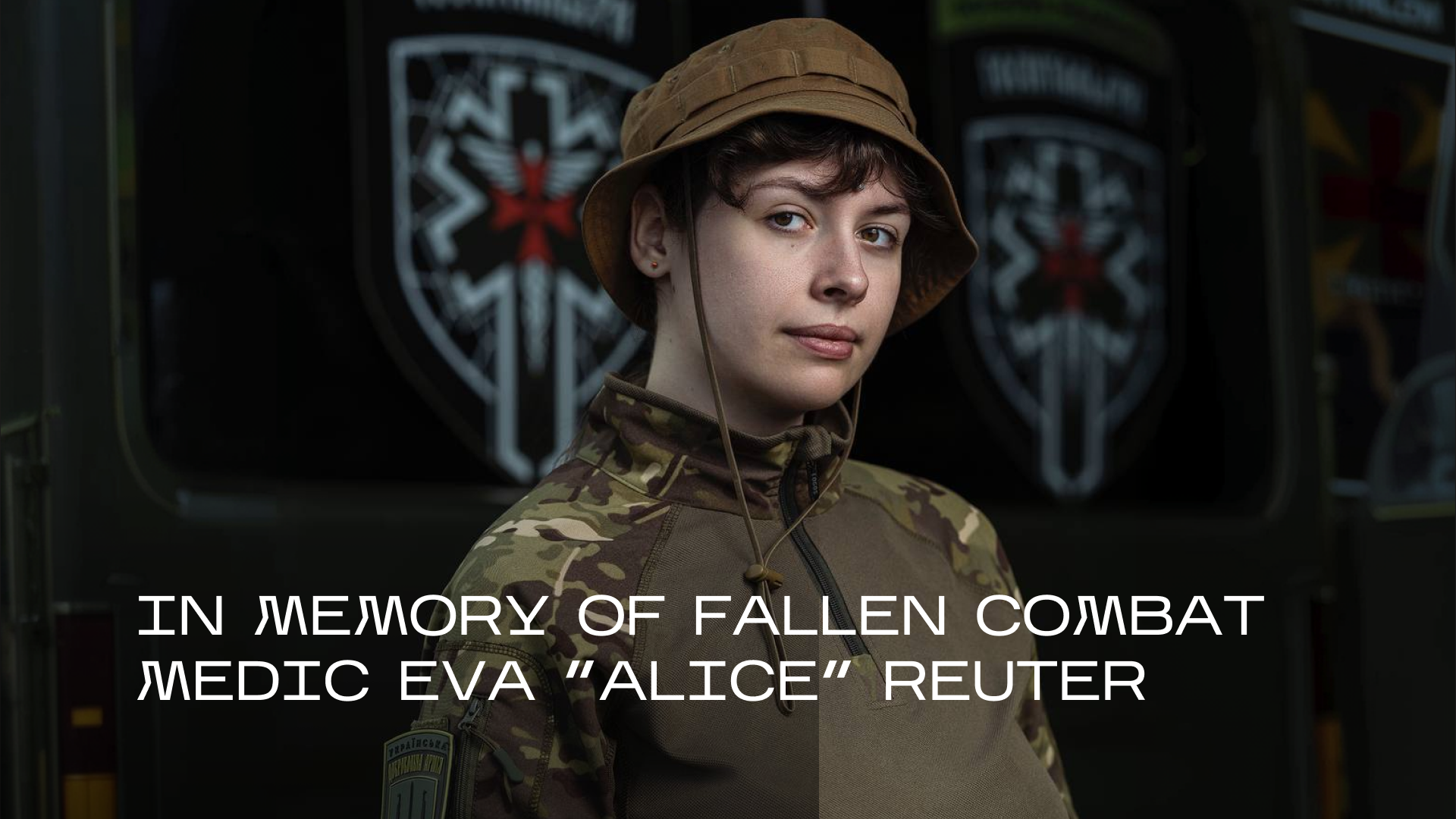 An art historian who became a combat medic, mastered drone repair, FPV drones, 3D printing, led international recruitment, and coordinated a major educational project
 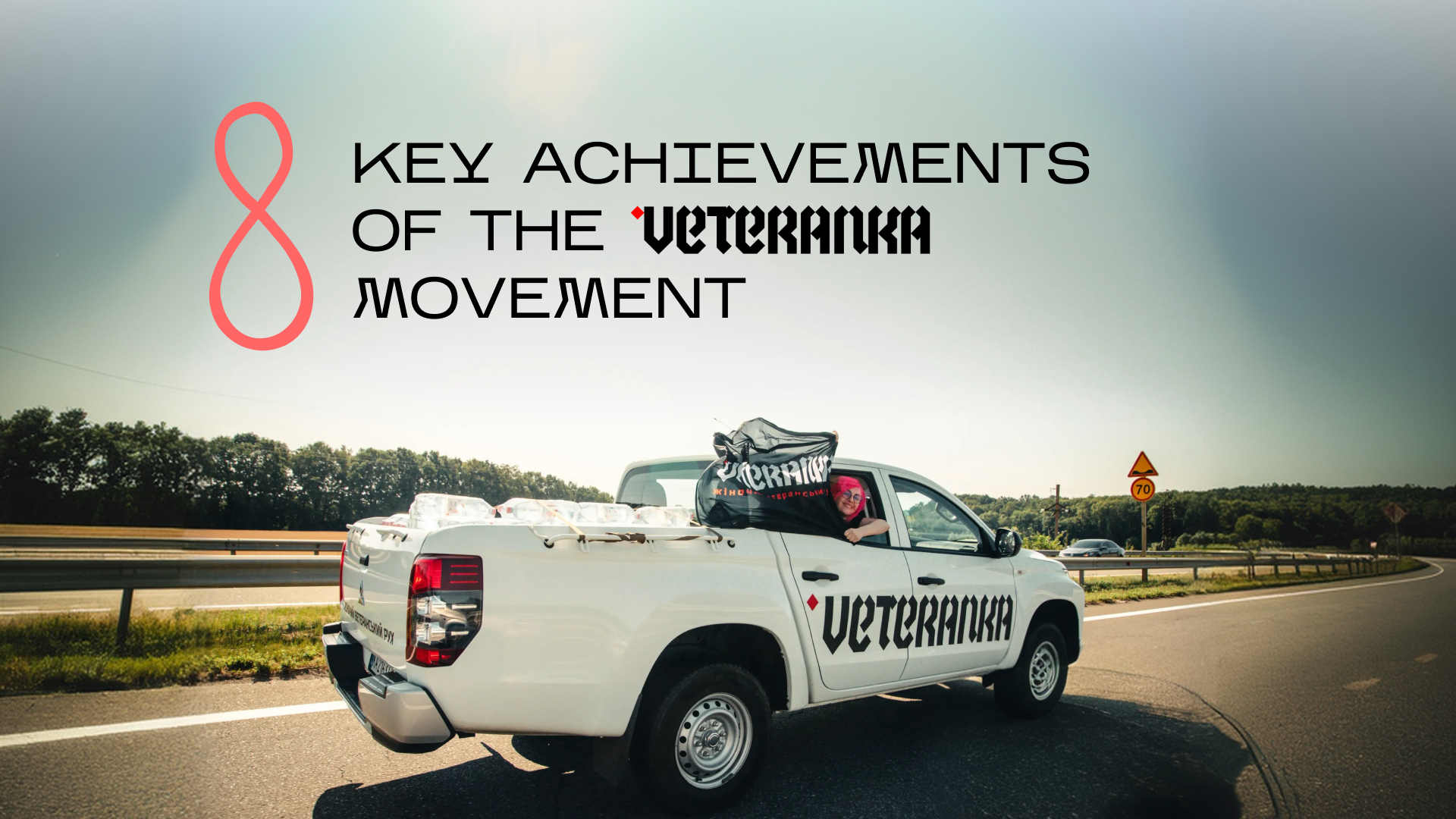 To Mark the 8th Anniversary of the VETERANKA Movement
 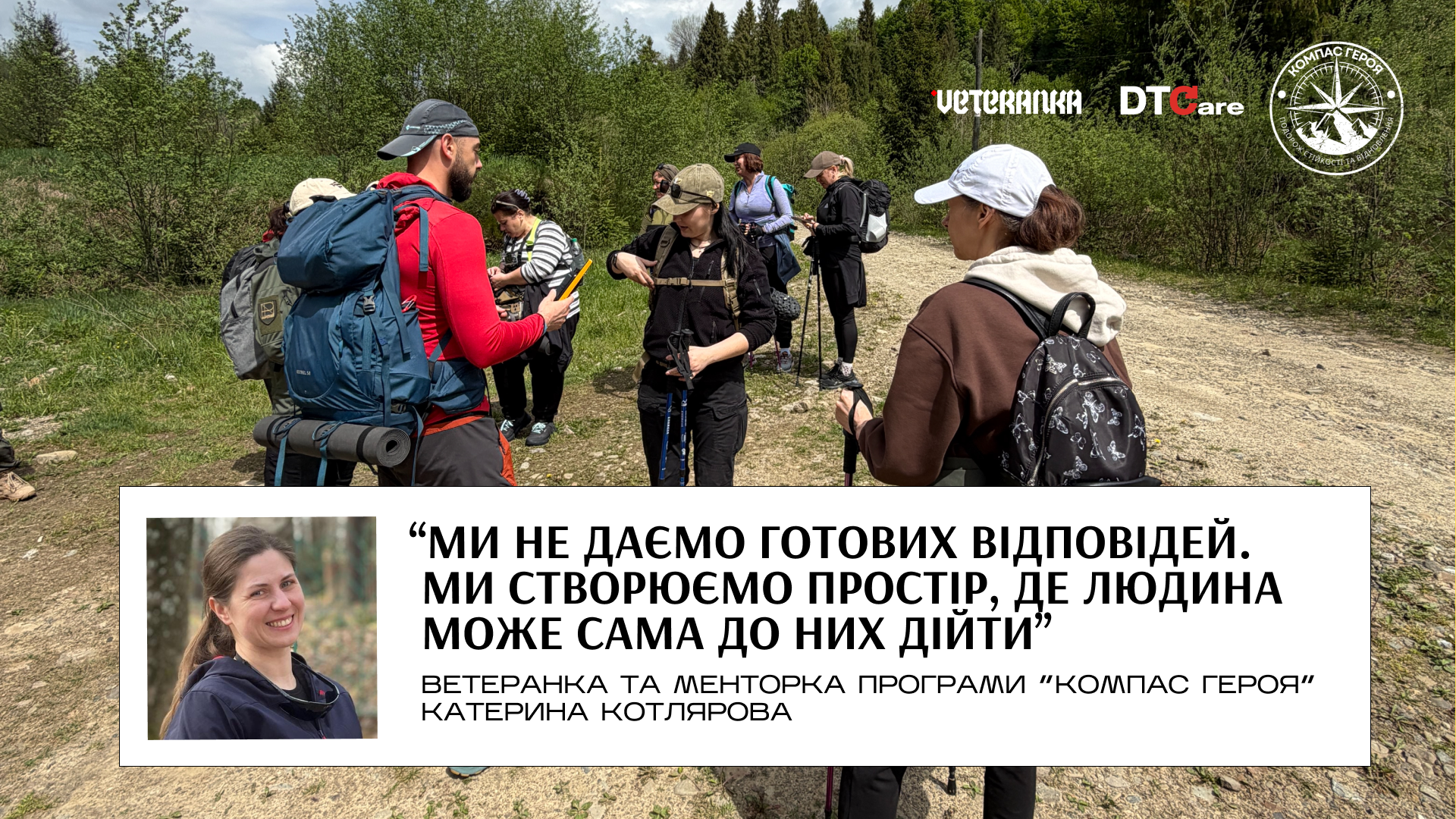 What Awaits Participants of the Hero’s Compass Adventure Counseling Program
 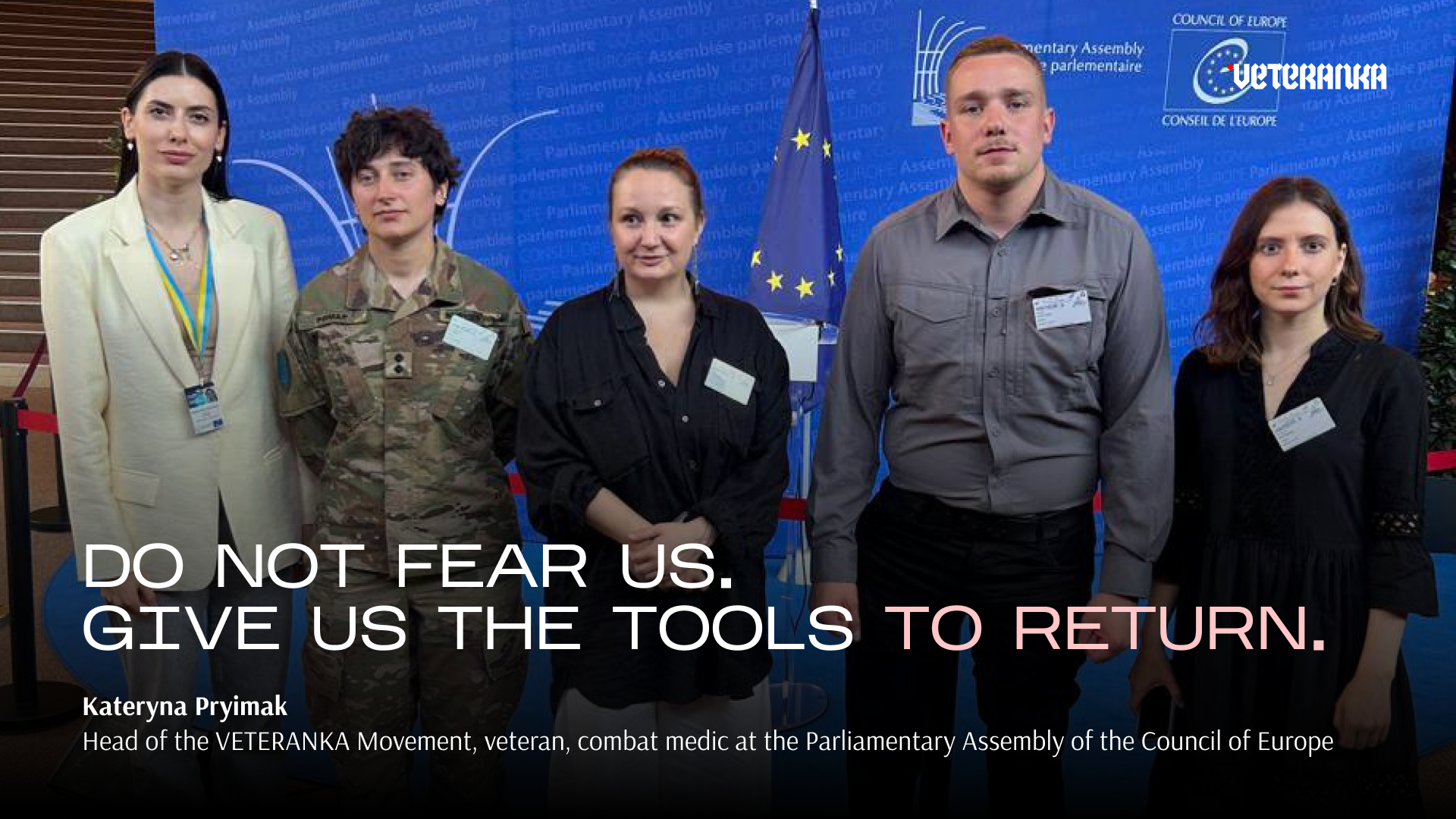 "Do not fear us. Give us the tools to return"
  “Life does not end after service — it becomes different”