A Mother in the Military Is Not “Abandoning Her Children” — She Is Taking Responsibility

Based on the experience of women in the VETERANKA movement, mothers who join the Security and Defense Forces often face public judgment and painful remarks such as: “Your child is growing up without a mother,” or “What kind of mother leaves her children?”
In schools and children’s groups, cases of bullying are also reported against children whose mothers serve in the military.
Why is it still difficult for society to accept a woman’s decision to defend her country? How do these prejudices form, and what can adults do to prevent bullying?
Psychologist Kateryna Vasylieva explains.
Society Is Still Holding on to Outdated Gender Norms
In our collective imagination, old social norms remain active: “war is men’s work,” “a good mother is always physically present.” When a woman chooses to defend her country, she disrupts this familiar picture. For many people, this is hard to accept — it requires internal flexibility and the ability to adapt to a new reality.
War is an extremely traumatic experience. It intensifies anxiety, generates fear, and confronts people with helplessness. To reduce internal tension, people often simplify complex realities by dividing the world into “right” and “wrong.” This is easier than acknowledging that someone else is capable of making a choice they themselves would not dare to make.
There are also those who unconsciously feel shame about their own passivity during the war. To protect their self-image, they devalue those who act, reassuring themselves: “I’m good — I stay at home with my children.”
A Man Is a Hero — a Woman “Abandoned Her Children”
This stereotype persists because society is still learning to see women not only through prescribed roles, but as autonomous individuals.
For decades, women were expected to nurture, care, and quietly support others. When a woman takes on a different role — becoming a source of strength, assuming responsibility, command, or even taking up arms — it causes a kind of “system error” for many people.
Double Standards Shape Prejudice
When a man goes to war, he is seen as fulfilling his duty. When a woman does, questions arise: “Why isn’t she at home?” “Who is with the child?”
This is an outdated script that no longer reflects reality.
Much of this reaction is rooted in fear and a desire for control. A strong woman disrupts familiar power structures and challenges traditional roles. For some, this is inspiring; for others, deeply unsettling. A woman who can give birth, protect, and make decisions dismantles long-standing stereotypes.
That is why instead of “she is brave,” we still hear “she left her children.” Recognizing women as heroes on equal footing with men requires a higher level of societal maturity.
Child Bullying Is a Reflection of Adult Behavior
Children are not born cruel. They reproduce the behavioral models they observe. Bullying almost always grows out of adult prejudice.
If a home environment includes judgment, anxiety, or devaluation of a woman soldier’s choice, a child carries this into school. The absence of a mother becomes framed as abnormal, and a harmful message emerges:
“Your mother isn’t here — so something is wrong with you.”
A Typical Reaction to “Otherness”
A child of a servicewoman becomes a carrier of a frightening theme: war, loss, pain, uncertainty. Groups under stress often release tension through aggression or exclusion. This is an attempt to cope with collective anxiety.
Children live in the same stress system as adults, but they lack the emotional vocabulary to articulate fear, guilt, grief, or uncertainty. As a result, emotions surface through devaluation:
“Your mom abandoned you.”
What they are really saying is: “I’m afraid this could happen to me.”
A Mother at War Is Not About Abandonment — It Is About Courage
In such situations, work must be done with the entire community: teachers, parents, caregivers.
It is essential to explain that a mother at war represents courage and responsibility — not absence. A servicewoman’s child has the same right to respect, support, and safety as any other child.
Social Prejudice Is Emotionally Exhausting
Women in service often live under a double burden: an external war and an internal one. Alongside physical danger, they face judgment, doubt, and emotional pressure. This can lead to guilt, shame, and loneliness.
Even when a woman knows she serves for her children’s future, an inner voice may say: “I protect, but I cannot be near.” Love and pain coexist here — inseparable.
How to Cope
- Stay in contact with your emotions in safe spaces — with loved ones, a psychologist, or fellow servicewomen. Talking, writing, crying gives emotions room to exist.
- Seek environments where you don’t have to maintain the image of “being strong.”
- Give emotions form through letters, short videos, shared rituals with children — presence is possible even at a distance.
- Set boundaries. Saying “I don’t discuss my family decisions and ask for respect” restores control over your personal space.
Six Steps for Responsible Adults to Prevent Bullying of Servicewomen’s Children
Speak without judgment or labels
Adults must actively shape respectful language about war and family diversity. A mother’s service should be framed as a form of love and care — just expressed differently.
Work with children’s emotions
Children experience anxiety, fear, guilt, and confusion. When emotions remain unspoken, they emerge as aggression or exclusion.
Create spaces for emotional expression
Schools should provide safe spaces to talk about fear, anger, sadness, and uncertainty, ideally with psychologists using art-therapy approaches — drawing, storytelling, play.
Systematic prevention in educational institutions
Clear anti-bullying policies, reporting mechanisms, and response protocols are essential.
Build supportive environments
Children of service members should not be singled out or idealized. They should feel “like everyone else,” with respect for their experience. Joint activities and volunteer projects help eliminate divisions.
When schools speak the language of respect, allow emotional expression, and don’t avoid difficult topics — bullying has no ground to grow.
How Teachers and Parents Should Respond to Bullying
Immediate intervention
Any humiliation must be stopped at once:
“Stop. We do not speak disrespectfully about other families.”
Document and report the incident
This enables systemic response and prevention, not just reaction.
Educational follow-up
Schools should hold discussions on military service and respect for families who defend the country.
Dialogue with parents of bullies
This is about explanation, not punishment — discussing service, gender roles, strength, and care.
Support the affected child
Give space to express fear, anger, confusion — through conversation, drawing, play. Emotions must not remain internalized.
A mother should clearly state:
“What happened is not about you. It is about others struggling to accept brave choices.”
Service Is Also Love
Children need to hear:
“My service is a form of love. I serve to protect — so you can be safe.”
This helps maintain emotional connection, calm, and pride.
Teaching Society Empathy Toward Mothers in the Military
Empathy cannot be forced. It grows through education, dialogue, and real human stories.
Language matters
Use respectful phrasing: “She chose to protect,” “She made a conscious decision.”
Media, educators, and opinion leaders play a crucial role here.
Education and open conversations
Love takes many forms: some protect at home, others on the front line — both are acts of care.
The power of real stories
Seeing faces, hearing voices, and understanding lived choices dismantles stereotypes.
Teaching empathy to adults and children
Through books, films, conversations, and personal example. “Different” does not mean “alien.”
Love Has Many Forms
A mature society sees substance beyond form. Love may look different — but it remains love.
Love for children and love for country come from the same root
I want to thank every woman defending Ukraine today. You carry an extraordinary combination of strength, action, tenderness, and love.
Even when support is lacking, your choice is seen, felt, and profoundly meaningful.
Take care of yourselves. Through you flows a powerful love for life.
Love for children and love for country do not contradict one another — they grow from the same source.
 To Mark the 8th Anniversary of the VETERANKA Movement
 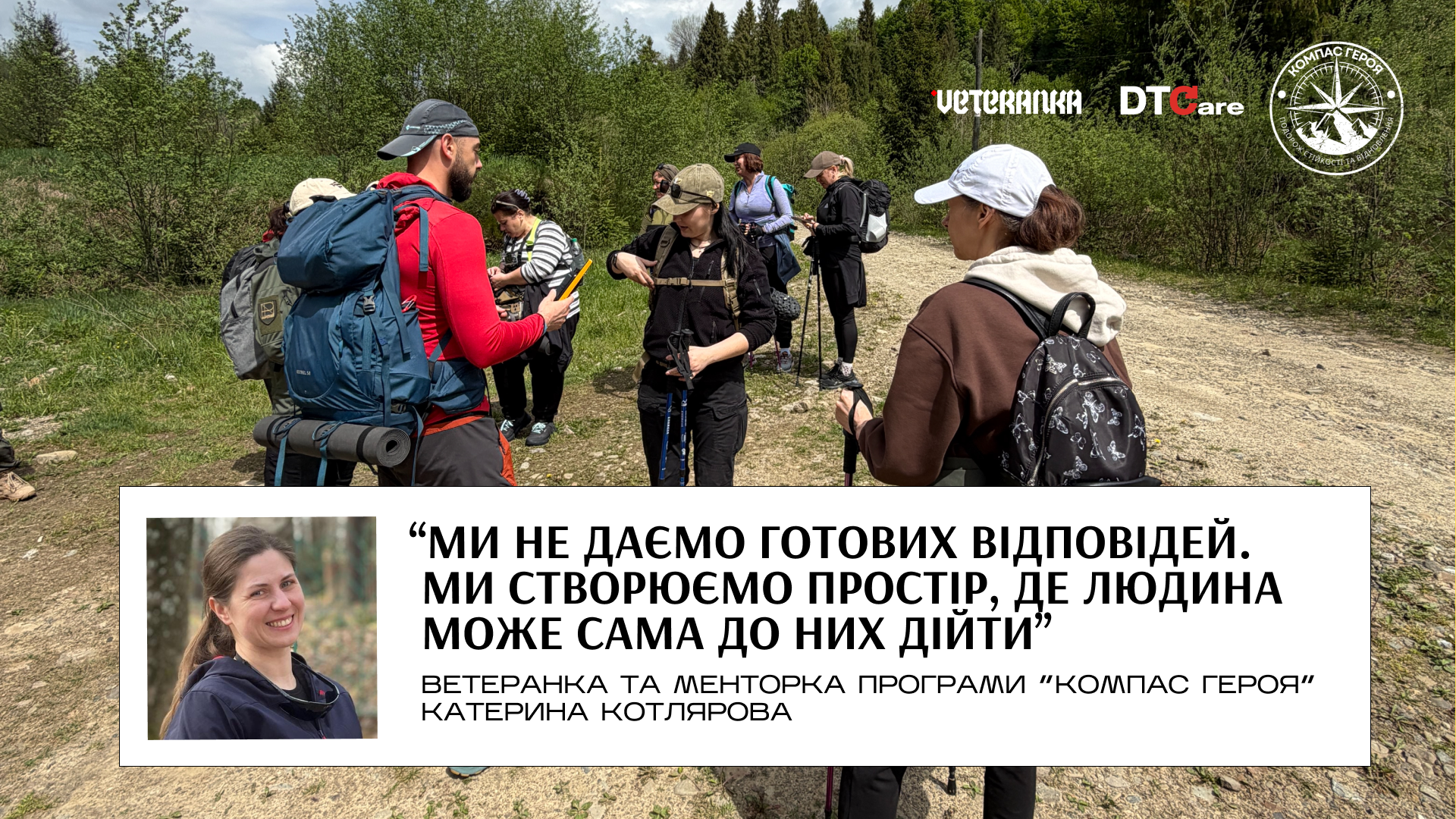 What Awaits Participants of the Hero’s Compass Adventure Counseling Program
 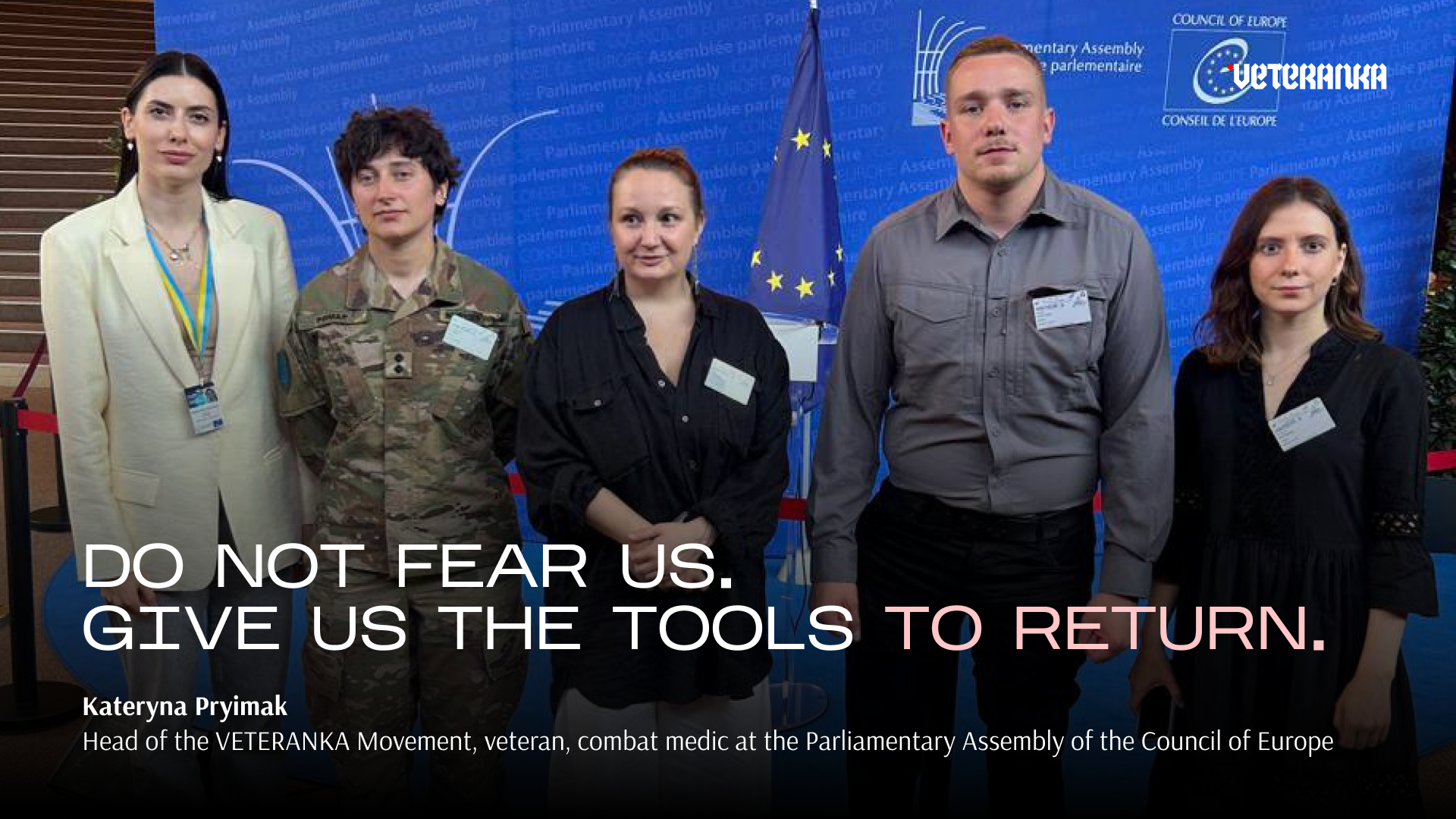 "Do not fear us. Give us the tools to return"
  “Life does not end after service — it becomes different”
  We strengthen evacuation efforts on the most difficult sections of the front and delivers the unique robotic complex “Maul”