A Veteran at Home: Expectations, Reality, and the Path to Support

A professional perspective on the role of women veterans in the family and the conflict of roles that arises after service, by Ellina Ilyinykh — certified psychotherapist, specialist in the EMDR method and sexology, facilitator of support and therapy groups, and psychologist with the VETERANKA Movement.
A Veteran in the Family: Between Expectations and Reality
When a woman veteran returns from the front, she does not simply come home — she faces a new challenge, as her military experience collides with expectations that she will “be the same as before.”
But how can she remain “the same,” when everything has changed — her body, her nervous system, her values, her worldview?
Role conflict is one of the most painful struggles after coming back. At the front, she was decisive, disciplined, responsible for the lives of others. At home, she is often expected to embody the role of the “gentle,” “feminine,” “caring wife and mother.”
Yet the “switch” between these roles doesn’t always work. Sometimes it jams. This creates inner tension, especially if a woman has not had the time or space to process her combat experience.
The Veteran’s Challenges in the Family
- “No one knows what I went through. Everyone just wants me to ‘blend in’ again.” — the feeling of being misunderstood.
- “I torment myself with guilt for not being at home, for how I’ve changed, for not being who I used to be.” — the burden of shame and self-blame.
- “I feel that my children are afraid of me, ashamed of me, or pulling away — because their mother is different: restrained, sometimes withdrawn.” — the loss of connection with children.
This leads to painful internal conflicts:
- Should I stay strong or allow myself to be vulnerable?
- Should I defend my boundaries or compromise for the sake of “peace in the family”?
- Should I stay silent or speak openly about my pain?
Shifts in Relationships
- With children, who may not recognize their mother: her facial expressions, her tone, her new boundaries.
- With a partner, who may feel competition or confusion.
- With parents, who long for “their little girl back,” not acknowledging her new strength and depth.
What Helps
- Psychotherapy — a space to integrate the war experience with a new life role.
- Recognition — of oneself, of change, of pain, of strength.
- Honest conversations with loved ones, if it feels safe.
- Communities of other women veterans, where masks are not needed.
How Families Can Support a Veteran
- Listen without pressure. Do not demand stories or a “return to who she was.”
- Acknowledge the changes. She has every right to be different.
- Ask about her needs, rather than imposing roles.
- Be present without trying to rescue. Simply being there is already support.
- Encourage her to seek therapy if you notice signs of anxiety, emotional withdrawal, or difficulties in family interaction. Suggest family sessions if possible.
A New Wholeness
Being a veteran is not about choosing between “mother or soldier,” “strong or gentle.” It is about forming a new wholeness that is only beginning to take shape. What she needs is not only love, but also space, time, and the right to be herself.
If you are a woman veteran, or someone close to her, remember: the journey of coming back is no less important than the journey of fighting. And it can be taken with support.
This publication is part of a project on the mental health of women and men veterans after service.
The project “Insight and Unity” is implemented by the NGO Women Veteran Movement within the framework of the GIZ project “Gender-Sensitive Approaches to Mental Health and Psychosocial Support in Ukraine”, funded by the Government of Germany.
 To Mark the 8th Anniversary of the VETERANKA Movement
 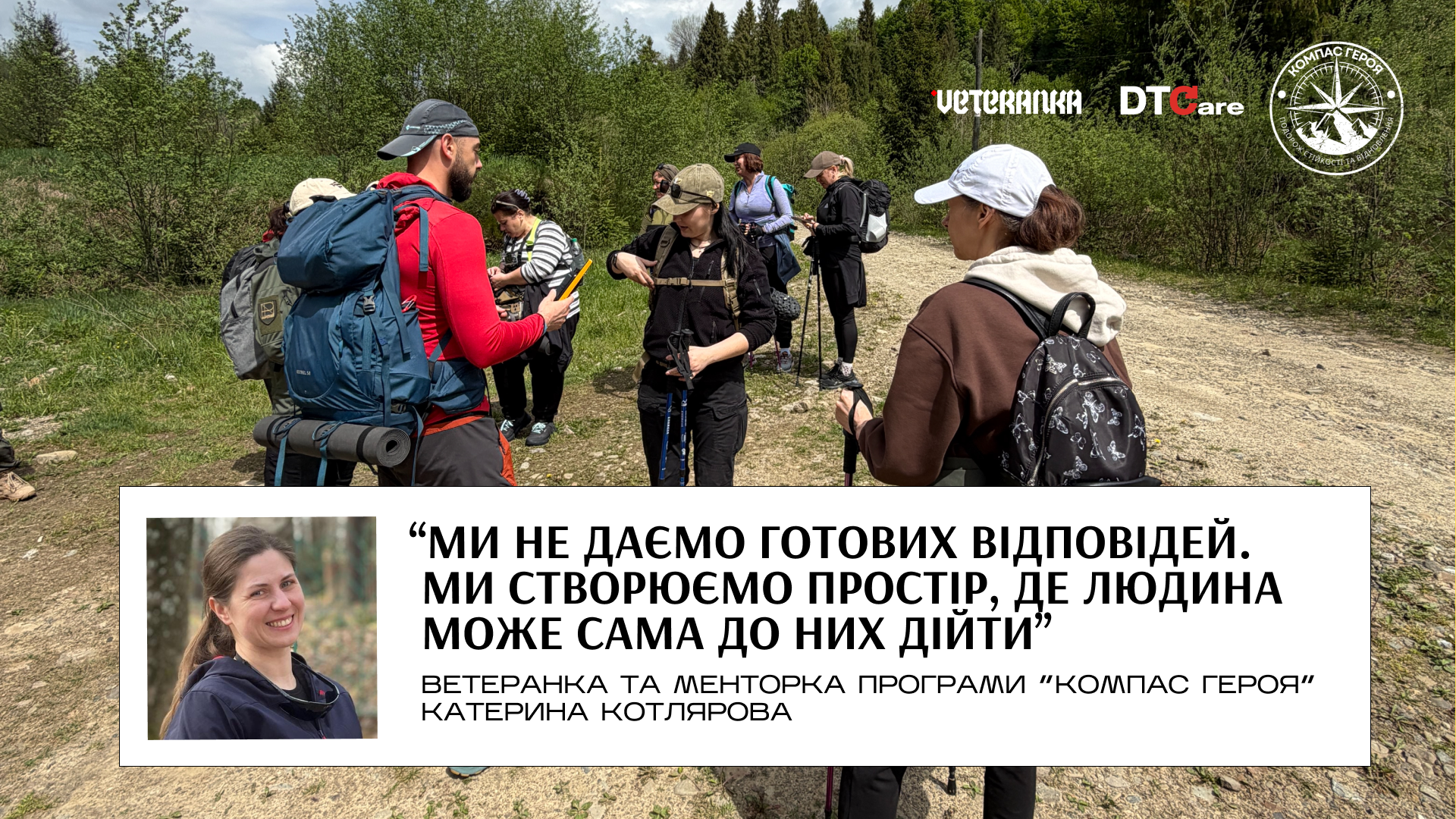 What Awaits Participants of the Hero’s Compass Adventure Counseling Program
 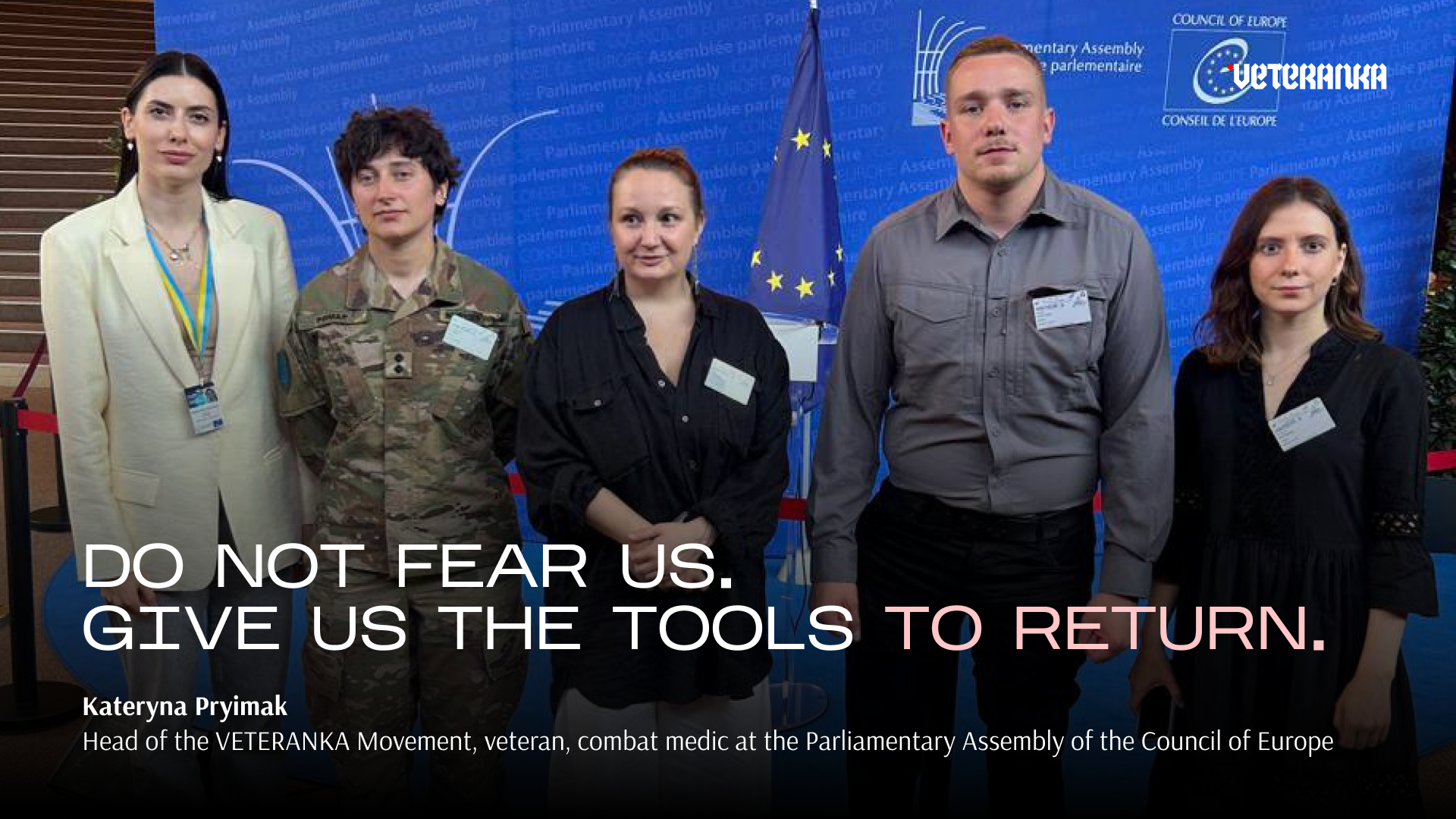 "Do not fear us. Give us the tools to return"
  “Life does not end after service — it becomes different”
  We strengthen evacuation efforts on the most difficult sections of the front and delivers the unique robotic complex “Maul”