After. by Tetiana Borys

A Personal Account of Navigating Loss
by Tetiana Borys
Navigating loss is a deeply personal experience. The support of family, friends, and loved ones is vital and much appreciated, yet in the end, you must walk this path on your own. That is why we asked those who have already gone through the most difficult stages to share their personal insights on finding strength and resources when darkness seems to surround you.
Tetiana Borys—founder and head of the “Plan B Power Center” project, wife of the fallen serviceman Oleksii Borys, and a member of the VETERANKA movement—begins a series of articles about her own journey through grief. Her candid story follows below.
“Bandaged with white laughter”
It has been one year and seven months since the death of my beloved husband, Oleksii Borys. Two weeks after his funeral, I went back to work—but not truly back to living.
I continue to confront this loss, but now I understand more clearly what helped me become self-reliant along the way. Perhaps my story will help make others who are grieving more visible, and their experiences more widely understood.
Responsibility
The day after my husband’s 40-day memorial service, his friends brought me a cat—a tiny black kitten—and with him came a big responsibility. My husband and I had always dreamed of having a black cat. On that first day, I felt an inexplicable fear of this little creature: I didn’t know what to do with myself, let alone with a pet. I named him “Liubchyk” because I love him dearly. Together, we learned how to sleep without sleeping pills, how to get up in the morning, how to look for meaning, and even how to travel.
Traveling with a cat is a story in itself. I bring him along whenever I don’t want to feel lonely. Our most recent trip was to the seaside in Odessa. What fascinates me most is how Liubchyk senses my moods and emotions. I’m not sure if all animals are like this, but it’s certainly true of him. I love every bit of his fur and every scratch he leaves on my skin.
Caring for an animal and shouldering this new responsibility has been tremendously helpful in my journey through grief. When night falls and I find myself alone with my thoughts and emotions, Liubchyk takes away that overwhelming sense of solitude.


Sports
My husband, Oleksii, had a gym membership and genuinely loved working out. One of my responsibilities was to fill out forms and freeze his membership every three months while he was serving in the military.
Six months after his passing, I went to the gym to request the cancellation of his membership. Instead, they suggested that I use it myself. At first, I took it as a joke—one that Oleksii himself might have made—because he knew how much I hated sports. But I went to the gym anyway. I felt a sense of responsibility. And that’s how sports became a part of my life.
I became interested in it because I started noticing changes in my body. I felt how it strengthened my character and cleared my mind. I continue training to this day because it gives me structure, a sense of routine, and much-needed stability.
The Mountains
Two mountain peaks and the vast nature of the Carpathians gave me a sense of strength and control—over my body, my thoughts, and my tears.
After my husband’s death, I felt an overwhelming urgency to do everything—work, study, make the most of every moment. I became hard on myself, determined not to waste a single second. But in the mountains, I was able to slow down, reset, and test my inner strength and endurance.
Oleksii loved Mount Petros, so when I climbed to its peak, I carried his flag with me—the one signed by his brothers-in-arms.

Support
“And if it were up to me,
I would write everywhere in italics:
There is so much sorrow in this world,
People, be kind to one another.”
These lines by Lina Kostenko express exactly what I would ask of people—to not be afraid to support those who need it, especially those experiencing loss.
I vividly remember a day when I was cheerful, joking, being the Tetiana that everyone called “strong” and “resilient.” But then I left work, got on a tram, and suddenly broke down in tears, overwhelmed by the emotions I had bottled up all day. A stranger—a woman—asked if she could hug me. I said yes, and I cried the entire way home on the shoulder of someone I had never met before.
Right before Christmas, I found support in the most unexpected place—a taxi ride home from the cemetery. To order the ride, I had to drop a location pin on the map, which happened to be a cartoon Santa Claus marking the cemetery entrance. The absurdity of it all—holiday celebrations, me at the cemetery, my beloved no longer here—sent me into a spiral of panic. The taxi driver turned off the music, handed me a tissue, and expressed his condolences. That, too, was support. And it mattered.


This project is implemented with the support of the European Union and the International Renaissance Foundation as part of the joint initiative “European Renaissance of Ukraine.”
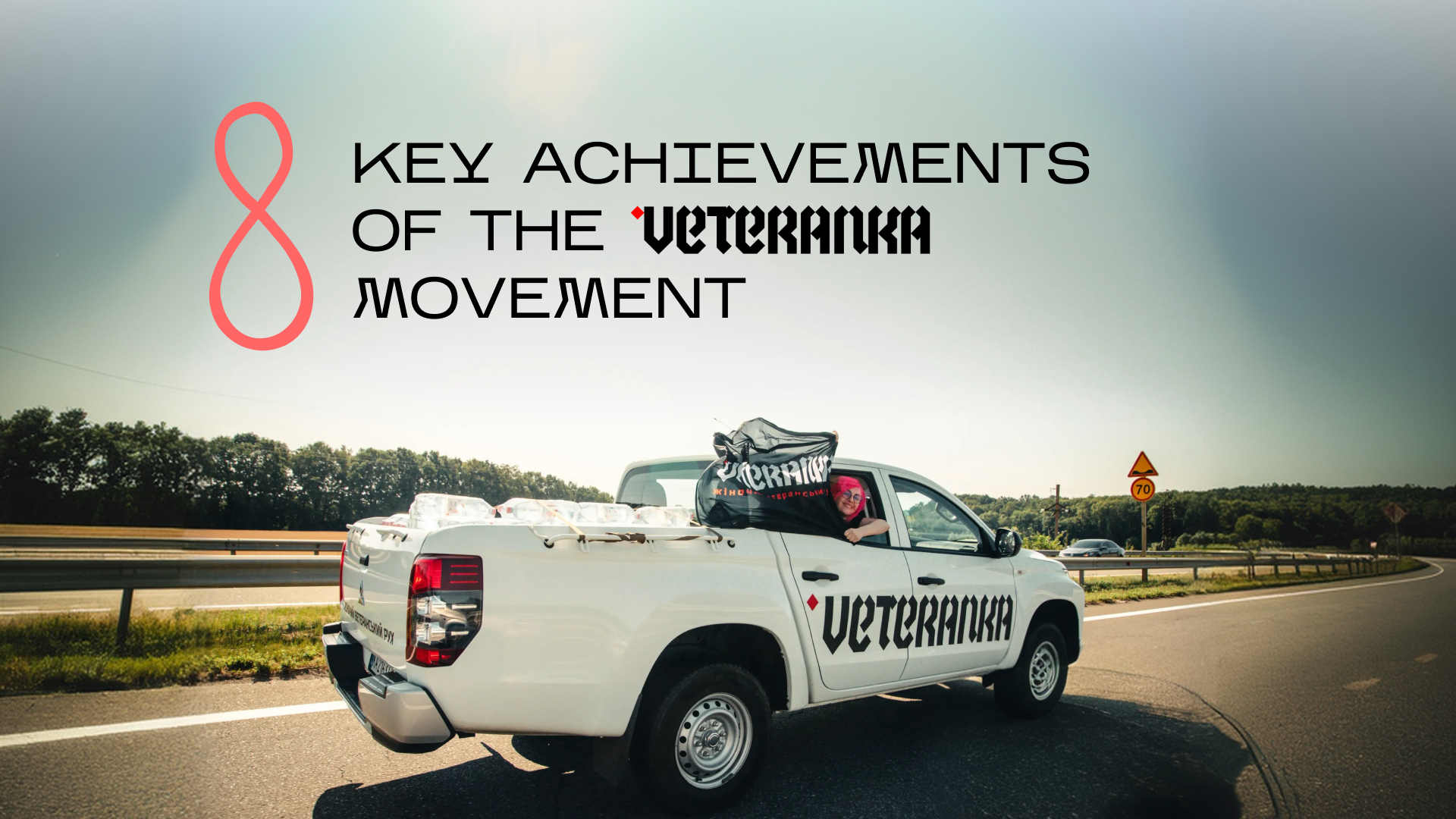 To Mark the 8th Anniversary of the VETERANKA Movement
 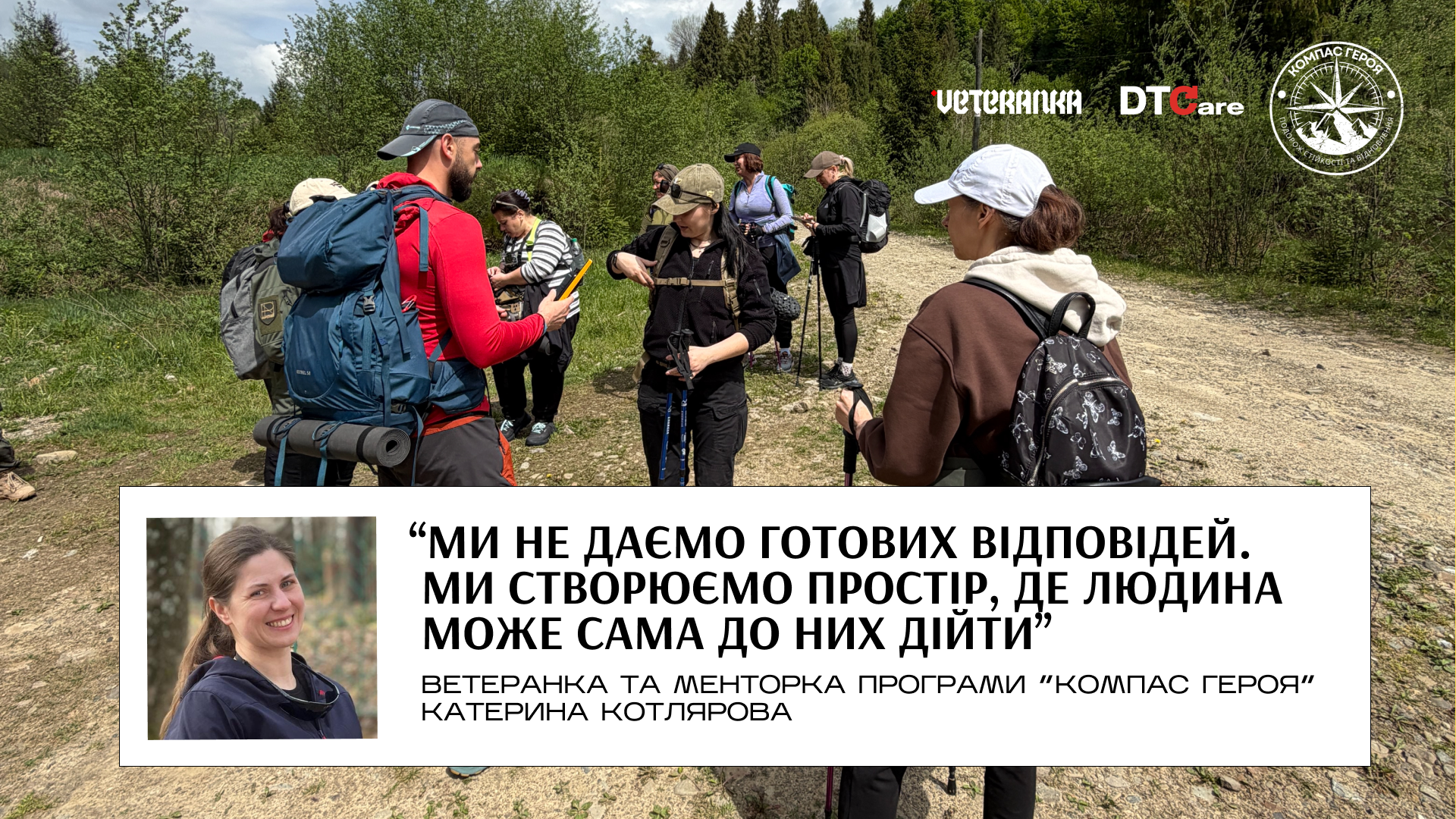 What Awaits Participants of the Hero’s Compass Adventure Counseling Program
 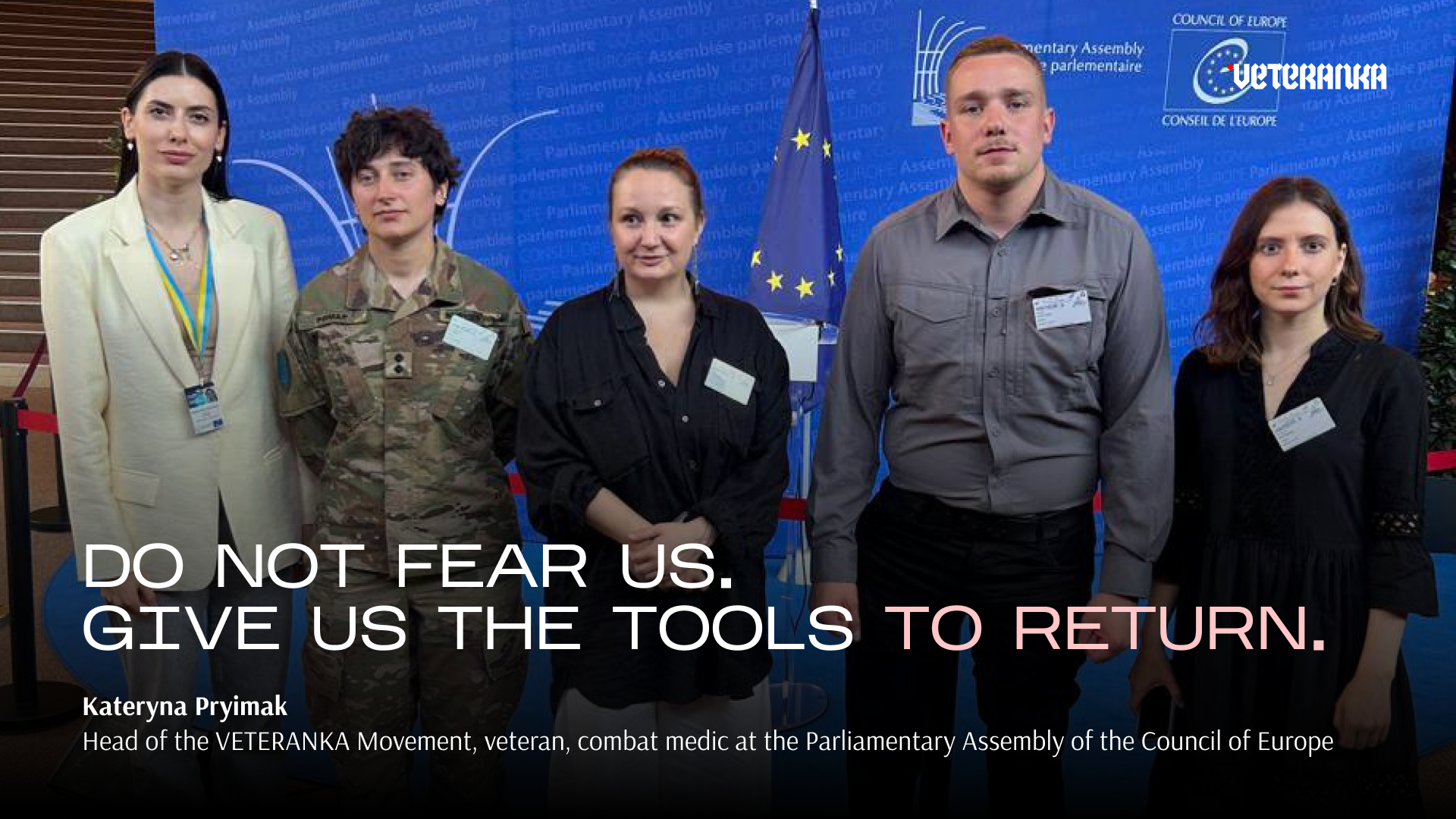 "Do not fear us. Give us the tools to return"
  “Life does not end after service — it becomes different”
  We strengthen evacuation efforts on the most difficult sections of the front and delivers the unique robotic complex “Maul”