“Coming back from military service isn’t the finish line — it’s the start of a new, challenging chapter.”

Yuliia Skrypiuk is a veteran and combat psychologist who served for over two years in the Donetsk region. She started in the 109th Separate Brigade of the Territorial Defense Forces, and later in the Mariupol Battalion within the same brigade. She went from a private to a senior officer. After demobilization, she faced a new city, a new reality, and many inner challenges.
“I didn’t return home after demobilization — I moved to a different city, where everything was new to me and no one was nearby. My kids finished the school year in the Poltava region and only joined me later. The separation from my family also left its mark.”
The first reaction she felt was aggression toward civilian life, toward people living in a peaceful daily rhythm, toward noise and crowds:
“The first thing I experienced after demobilization was inner aggression. I felt it toward civilians: when I entered a café, I couldn’t stand being among so many people. This inner aggression is a mental reaction from constantly being in hyper-control, used to stressful situations, and living in a physically and emotionally tense state. You disconnect from the world around you. It starts to feel like it might attack you or somehow threaten you.”
During this period, Yuliia continued working with a psychologist — as she had throughout her service. But after demobilization, her needs and state changed:
“After demobilizing, I turned to a professional, and later switched to another.
Because the level of understanding of the boundaries and inner layers of a traumatized person is completely different.”
Today, Yuliia supports other veterans. She knows for sure: to keep moving forward, you need inner resources — and someone to talk to:
“The trauma of veterans is like the layers of the earth: first the soil, then clay, water, and many more layers underneath. We might scrape off one layer, but to reach the next, we need enough strength for it. With my psychologist, I worked on understanding exactly where I was at that moment. Because even though I left service, I hadn’t fully left it in my mind. I still feel drawn to ‘my people.’ But I want to shift my thoughts and lifestyle so I can stay among civilians — to support our veterans, develop veteran-focused programs.”
The return process isn’t linear. But psychotherapy gives a foundation:
“Psychological therapy is definitely necessary. It isn’t quick, and there’s no point expecting results after just one or two sessions. It’s an inner journey: finding the strength to rethink your experiences and shift your mindset.”
Community and mutual support are also crucial. That’s why Yuliia encourages:
“I want to wish for our women not to be afraid to unite, to look for like-minded sisters. The VETERANKA Movement is a powerful and amazing community that helps women navigate demobilization — a truly difficult and painful process. We go through ‘thorns to the stars’ together.”
This publication is part of a project about mental health after service. Share it with someone who might need it. Support matters.
The project «Insight and Unity» is being implemented by the NGO «Ukrainian Women Veteran Movement» within the GIZ project «Gender-Responsive Approaches to Mental Health and Psychosocial Support in Ukraine» funded by the German government.
 To Mark the 8th Anniversary of the VETERANKA Movement
 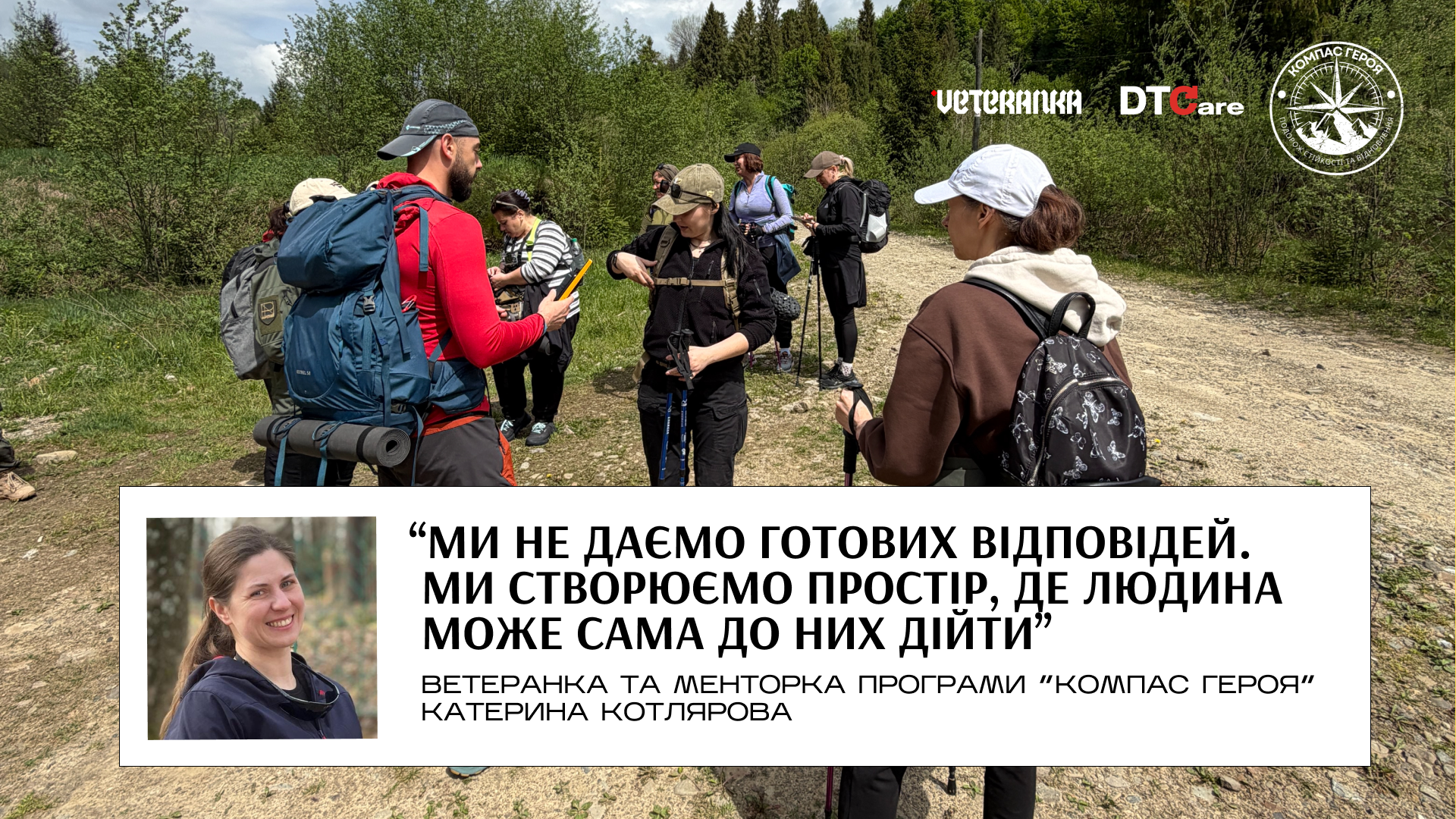 What Awaits Participants of the Hero’s Compass Adventure Counseling Program
 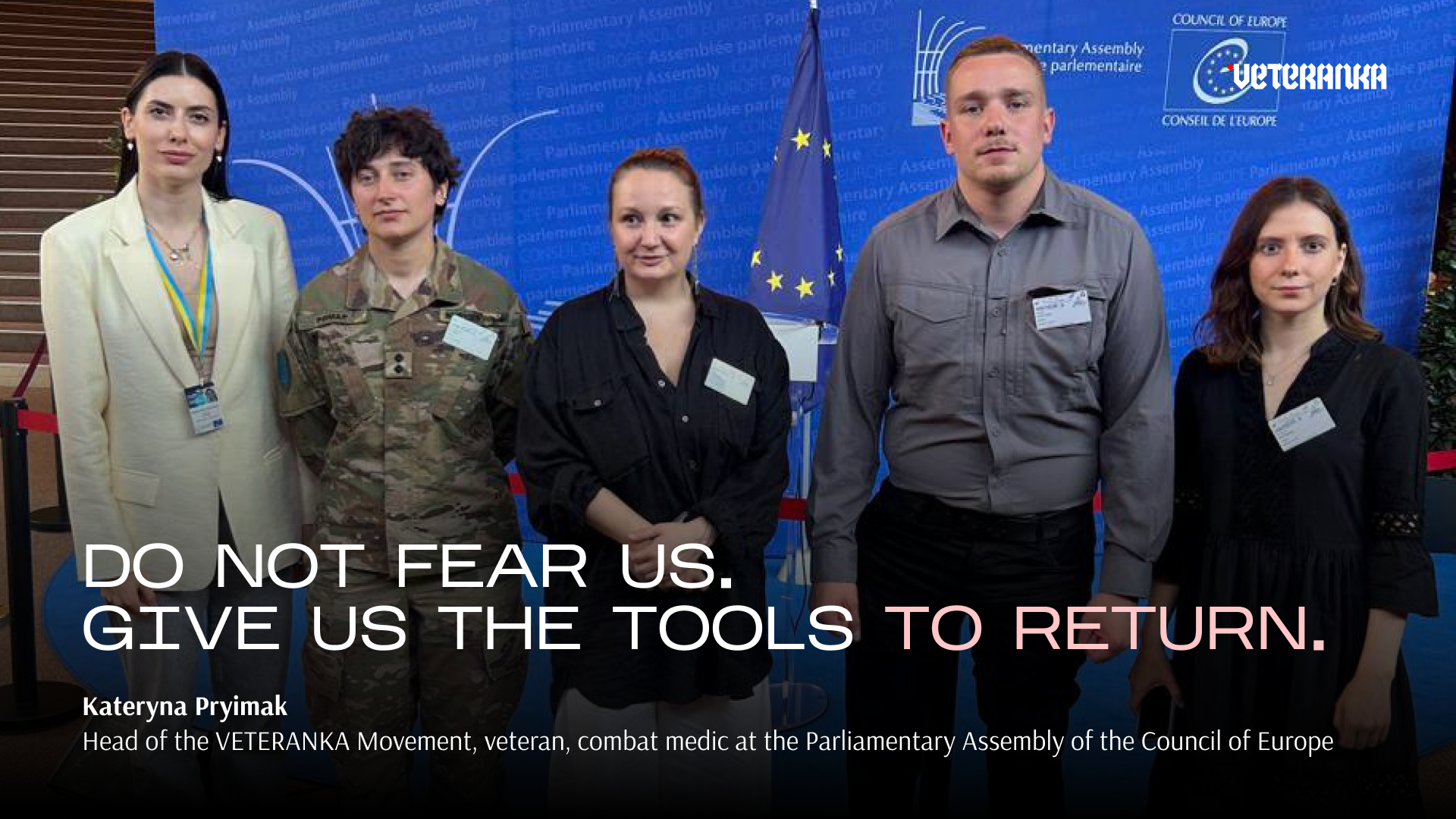 "Do not fear us. Give us the tools to return"
  “Life does not end after service — it becomes different”
  We strengthen evacuation efforts on the most difficult sections of the front and delivers the unique robotic complex “Maul”