“She saw herself as part of the female combat force in the army and tried to set a worthy example”: the story of fallen defender Daria “Delta” Lopatina

On September 2, 2025, in Donetsk region, 19-year-old Daria Lopatina, call sign “Delta”, a soldier of the 12th Special Purpose Brigade of the 1st Corps of the National Guard of Ukraine “Azov,” was killed in action.
At just 18, she took up arms and volunteered to join the Armed Forces. She spent the last year of her life defending Ukraine as part of the Azov Brigade. For the brigade, this is the first female soldier killed on the front line since the defense of Mariupol.

From student to defender
A Kyiv School of Economics student and native of Kyiv, Daria joined the Armed Forces during her second year of studies. She became a radio electronic warfare (EW) platoon engineer and was the only woman in her unit. From the very start of her service, she was deployed to the Toretsk sector, performing combat tasks alongside her comrades.
Delta died heroically in battle
The Azov soldier was killed while carrying out a combat mission in Donetsk region.
“The loss of a sister-in-arms hits the unit especially hard. Women’s service is an enormous feat. I’ll quote our brigade’s ensign Khidan at Dasha’s funeral: ‘Many Ukrainians who have never fought for freedom shout about their rights, forgetting their duties and responsibilities. Delta understood this…’” her comrades said.
She wanted to stand alongside those who truly cared
Her comrade Haus recalls Daria as exceptionally smart — someone who could have worked in any defense company or contributed to missile development. But she chose to fight shoulder to shoulder with people who joined the Defense Forces out of conviction.
“For her, it was important to be inside the army, right on the front line. The slogan ‘Glory to Ukraine!’ from the lips of those who’ve done nothing for this country means nothing during wartime. As Lina Kostenko said, patriots are not those who sing the anthem in the capital, but those who go to where it has fallen,” he shared.

At 18, she went to defend her country
Daria began her service as soon as she turned 18. After completing all necessary procedures and training, she deployed to frontline positions with Azov fighters.
“She wanted to enlist even earlier. For Delta, it wasn’t about joining the army to ‘serve,’ ‘shoot,’ or ‘kill.’ She was a kind and empathetic person who simply couldn’t watch civilians and soldiers die without doing something. She was deeply affected by the deaths of young people, especially women — like soldiers Cheka and Tysha. She hurt for the entire country and its people, who meant so much to her,” Haus adds.
She always thought she was doing too little — but in truth, she did so much
Comrades from Azov’s EW platoon say Daria was a fast learner, constantly seeking more work and wanting to be directly involved in combat missions. She never compromised her principles and never showed how hard it was. She always felt she wasn’t doing enough — but in reality, her contribution was immense.
“Medics can count the lives they save. EW engineers protect lives in a different way — by preventing losses. Thanks to Delta’s precision and dedication, countless vehicles, infantry, and medics were saved. Many enemy aircraft were brought down thanks to her work — some we know about, some we don’t. She was an incredible engineer. Her death is a tremendous loss — not only for her parents, me, the unit, or the army, but for humanity as a whole,” Haus says.

Not just on par with men — often better
Her comrade says Daria saw herself as the face and voice of all women in uniform who stand shoulder to shoulder with men on the front lines.
“Daria always strived to be the best — especially as a soldier. She saw herself as part of the female combat force and worked to set a worthy example. She wasn’t just on the same level as men — she was often better. For instance, EW equipment weighs 30–40 kilograms, and she could carry it on her own, refusing any help. She followed the VETERANKA movement closely and often said how much the community supports women at the front. She had a VETERANKA T-shirt at home that she proudly wore,” he recalls.
Delta wanted to make sure today’s horrors would never happen again
From the very first days of the war, Daria understood the immense risks she faced — and she made that choice consciously, in the name of a higher purpose.
“We often talked about how, after the war, society would need to rebuild, the country would need to be restored, the nation developed. She didn’t have that attitude of ‘I’ve done my part, now leave me alone.’ Delta wanted to ensure this never happens again — to nurture Ukrainian culture and music, to help animal shelters, to cultivate kindness in people,” Haus says.

The VETERANKA movement extends its deepest condolences to Daria’s family, loved ones, comrades, and everyone who knew her.
Her light, her courage, and her devotion to Ukraine will forever remain in our hearts.
 To Mark the 8th Anniversary of the VETERANKA Movement
 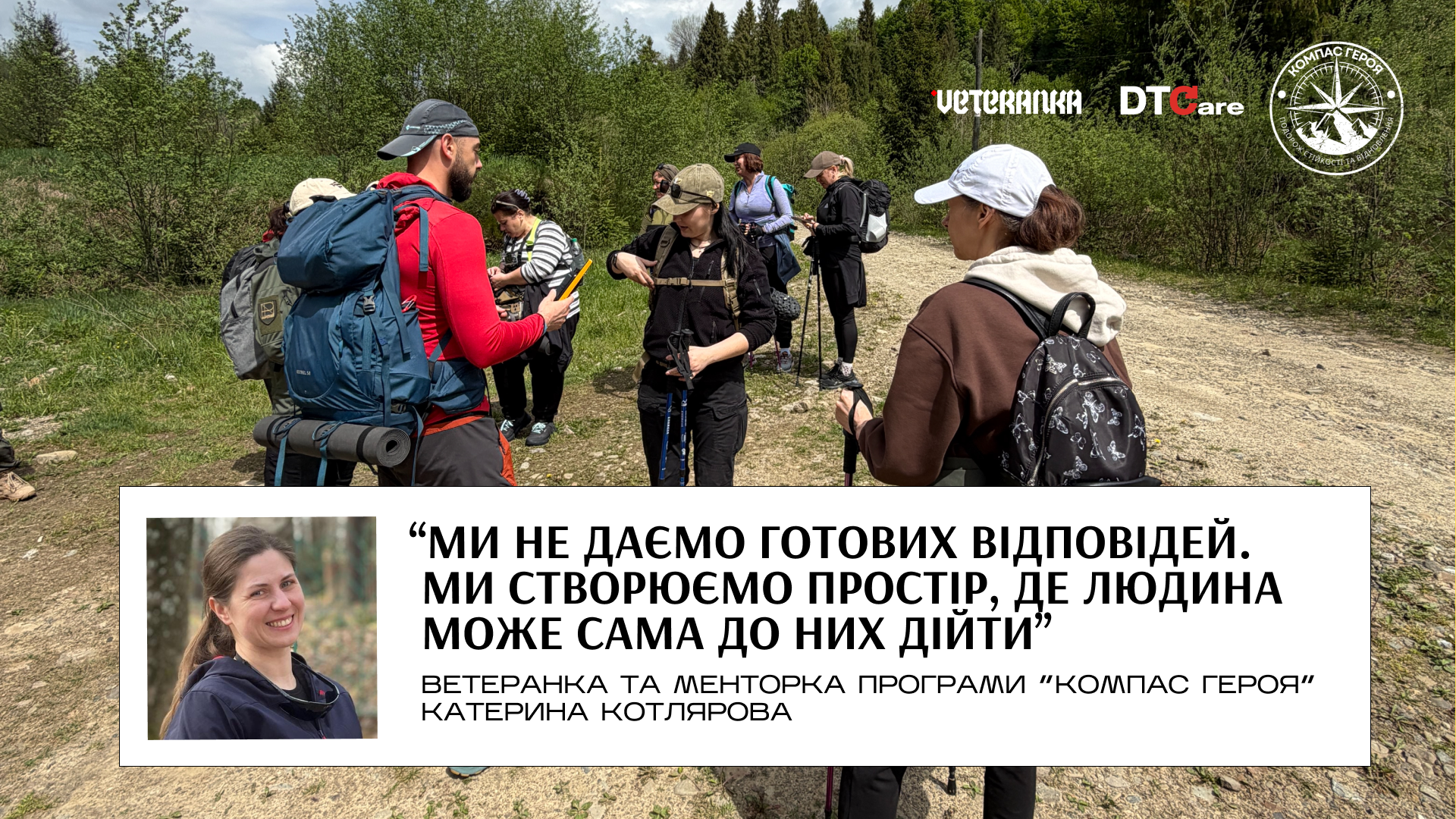 What Awaits Participants of the Hero’s Compass Adventure Counseling Program
 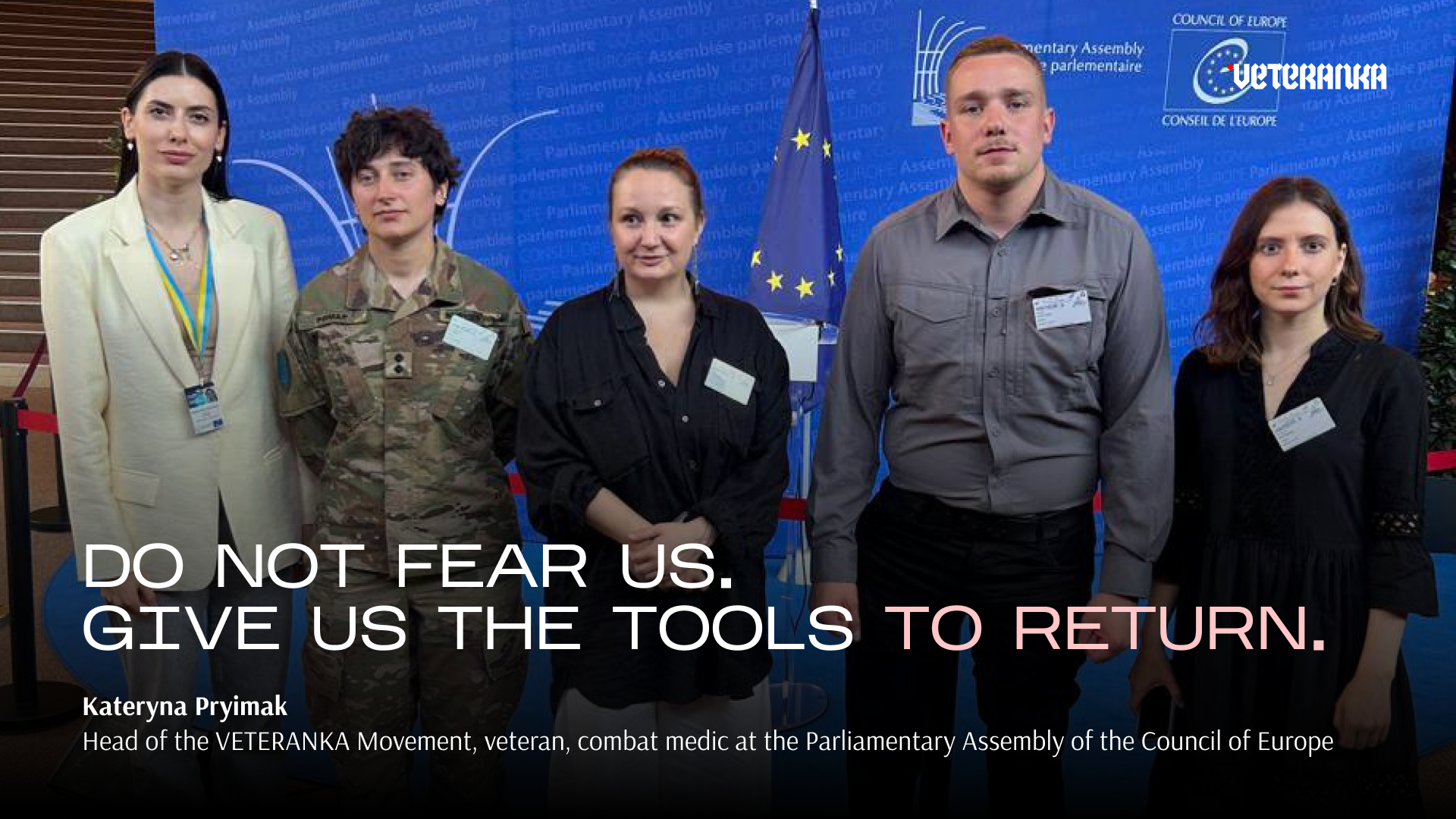 "Do not fear us. Give us the tools to return"
  “Life does not end after service — it becomes different”
  We strengthen evacuation efforts on the most difficult sections of the front and delivers the unique robotic complex “Maul”