Emotional Rollercoaster

Emotional rollercoasters, driven by news from the frontlines, constant air raid alerts, and a sense of lack of control, have become the reality for most inhabitants of our country. Both military personnel and civilians experience a wide spectrum of feelings. During the execution of their duties, when they must constantly remain focused and prepared for any trials, supporting comrades and close circles becomes particularly crucial.
We wake up in the morning ready to conquer mountains, but by midday, we’re overwhelmed.
Yes, these are emotional rollercoasters, and almost everyone has experienced them.
However, regardless of how much we sway back and forth, it’s important to realize that sharp mood swings are normal and far better than being stuck in a single emotion.
Mood shifts arise due to prolonged stress and exhausting feelings of danger. Of course, all of this intensifies when we start worrying about loved ones, especially if they’re on the frontline, at work, or dealing with endless household chores.
Why does this happen?
Primarily, it’s due to emotional changes: a period of excessive euphoria is always followed by a period of severe depression. Expectations weren’t met, we didn’t reach Moscow, the Russians haven’t stopped, just like their tanks…
Then comes a feeling of helplessness. Most of us share the sense that we can’t help or are doing too little.
There’s no shame in feeling like there’s a “storm” inside you, even if it seems like you’re the only one on the rollercoaster. It’s good to have a friend or someone close for support, but if you’re alone, acknowledge your emotions and give yourself time.
There are four key stages to emotional control:
1. Recognize.
2. Accept.
3. Name.
4. Acknowledge.
First and foremost, accept the fact that all these emotional fluctuations are normal; allow them to exist. Explain to yourself why you’re experiencing a particular emotion right now, accept it. It’s important to be careful with those around you so they don’t suffer or fall victim to your emotional turmoil. Once you understand and accept your emotions, move on to action. Ask yourself, “What can I do right now to ease my state? How can I help myself?” This is where certain practices and methods come in handy.
Engage in physical activities to take control of your emotions. Any movement adds energy and diminishes the strength of emotions. Breathe, choose a calming exercise, and return to it daily. Believe that you’re stronger than fear, anger, or anxiety.
Plan your day: set and accomplish at least the simplest tasks; it’s crucial right now. Don’t underestimate their significance. Always note what you managed to achieve and praise yourself for it. Whatever you couldn’t do today, move it to the next day and make sure to complete it. Planning and executing daily tasks will help you succumb less to stress because any physical action diminishes the power of emotion.
Try to allocate a bit more time for yourself: paint, dance, read, listen to your favorite music, talk to friends, watch movies.
Remember: you have to save yourself first, then others, then the country, and then the whole world. In that order, not the other way around!
This publication is part of the UN Women project “Transformational Approaches for Achieving Gender Equality in Ukraine” supported by the Office of the Vice Prime Minister for European and Euro-Atlantic Integration of Ukraine and funded by the Government of Sweden. The views expressed in this article belong to the author and do not necessarily reflect the views of UN Women.
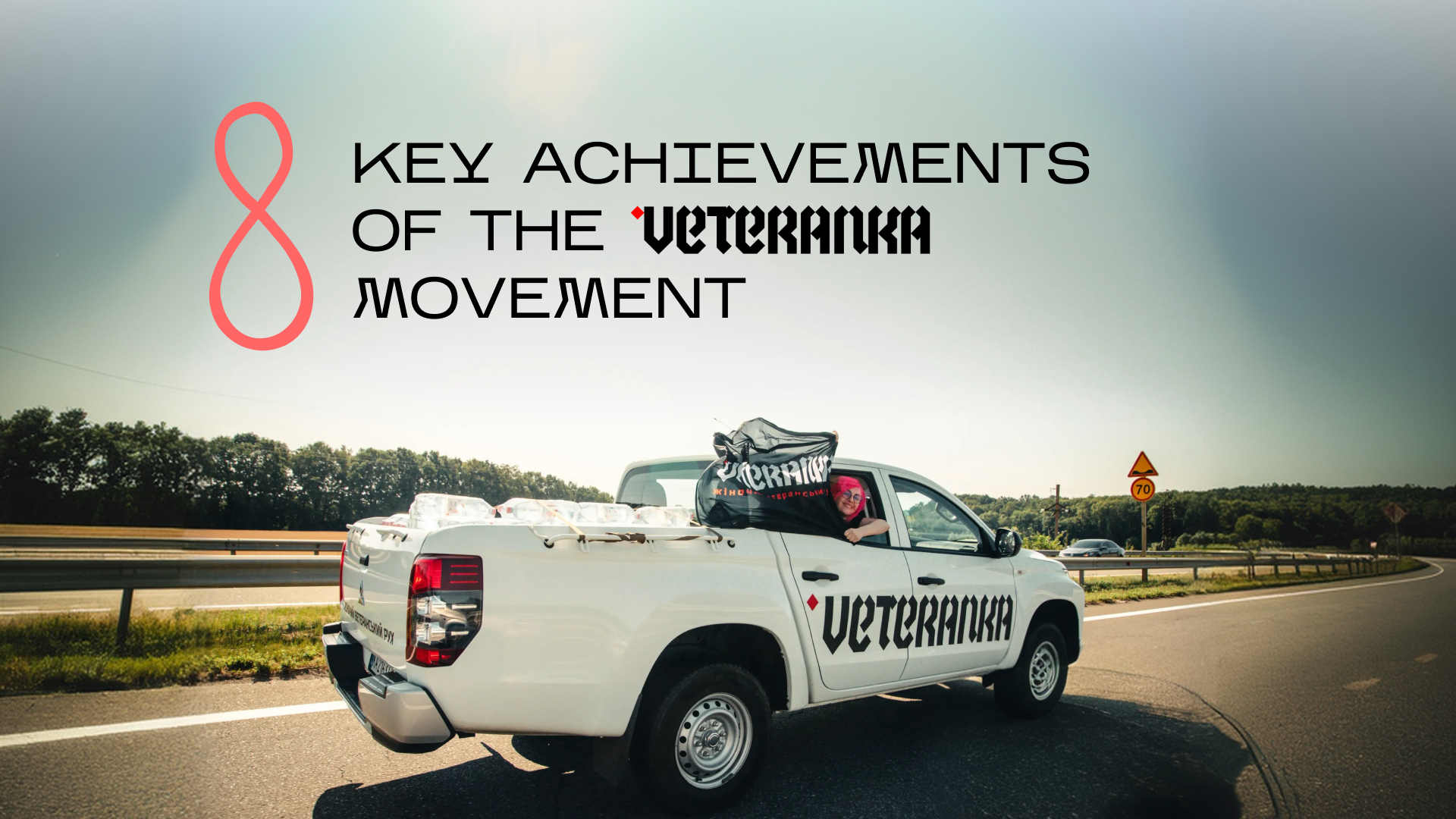 To Mark the 8th Anniversary of the VETERANKA Movement
 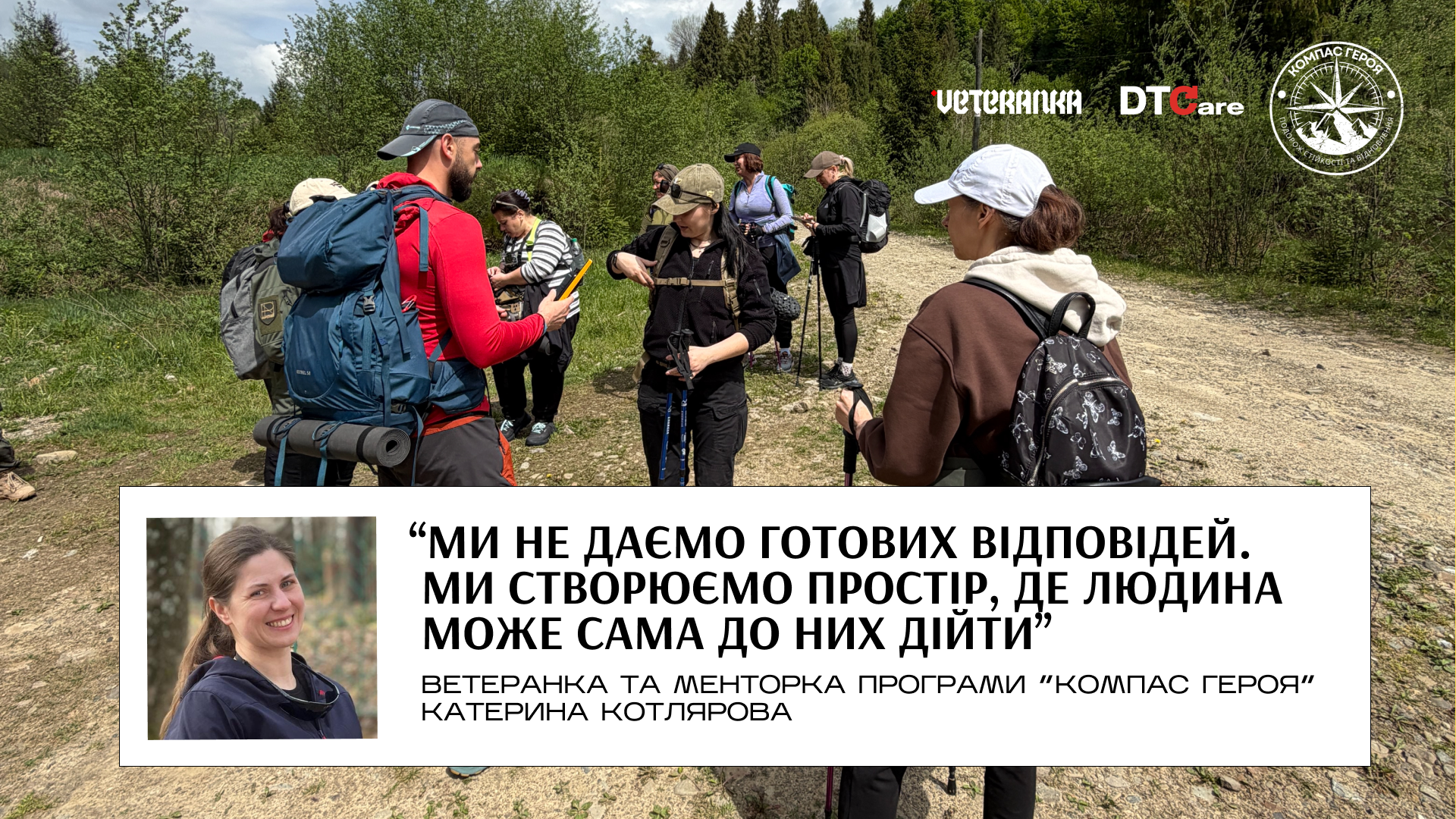 What Awaits Participants of the Hero’s Compass Adventure Counseling Program
 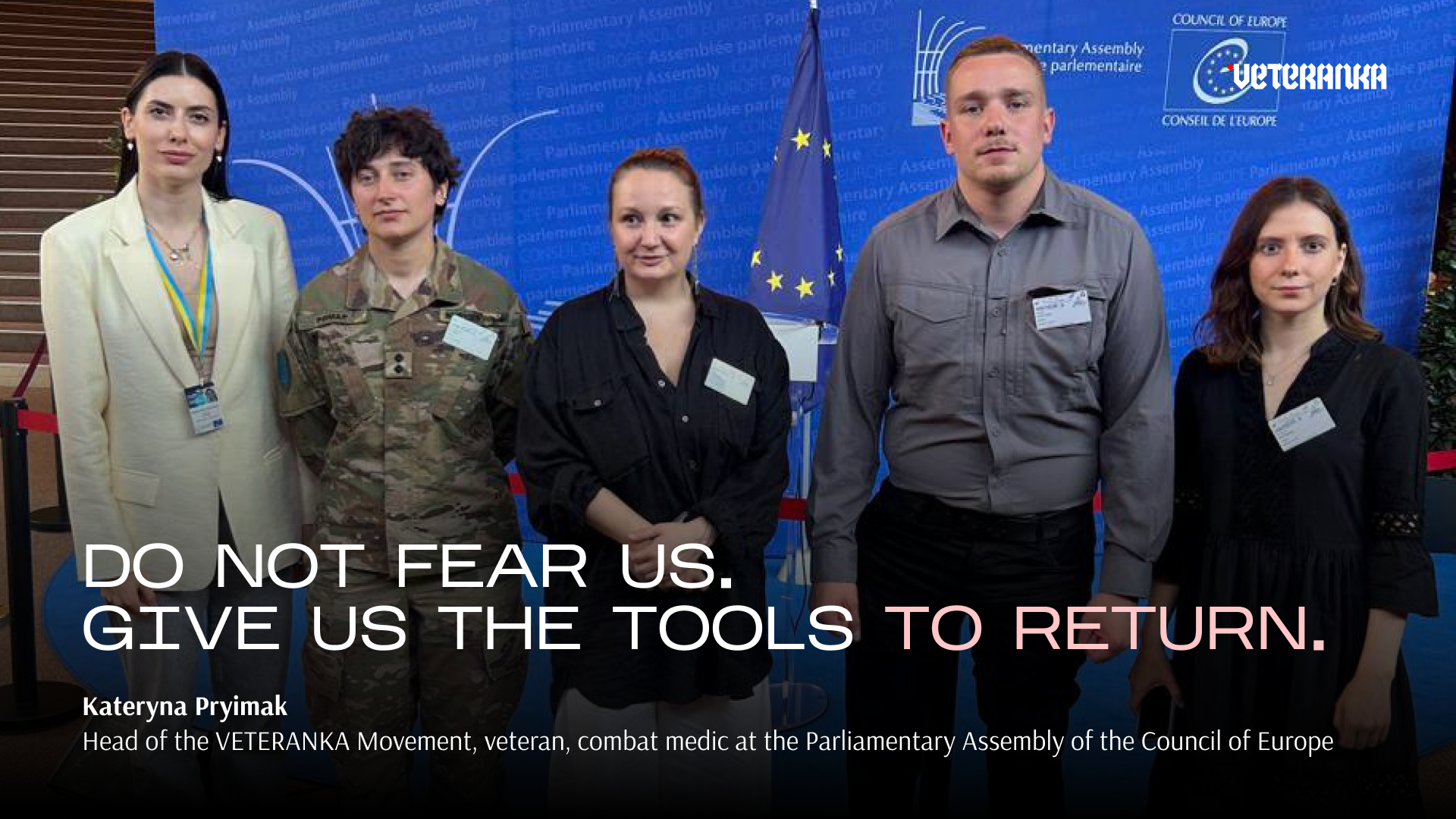 "Do not fear us. Give us the tools to return"
  “Life does not end after service — it becomes different”
  We strengthen evacuation efforts on the most difficult sections of the front and delivers the unique robotic complex “Maul”