For Mother's Day

This Mother’s Day, we want to express our respect and admiration for mothers in the army. You made a difficult choice when you went to defend the country, being aware of all the risks and complications that could happen in your family’s life. The most difficult test is being away from your children. We embrace each of you, are proud of you, are inspired, and call on every Ukrainian man and woman to respect the conscious choice of mothers in the army. We have only one common enemy, let’s remember the price of our freedom and thank everyone who fights for this freedom and us.
Why didn’t they stay in the rear, how did they experience being away from their relatives, and the main motivation to go and defend the country – told with the examples of three of our women:


Marina “Little”, a senior signaller, telephone operator of the company that defends the country on the front line, mother of three boys aged 7, 12, and the eldest 22-year-old son defended Bakhmut, now in the hospital with a shrapnel wound: “I decided to go to war in the first minutes of February 24, when the full-scale invasion began.The path was not easy, they didn’t want to take me without military experience, so I went to the military commissariat over and over again for a month. I left the younger children with their grandmother. Now, when I get sad, I look at the photos of my kids, and I get in touch with them thanks to Starlink via video call. When the eldest son was in Bakhmut, he could not get in touch for weeks, I was very worried. When I managed to contact him, I finally could breathe again knowing he was alive and healthy, – that was pure happiness. Let’s hold on, we are strong!
People who criticize us for abandoning our children are only looking for an excuse for themselves. Like most men, they did not go to fight, so they say it’s because they have children, they have families, they have to take care of them. You don’t need to look for excuses here, you need to pull yourself together, find strength in yourself, and go to defend your country, and your children. There is no need to criticize those of us who did exactly that.”


Iryna “Unbreakable” Terehovych, aerial scout, commander of the third reconnaissance unit of the mountain assault battalion. Iryna has been serving in the first positions of the front line since 2015 together with her husband. She is a veteran, mother of two daughters aged 23 and 19, and a 5-year-old son. She says that it is impossible to combine service and motherhood, the children stay with their grandmother, and the younger son is taken care of by the older daughters.
“I am seeing the weird tendency: after a full-scale invasion has begun, a big percentage of men in my region turned out to be disabled (only by documents). Such a sad statistic, nowadays there are few men who think specifically about their country, about the future of their children. I personally want to protect my children so that they live in the free country that we are fighting for – without the corruption that is developing. So that my descendants can live peacefully in Ukraine so that no one can come and hurt them. We mainly communicate with children by phone now. It’s hard for them, it’s hard for me, they worry that something might happen to me. So we have to be careful, if only for their sake, to see how our grandchildren grow.”


Alisa “Destiny” Shramko, a medical instructor of the volunteer territorial defence group in Fastiv city, a sub-instructor of the volunteer battalion of Hospitaliers, mother of two daughters, the youngest was born during the full-scale war. Alisa is an experienced combat medic, since March 2022 she has taught tactical medicine being 6th pregnant. That was the time she realized that in the territorial community where she moved to for the safety of the children, there are no medics capable of working on the battlefield, except for her. She signed a contract with the local voluntary formation of the territorial community. First pregnant, and then with a newborn daughter, from the beginning of the full-scale invasion, she taught a couple of thousand soldiers of adjacent units and others to provide first aid. She organized a stabilization point, and an evacuation vehicle, prepared to provide medical support in case of active military action.
“I understood that I was needed in action, not in a hospital. Despite the pregnancy pathology, I refused any hospitalizations and worked until the end. When I came for a planned cesarean section, doctors told me that I came late, that people don’t live to such a term with my diagnosis. A month after giving birth, I continued teaching. I asked friends, acquaintances, and volunteers to stay and help with the baby. My little one was involved in such a life from birth, became my assistant, visited various barracks, places where training took place, surprised everyone and created an unforgettable atmosphere.”
Alisa admits that she hid her pregnancy in front of the trainees because she was worried that her authority would lower in the eyes of the fighters. It was necessary to quickly gain leadership in the new all-male team.
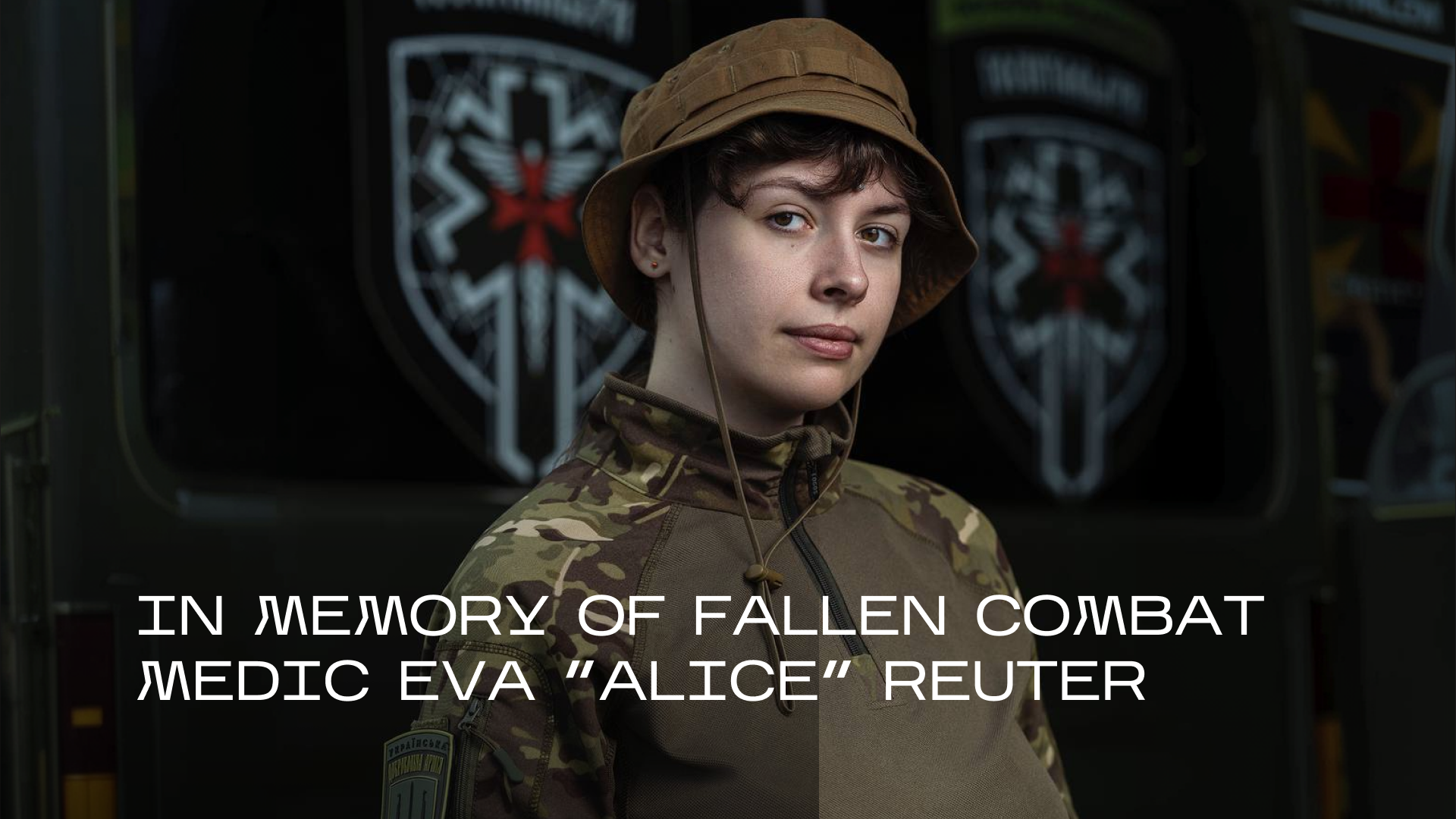 An art historian who became a combat medic, mastered drone repair, FPV drones, 3D printing, led international recruitment, and coordinated a major educational project
 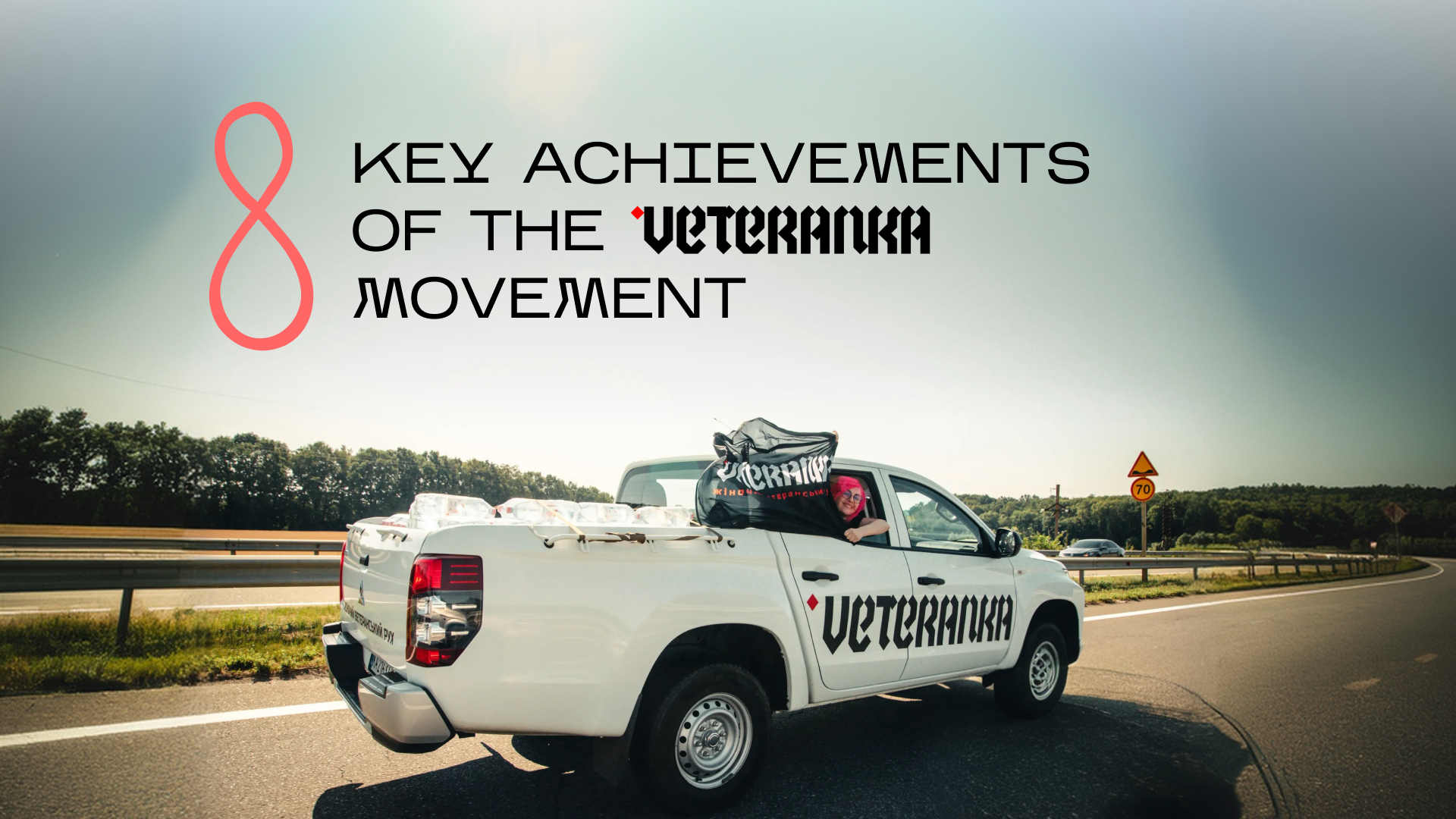 To Mark the 8th Anniversary of the VETERANKA Movement
 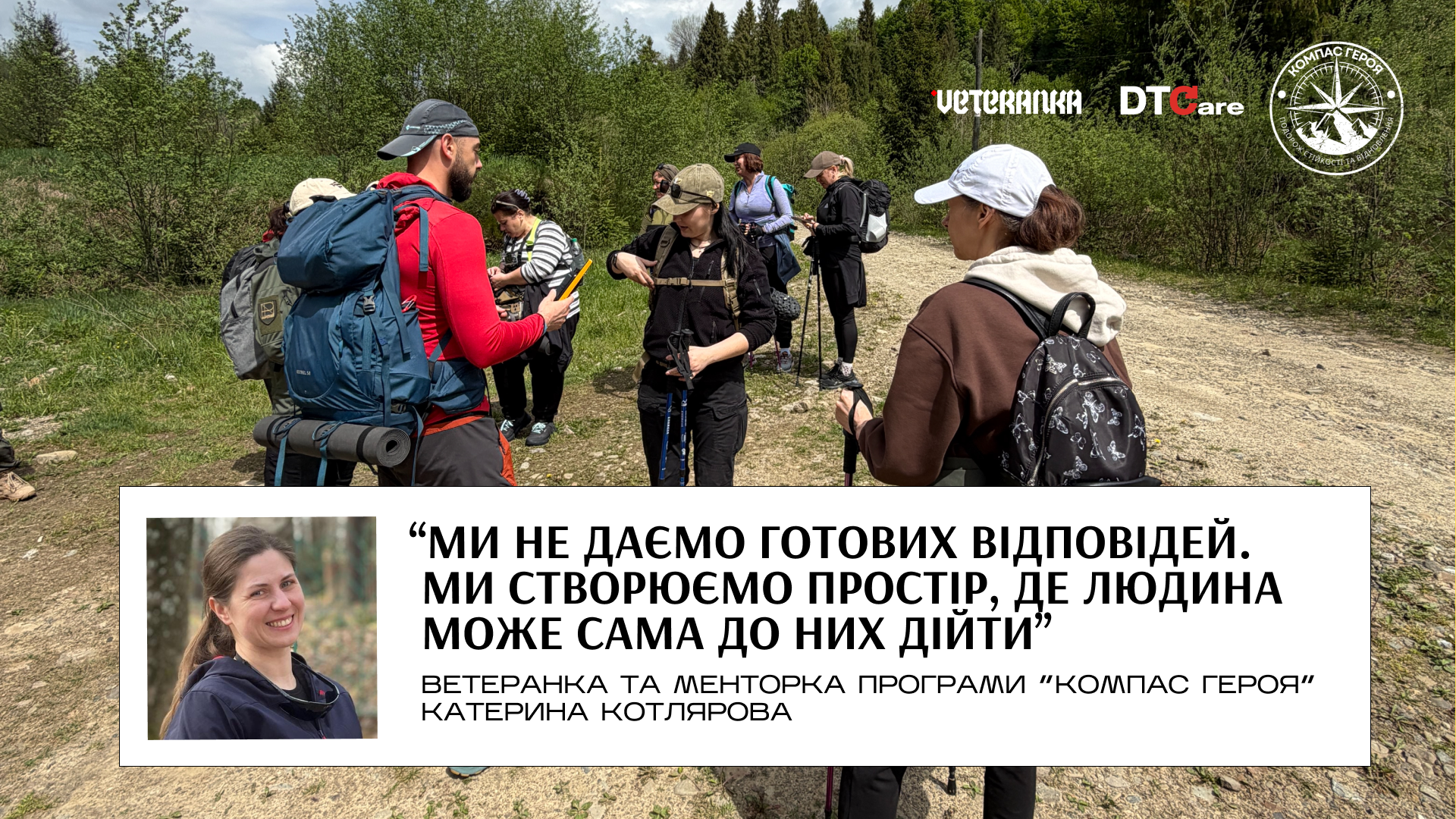 What Awaits Participants of the Hero’s Compass Adventure Counseling Program
 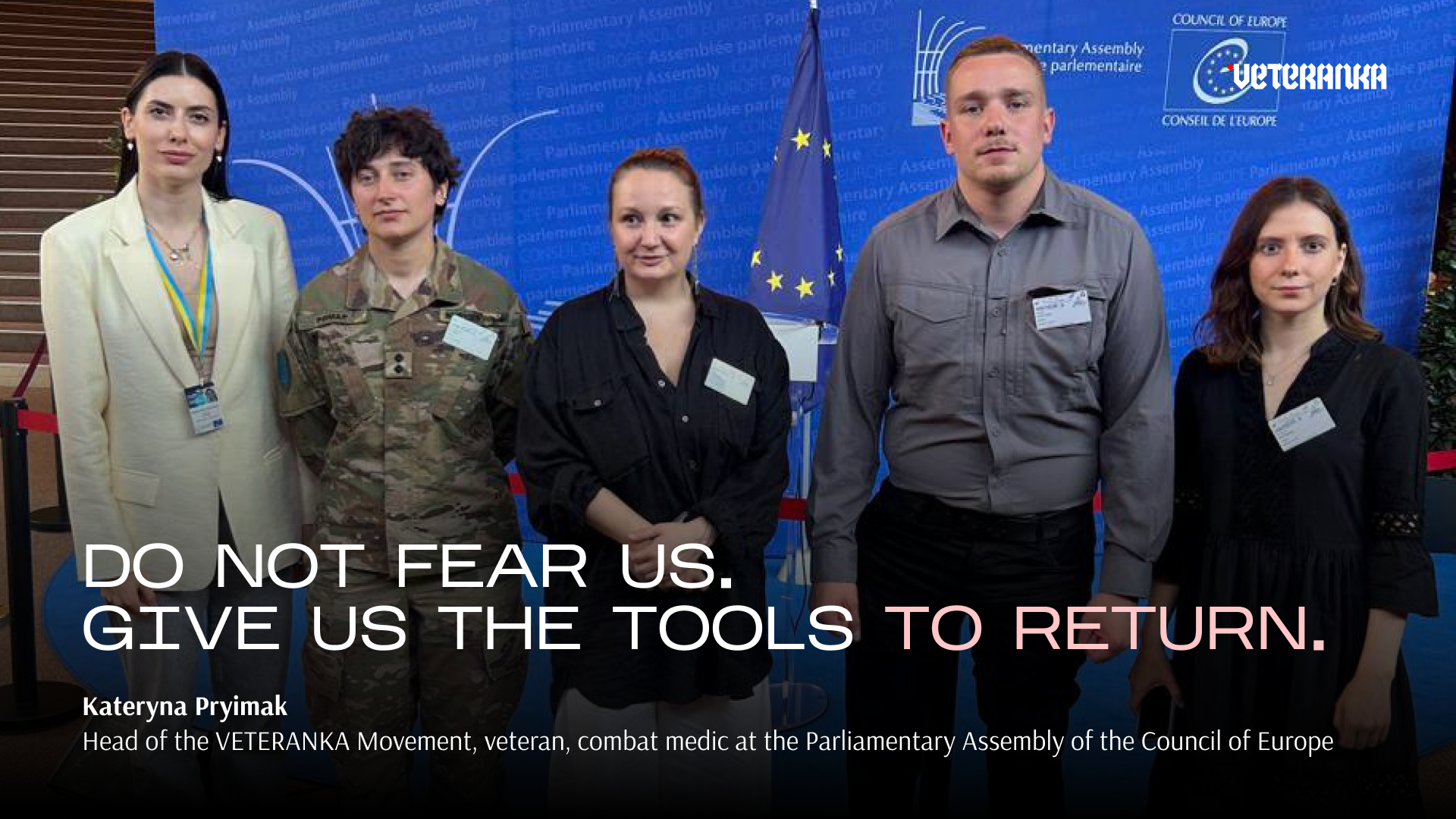 "Do not fear us. Give us the tools to return"
  “Life does not end after service — it becomes different”