At last, my children proudly say their mom is at war — they’re no longer ashamed of me

The heroine’s call sign has been changed to protect her identity.
Vatra serves in Ukraine’s Defense Forces. She’s a mother of two — a son and a daughter.
From the first days of Russia’s full-scale invasion, she helped the military as a volunteer, and in May 2022 officially joined the Armed Forces.
At the start of her service, she faced judgment and disbelief: “Why did you go there? What for?” Her son was even told by his peers that he was “motherless.”
Following her husband to the front
After February 24, 2022, Vatra began volunteering — delivering humanitarian aid to cover soldiers’ basic needs. She has now served in the Armed Forces for over three and a half years, with deployments in the Kharkiv, Donetsk, and Dnipropetrovsk regions. Today, she handles financial support within her military unit.
More than 1,200 kilometers separate her from home and her children. But what feels even greater, she says, is the distance between herself and society.
“The moment I joined the army, I felt judgment everywhere,” she recalls.
“Everyone kept asking, ‘Why did you go there?’ ‘Why did you leave your children?’ They spoke as if the war were somewhere far away. I still face this, especially from women whose husbands stay safely at home.
And there’s another topic people like to bring up — money. They ask with a smirk: ‘So, are you making a lot in the army?’”
“My son was called ‘motherless’”
The prejudice and painful remarks affect not only Vatra, but her children too. When she enlisted, her son was 12 and her daughter 7.
“For a long time, my kids didn’t tell anyone that both their parents were serving. They were ashamed — because, to some, a father who ‘bought his way out’ of service was considered successful. It took years to change that. I keep reminding my children of their rights as children of service members.”
“Two years ago, my son came home crying — he’d been called ‘motherless.’ I had no words. Parents must teach their children respect. Civilians should treat military families — especially the children — with understanding. We’re all vulnerable in different ways, and above all, we must stay human.”
She adds that many adults live “in their own bubble,” ignoring what’s happening around them — and passing that indifference on to their kids.
“Instead, we should be telling them the truth about the war, about what’s really going on.”
Fighting not only on the front line, but for rights at home
When she comes home on leave, Vatra is often invited to schools to speak with students — encounters that move her deeply. But there are also many frustrating moments, when she has to fight for what should be basic rights.
“In 2022, the city mayor announced that children of service members could attend a summer camp for free. But it turned out the benefit was only for those mobilized locally. Since I was mobilized from another city, my kids weren’t eligible. That made me furious. I had to explain to officials: it doesn’t matter where I enlisted — my children have the same right to rest.”
“Another time, only my younger child was getting free school meals, because she was in primary school. The older one wasn’t. I called the teachers, explained the situation… But it shouldn’t be like that — not when both parents are serving.”
“We all have our battles”
As a mother and a woman, Vatra wishes teachers and society showed more empathy toward children of service members.
“It shocks me that schools can’t seem to grasp what it means when a child’s mother is on the front. Even if I’m not in a trench — as civilians often imagine — I’m still defending my country. War isn’t only about weapons. There’s also the ‘paper war’ — mountains of documents and reports.
And still, people laugh when they hear I’m not on the front line, as if that means I’m not really at war.”
“Now my children are proud of me”
Her children, she says, had to grow up quickly.
“They had no choice. My son now takes care not only of himself, but also of his younger sister. Of course, it’s not easy — there are challenges. But I’m deeply grateful to our friends, who help — taking the kids to the doctor, shopping with them…
And now, finally, my children proudly say that their mom is at war. They’re no longer ashamed of me. It’s been a long road to that understanding,” Vatra says.
 To Mark the 8th Anniversary of the VETERANKA Movement
 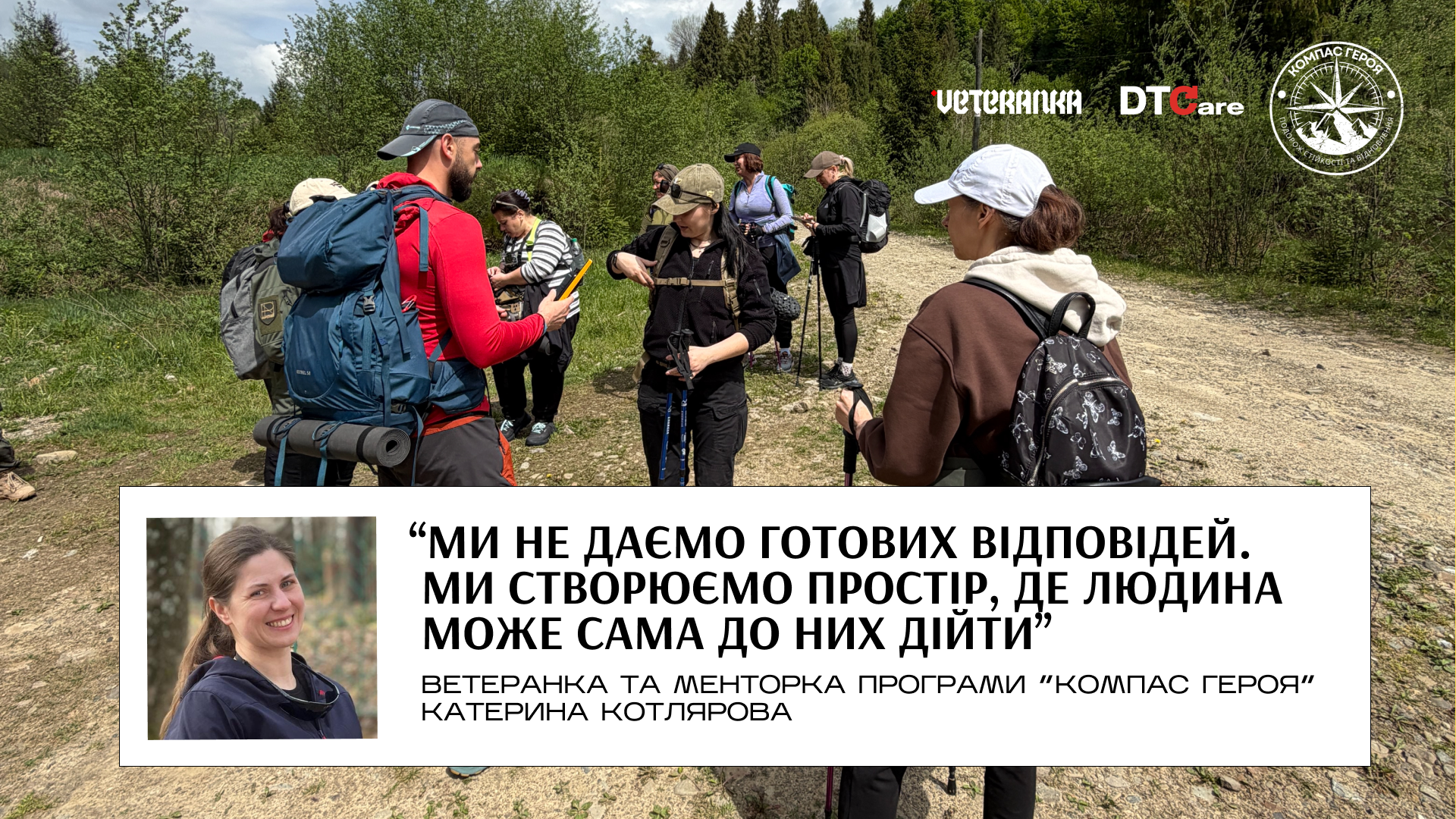 What Awaits Participants of the Hero’s Compass Adventure Counseling Program
 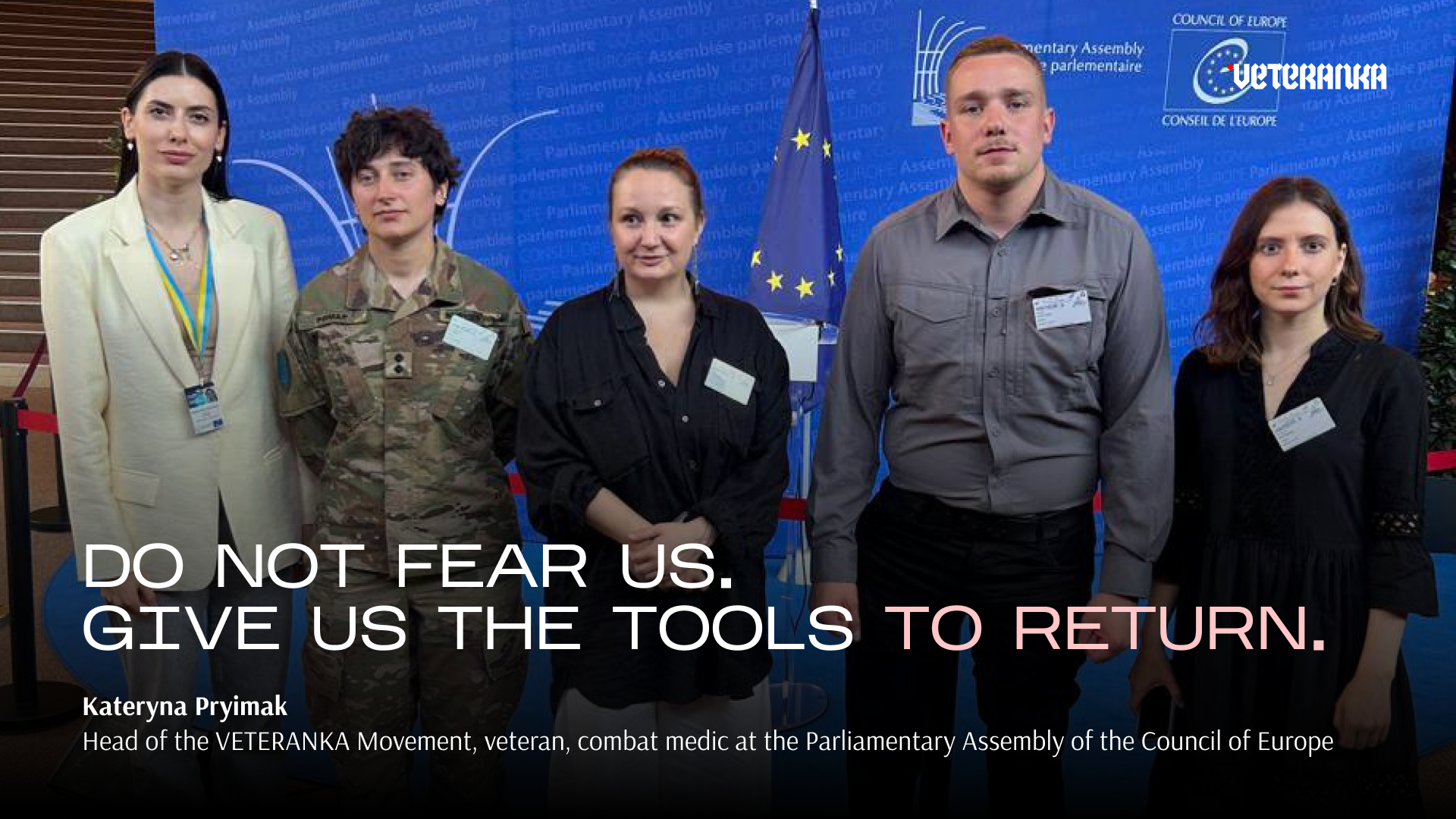 "Do not fear us. Give us the tools to return"
  “Life does not end after service — it becomes different”
  We strengthen evacuation efforts on the most difficult sections of the front and delivers the unique robotic complex “Maul”