“While I’m serving my country, my child faces prejudice”

Her military journey began in 2015.
Unable to stay aside, Yuliia joined the Armed Forces to defend Ukraine. Among her comrades, she’s known as Bilka — “the Squirrel.” For her two daughters, she’s simply mom. Yet, her choice to serve has brought not only pride but also painful judgment: “She left her children,” “She serves instead of raising them,” “She should be at home.”
A defender and a mother
Throughout her service, Yuliia has taken on many crucial roles — from aerial reconnaissance to logistics. Since the first days of Russia’s full-scale invasion, she has served on the Donetsk and Kharkiv fronts.
Now she is responsible for the armament and equipment of special units within one of Ukraine’s mechanized brigades — a position surrounded mostly by men. Despite the hardships, she continues raising her daughters and living for their future.
“Your mother doesn’t raise you!”
The wave of accusations began with a conflict among children. The mother of one classmate filed a bullying complaint — and blamed Yuliia’s military service, claiming she “doesn’t take care of her child.”
“It’s painful to realize that even in peaceful cities, there are people who don’t value or understand what a military uniform stands for,” Yuliia says. “It’s especially hard to hear my child being told: ‘Your mother doesn’t raise you.’”
This is a common bias faced by servicewomen who are mothers — where a child is seen not as an individual, but as ‘a soldier’s child.’
Service is not a reason for stigma
According to Yuliia, the woman who made the complaint never tried to talk and resolve the situation — she simply avoided any contact.
“It feels as if my service strips me and my daughter of a normal life,” says Bilka. “While I’m fulfilling my duty, my child faces prejudice. But it should be the opposite — our children should feel supported and protected because we’re here, serving.”
We must protect our children
Every mother who joins the army faces a difficult trial, Yuliia says. “You’ll always feel torn, always guilty. But someone must defend this country — and our children.”
“To those who accuse servicewomen of ‘abandoning’ their kids, I’d say: let’s switch places. Try packing your things and coming to the front, and I’ll go home. During war, protecting children means defending them through the Armed Forces — that’s the only real protection. Society must understand this.”
A mother’s heart is always with her children
Every woman defending Ukraine today, Yuliia believes, is setting an example for her children — an example of courage and love.
“Yes, while I’m serving, I can’t always be there — can’t hold or kiss my daughters every day. But I do everything I can to make them feel my support,” she says.
“When it gets hard, when I feel like I’m sinking emotionally, I call my children. It’s like being reborn. I’m a soldier — but I don’t want my kids to cry because of people who can’t respect mothers who fight for their country.”
Society must honor mothers who serve
Yuliia believes that society must respect and support those who defend it — and hopes that her words reach every mother in uniform.
“To every servicewoman, I want to say: hold your head high. Be proud to wear the uniform and to fulfill your duty alongside men. Never forget that you are a woman — and a woman means strength. Always believe in yourself. When your children say they’re proud of you — that’s the most important and precious thing of all,” says the Ukrainian defender.
 To Mark the 8th Anniversary of the VETERANKA Movement
 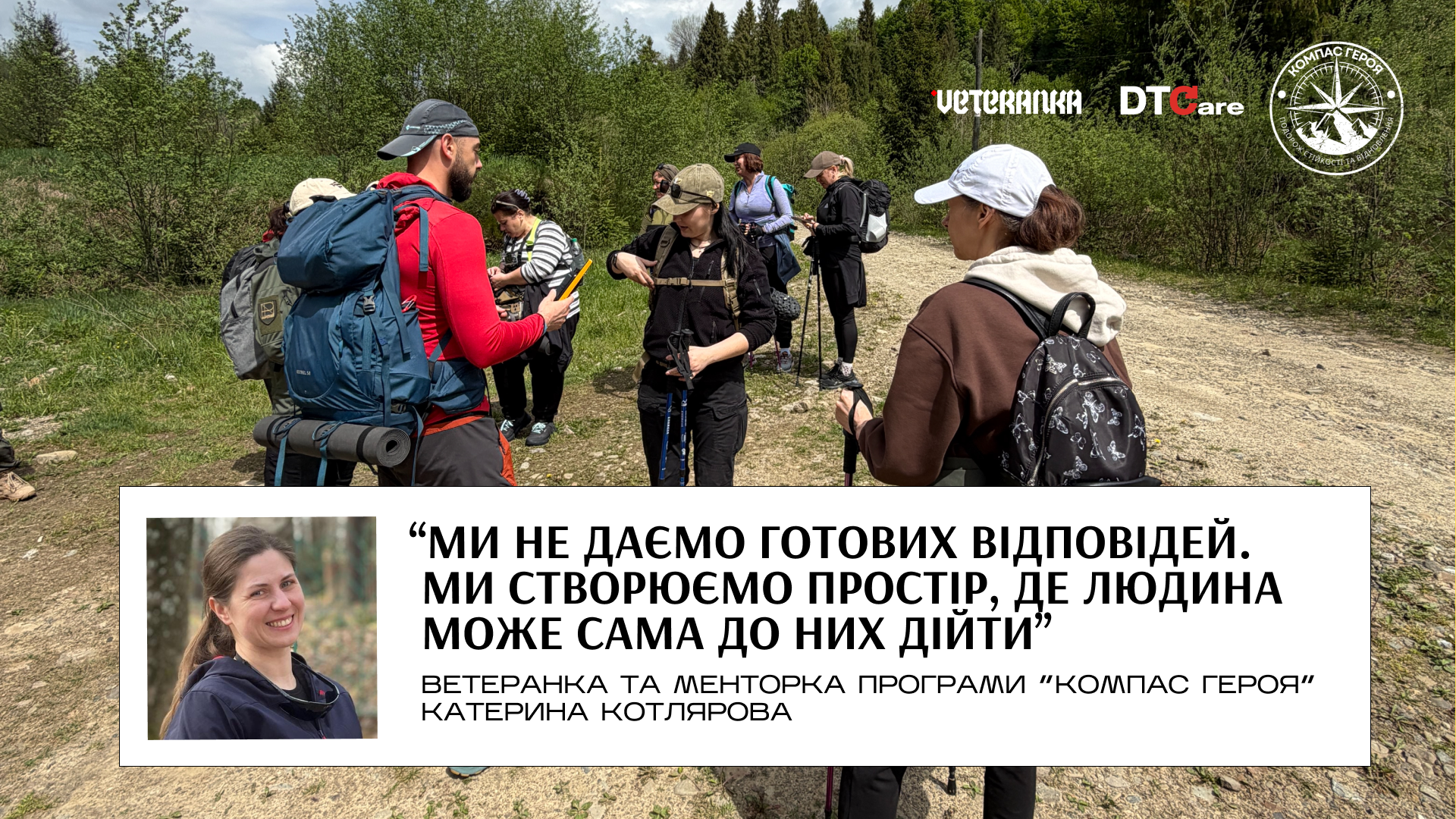 What Awaits Participants of the Hero’s Compass Adventure Counseling Program
 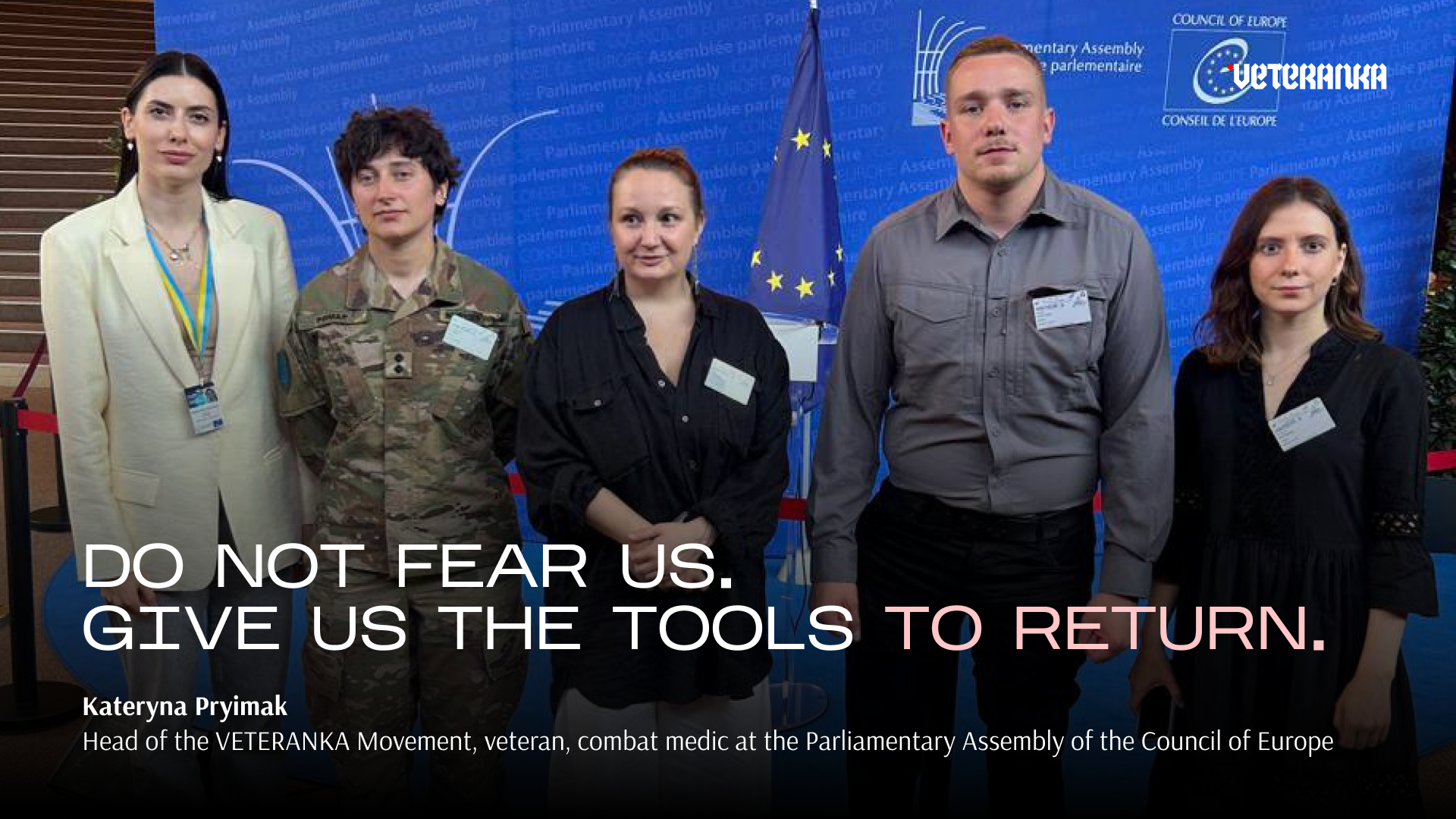 "Do not fear us. Give us the tools to return"
  “Life does not end after service — it becomes different”
  We strengthen evacuation efforts on the most difficult sections of the front and delivers the unique robotic complex “Maul”