Sisters in arms. Anna Kuzminchuk

At the age of twenty, in 2014, Anna volunteered for the evacuation crew of the 25th Separate Mechanized Brigade “Kyivska Rus”, all while pursuing her studies. Engaging in water purification and scientific endeavors, by the age of twenty-eight, she officially joined the ranks of the Armed Forces of Ukraine. As a junior sergeant and paramedic, Anna Kuzminchuk shares her insights on the feminine side of tactical medicine, legalization, preparing for service, and sisterhood.
How did you end up in the military and what position did you hold compared to what you actually did in the military?
On February 24th, I gathered with the guys from the 25th Separate Mechanized Brigade “Kyivska Rus” and other volunteers of the unit at the designated location, part of the Territorial Community Volunteer Formation. Here, I was essentially responsible for the medical service. Later, there was another deployment, but it ended when I officially joined the Armed Forces as a rifleman, where I continued to perform the same functions. Eventually, I was assigned the position of a paramedic in the medical unit. We’re on duty. Fortunately, sexism has never been and is not a factor in medical roles.

Three Pieces of Advice for New Recruits: How to Prepare for Service?
- Avoid Idealizing the Military for Yourself, as it’s Far from Perfect.
- Prepare Yourself:
- Undergo basic medical examinations, including dental check-ups and vaccinations.
- Independently gather desired footwear, gear, and other essentials, as supply lists are readily available today
- If Possible, Choose a Unit Independently.
Who do you consider a “hero” in this war, and why is it important not to idealize the military and its personnel?
We traditionally lack living heroes. For me, every single part of the military truly constitutes a hero. It’s the guys in the trenches, the commanders capable of preserving personnel and accomplishing their missions, the cook working in the relative safety of the rear to ensure everyone is fed, and the clerk who goes without sleep for three days to prepare stacks of paperwork. It often doesn’t look heroic at all, but they are all integral pieces of the heroic Armed Forces.
“Idealizing the military and its personnel is not advisable, especially if you’re considering joining or offering your assistance, because it may not turn out to be as rosy. In the military, bureaucracy manifests itself in various ways, and there’s also a notable prevalence of alcohol and drug abuse. War exposes everything, including childhood traumas and susceptibility to alcoholism. I’ve had quite an interesting experience observing volunteers from entirely different social backgrounds, with different value systems. It’s sometimes enjoyable, but often quite poignant.

How do you cope? I’m sure there are many triggering moments.
Honestly, it’s the job that keeps me going, while simultaneously wearing me down. When the three-hundredth individual arrives at the stabilization point, treated, pain-managed, and most importantly, alive, it brings incredible joy. When you collaborate with a team to aid the recovery of those with concussions or illnesses, and you see them start to function more effectively, it’s heartening. When you persuade a stubborn case to tough it out with the guys, to be hospitalized because you see that it’s getting worse for them, you feel relieved, knowing they’ll come back, suffer a little less, and be a bit more effective.
It’s emotionally draining:
- The lack of appreciation for the work, ‘What the heck am I doing here right now, while someone else is slacking off,’ but that’s more of a trauma.
- The paperwork is demanding – handling cases involving the wounded, injured, and sick.
- Avatars and addicts are exhausting because they bring unpredictability, which could be avoided.”
Providing military personnel with clothing and underwear in the army is one of the issues advocated by the Women Veterans Movement: volunteers cover it, deputies hype it up, but how do you personally address this problem?
We had the option not to receive it if we didn’t need it. Yesterday they showed the issued summer sets – I liked the fabric quality, so I’ll take and have them tailored. The uniform is either bought or tailored from men. I actually quite like the summer uniforms.
But overall – yes. It’s truly a huge problem that I can’t just come and get a uniform in my size. Why do I have to spend time and money on this? Even if there were 100 women in the Armed Forces, they should have the right to it.
Underwear is a separate topic altogether. I suspect that this issue will never be resolved as long as they attempt to address it in a centralized manner.

How has the war changed you?
I still don’t fully understand it. But when you have a job you love, invest in a child you love more than anything, and then you realize that a war, the scale of which you can’t estimate, is about to begin – something changes. You gather your child’s things and send her to her grandparents; on February 24th, you tell work that you won’t be coming in today because something serious has happened, and then you look for someone to take care of your cats and dog. Something changes. Then you take on responsibility, and even more responsibility, and even more responsibility. I’m constantly changing, but right now I feel that after the war, I want more from myself. I want to give more of myself to my child, I want to finish my dissertation. It’s not like it was in 2015. I’m changing in a different way. I suspect that even my values have shifted somewhat.
What does the Women Veterans Movement and sisterhood mean to you?
First and foremost, it’s about understanding each other. It’s a place that managed to bring together a great many women in the military, providing support and the opportunity to achieve more through collective efforts.
A pregnant sniper and the media hype around women in the military. What are your thoughts on this? It’s also about the accurate portrayal of a military woman and avoiding stereotypes.
Well, if she’s pregnant, that’s her personal decision. I didn’t like the media hype because it seemed like yet another unpleasant ghost haunting the protectorate. Yes, we love to engage in this sort of thing, but in general, our society loves extremes in everything, because it hasn’t fully adapted to the modern world yet. At my home in the west, for example, people still give sideways glances to women who raise children on their own. So, a man who knows all the brothels in Kramatorsk is fine. But a woman who’s in a relationship – she must be trying to find a husband in the army.

As a paramedic, do you believe that legalizing medical cannabis as a rehabilitation option after the war would be appropriate?
It should have been done already, even yesterday. Marijuana doesn’t lead to aggression, nor does it disorient them. And, to be frank, based on my personal statistics, they tend to recover more easily after concussions with its use.
So, marijuana doesn’t scare me. What does concern me is chronic alcoholism and its consequences, both for health and for life. Drunken brawls, intoxicated accidents—I shudder to imagine the real statistics of the 200 who were killed by alcohol, not by the enemy. I’m also apprehensive about amphetamines and the notorious ‘bath salts,’ which often come hand in hand with alcohol and have equally dreadful consequences—people physically break down and deteriorate before your eyes.

How do you envision a mental victory for Ukrainians?
I don’t see victories yet, and I’m afraid that we won’t see one in the next 2 years. Mentally, for some, this war has already ended, just like it ended somewhere around 2016. I would like to see changes in the attitude towards collective responsibility for the state, because attitudes like “I’ll dodge the army” are just as toxic as attitudes like “I won’t pay taxes” or “Why can’t I mine amber?” But, honestly, I don’t expect this. I expect a lot of work, a lot of crime, and many years for people to internalize the values for which this war is truly being fought right now.
Valiko Korobkadze
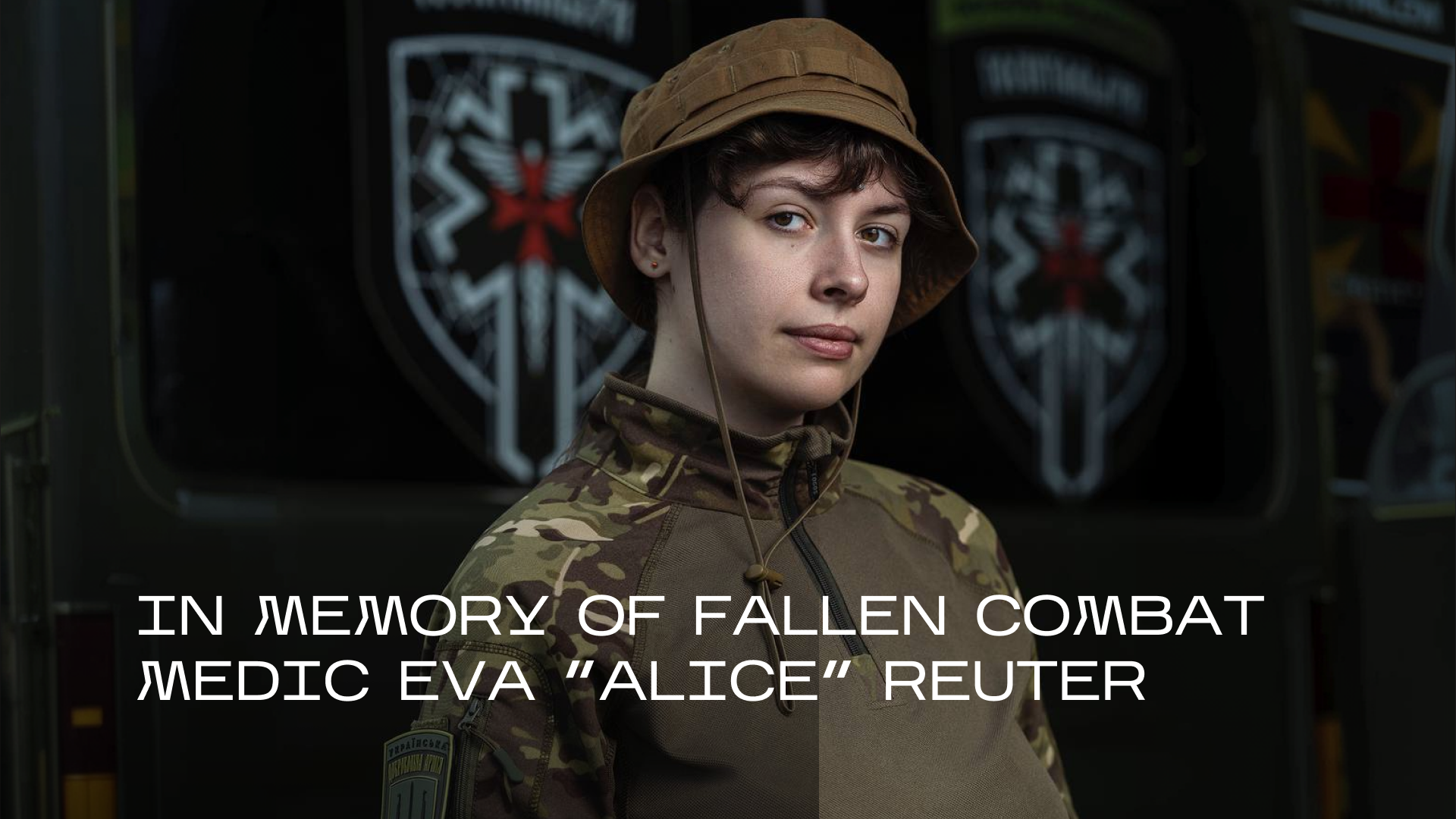 An art historian who became a combat medic, mastered drone repair, FPV drones, 3D printing, led international recruitment, and coordinated a major educational project
  To Mark the 8th Anniversary of the VETERANKA Movement
 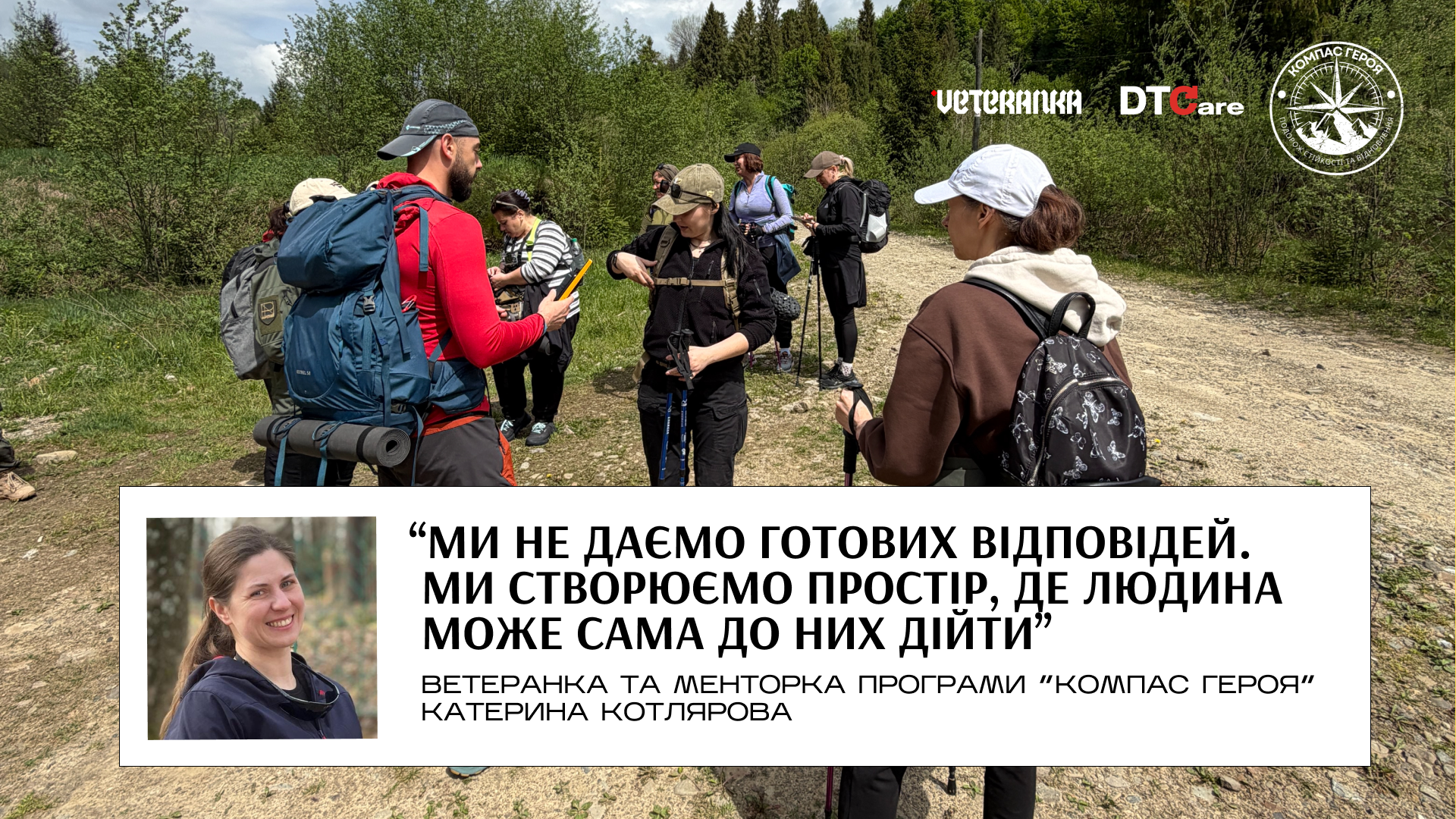 What Awaits Participants of the Hero’s Compass Adventure Counseling Program
 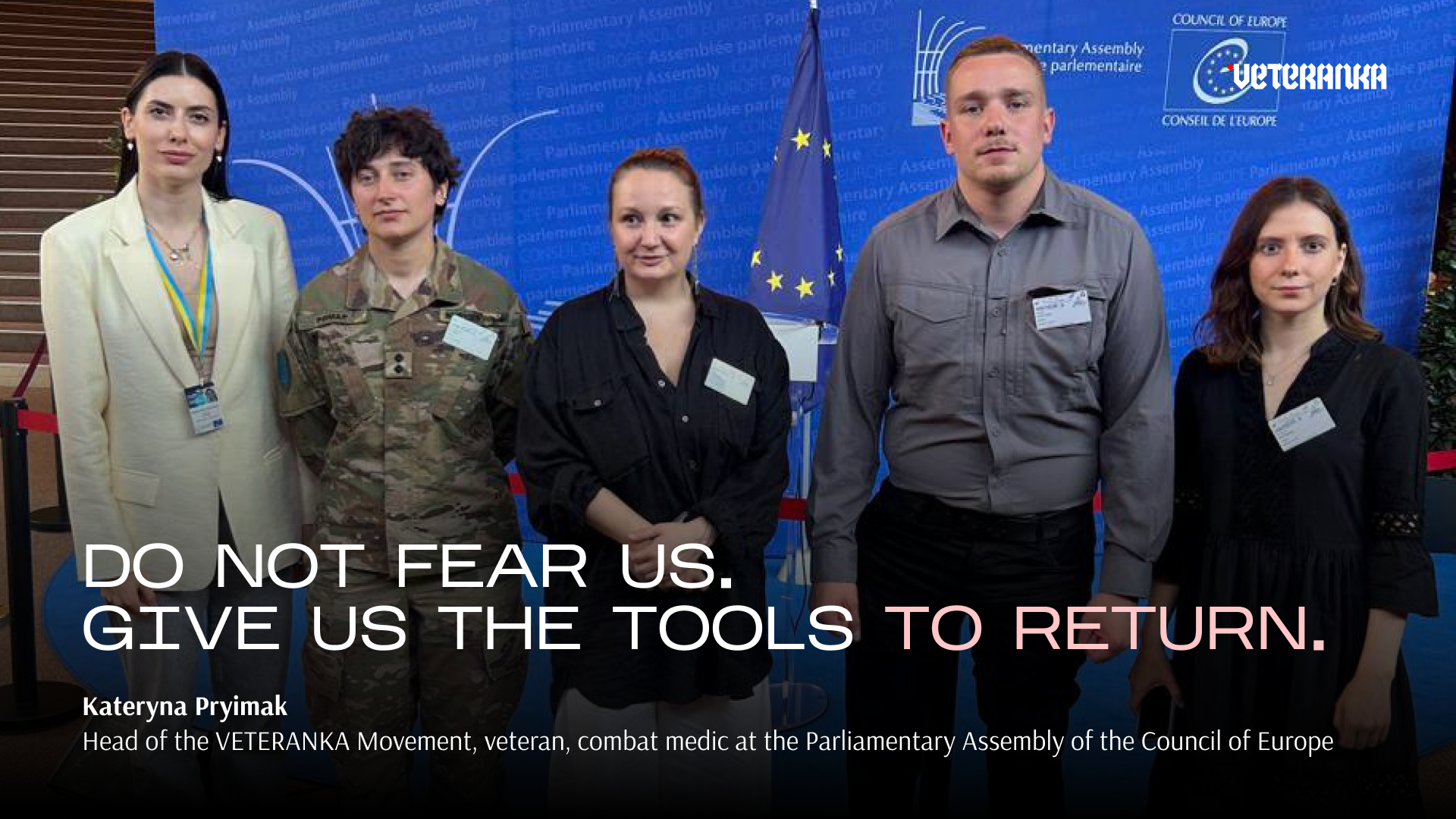 "Do not fear us. Give us the tools to return"
  “Life does not end after service — it becomes different”