Sisters in arms. Galyna "Pearl" Klempose

From volunteering to aerial reconnaissance: about the path of a volunteer from the Euromaidan(the uprising against pro-russian government in Ukraine 2013-2014, – editors’ note), sexism, ageism and “soviet union thinking” in the army, about building relationships in a male team and mastering a drone with the help of YouTube, – read all about it in our interview.
How and when did you join the army for the first time?
I joined the army for the first time as a volunteer in January 2015. At the moment, the Vinnytsia battalion “Horyn” was stationed at the Kramatorsk airfield, and I went there. I come from the Rivne region, Ptycha village.
After the war began in 2014, I was looking for a way to be useful. Coming to terms with the fact that someone was dying at the frontline, and I was sitting in the rear, was very difficult. At some point I got to know a few people in my village who were going to the front, I helped them to transport the military aid. Since then, I have begun to work for the benefit of the army.
Once there was an autumn holiday in Dubno, various communities organized fairs, and after this holiday there were many korovais left (korovai is a traditional type of bread, – editors’ note). I took them to the front line. The guys laughed when I got to their position with a loaf of bread and a towel, I bowed to them three times: “Mom asked, dad asked, and I’m asking you – eat a karavai.” (Ukrainian traditional saying while offering the traditional bread, – editors’ note)
I continued to go to the frontline like that until June 2016. And then “Shlotsyk” died, volunteers from Dnipro wrote me about a guy with a concussion, who refused to be hospitalized. I brought aid and thought that I would stay in the Right Sector for a week or two at the most, observe this guy, and bring medicine. But I stayed as a volunteer. Later, after the death of Vasyl Slipak, we were given a choice – either we signed the contracts or we withdrew from the position. Of course, the commanders decided to stay and fight and I joined the ranks of the Armed Forces.
On August 3, I officially signed the contract. My commanding officer promised me that I would have the opportunity to finish my studies because I was a student. We served in the 1st Mechanized Battalion of the 54th Separate Mechanized Brigade.

What position did you hold?
I signed a contract as an orderly gunner. They offered me to attend officer courses. But we all did different work. I was a liaison officer, logistician, engaged in rear support, documentation, and weapons accounting in the unit. All of that was a huge amount of work.
“Right sector” consisted of one company, one mortar and half of the second company. When the storming of the forest in Svitlodarka occurred, they wanted to disperse us to different divisions, but “Right Sector” announced a hunger strike. In the end, we ended up in the 46th separate battalion “Donbas – Ukraine”. There were 38 of us – the “craziest” ones who fought under the red and black flags.
In the 46th Battalion, I initially took up the position of a grenade launcher, because during the exercises I hit the tank models most accurately. Later, when the company commander (now deceased) called me for an interview, he appointed me to the position of sergeant – the company’s health instructor. The battles in December 2016 made me understand that I am not afraid of blood, and capable to help heavily wounded.
Being a part of the 46th Battalion, we went to Chermalyk. It was a depressing time because there was no action there, and we did not understand why we were staying there. The volunteers gave us the copter. But when the guys got to know how much it costs, they were afraid to even touch it and take responsibility. But I did.
We had one position, that had been attacked by a machine gun heavily each night and we could not understand where it was all flying from. They asked me to come to them and check it out. It was my first reconnaissance flight. I had to cross the river, but the instructions say that you can’t fly a drone over the water. It seemed to me that the water would somehow affect the signal, the drone would drown, and $1,500 would go to the bottom of the river. But I piloted it 1.5 kilometers and turned it back. Since then, I began my journey to become a military drone pilot.

What was the most difficult thing for you?
There were no difficult tasks for me. If I had even been told to go into position and cover the guys with a machine gun, I would have done that. But they treated the girls very carefully there.
For me, the most difficult weren’t the tasks, but the internal struggle due to the commanders with a “soviet” mentality. The most difficult thing is the stupidity in the army. Especially when they start yelling at people according to the rules, and not according to brotherly virtues and normal humane morals.

How did you build your relationships in the men’s team?
Voluntary organizations were great because if the women stood side by side with the men, they stood side by side in everything. All was resolved through the spirit. If someone had told me something like “Your place is in the kitchen”, I would probably turn the pot over that person’s head. We had shifts in the kitchen, both men and women cooked.
It seems to me that women in war add comfort and cleanliness, no matter what shit we are in and no matter where we sit. We created comfort with our presence and advice. All of the dugouts were clean, warm kitchens were dug into the ground. Thought I understand that the guys can also do it without us. I saw the air defense forces, that laid rugs in the dugout, they took off their shoes and walked in slippers there.
When I joined the Armed Forces of Ukraine, I heard a lot of sexist remarks directed at me. Personnel officers could make a silly joke at my expense. They could ask: “How’s your manicure?”, when I was coming back to the training room from my position. I always answered rudely to such remarks. I would say that manicure salons do not come to where I am positioned.

Describe your career path in the Armed Forces of Ukraine
I served in the Armed Forces of Ukraine until September 2017. I came as a soldier and left as a soldier. I spent 4 or 5 months as a sergeant and as a company medicine instructor. I was considered to be a platoon combat medic when I was seconded to the deputy commander of the battalion artillery. My task was to climb as high as possible and fly as far as possible.
About women in the army. What problems did you face in matters of clothing and other everyday items?
I was issued my first uniform on October 14, 2016, when I took the oath. It was already a winter set of uniforms – warm pants, a jacket, upper trousers, and a coat. The uniform for women was comfortable. There was a puffy parka, there were no small-size army boots then, we received them at the end of 2016 – winter type, I still have them.
The only problem for me at that time as a woman in the army was the lack of t-shirts and underwear.
Later, another set of summer uniforms was issued, because the first set was made of denim. That uniform was also comfortable. The only disadvantage was that the coat shoulders were too wide, and the bottom was too narrow because it was made for men. But I never argued about the uniform. At the positions, we wore the usual cotton uniform – it’s light, and it’s not a big deal if it gets super dirty. And for some special events, we wore a better one.
Later, we were issued ripstop uniforms (ripstop is a type of fabric, more resistant to tearing and ripping, – editors’ note). The only drawback is the lack of drawstrings at the waist. We received our underwear and thermal underpants and just gave it to the men, that’s how big it was. Volunteers would bring us the correct size underwear, and we would also buy it ourselves. I was actually a type of a soldier, who would go to work in black ski pants. And I knew that I would get nothing for it. Or I could walk in the regular boots because I was cold.
The best thing for women in the Armed Forces would be bio-toilets because cystitis on the front line is something we get instantly.

How did you feel living in the same dugout with men?
I was comfortable with men. I was not ashamed of my guys, I would not, say, change my bra in front of them. The late soldier “Family Man” was constantly worried about us having hot water to wash. There was no sexual attraction or sexual innuendo towards us. “Right Sector” is about brotherhood and sisterhood at the highest level.
Cases when drunken officers entered women’s tents and tried to force them to do something happened in our Armed Forces brigade. Promotion is considered the best “punishment” in the army. That officer was promoted, and taken away from us. He asked that girl’s forgiveness, I gather.

How did you finish the service?
In the fall of 2018, my commander, the deputy commander of the artillery, offered me to lead a platoon of information collection and processing. Such a platoon includes aerial scouts and analysts. But on August 29, my father died, my younger sister was studying at the university, my older sister was with a child, and someone had to be with my mother. Now I would really like to return to the army, on February 24 2022 I was looking for options. Many friends called, and I had many offers. I considered, of course, aerial reconnaissance. My friend Yashka Tsygankov called me to work with him, but when he realized what kind of war this was, he called me and said that someone must survive. “Da Vinci” used to call me to his unit, but when he died, that option was closed. This is very troubling because I have fewer and fewer options.
Later, “Azovstal” started. My boyfriend is from “Azov”. I told him that I would go there, I knew someone who could drop me off in a helicopter. Such crazy ideas came to mind then. I promised him, after all, that I would not go serve until he was released from captivity. My fight for Ukraine turned into a fight for our people to be released from captivity.
Who are you without a uniform and without an army?
Officially, I work as an assistant to the People’s Deputy of Ukraine. I also am engaged in volunteer activities.I call myself a “conductor” because I connect people. I have a huge circle of acquaintances and this allows me to help people. In addition, I am involved in the activities of the Association of Families of “Azovstal” Defenders, where I work as a communicator to the public and the authorities, and organize various meetings.

What does sisterhood in the Ukrainian Women Veteran Movement mean to you?
When I got to know the girls, I realized that this sisterhood is a thing of incredible strength, because we are similar, we have the same motivation, common values, and realizing that we began to organise the first meetings of girls – female veterans.
The first projects were the meetings of the Ukrainian Women Veteran Movement all over Ukraine. While working with the organisation, I was involved in advocacy campaigns regarding the draft law on war crimes, we advocated this issue together with the Center for Civil Liberties.
For me, the organisation is about strength: to destroy the stereotypes about the weaker sex, and build something new, all about inspiration, a positive charge, and unity.


How do you see our victory and when do you think it will happen?
Victory for me is about pain, a deep understanding of the scale of the tragedy for the whole country. Of course, I want it to happen as soon as possible, but I am a realist, I understand that the people who were inspired to fight are all already serving in the army. And others, who sit in cafes, tired of the informational discussion on war, do nothing to replace inspired, but tired people. This is also very scary and painful.

How can we coexist: hundreds of thousands of veterans returning from war, and others, who are already tired of news and war?
This question has arisen already after 2015, when a lot of people were demobilized. Coexistence in an ideal world would be an outpouring of respect towards the ex-military, and no bullying. Civilians who have never been to hell, do not understand what that person has been through and how traumatized they could be. The next circle of hell awaits us, really. You need to be aware of this and prepare for it. And prepare society to know how to show their gratitude
Odarka Kozak
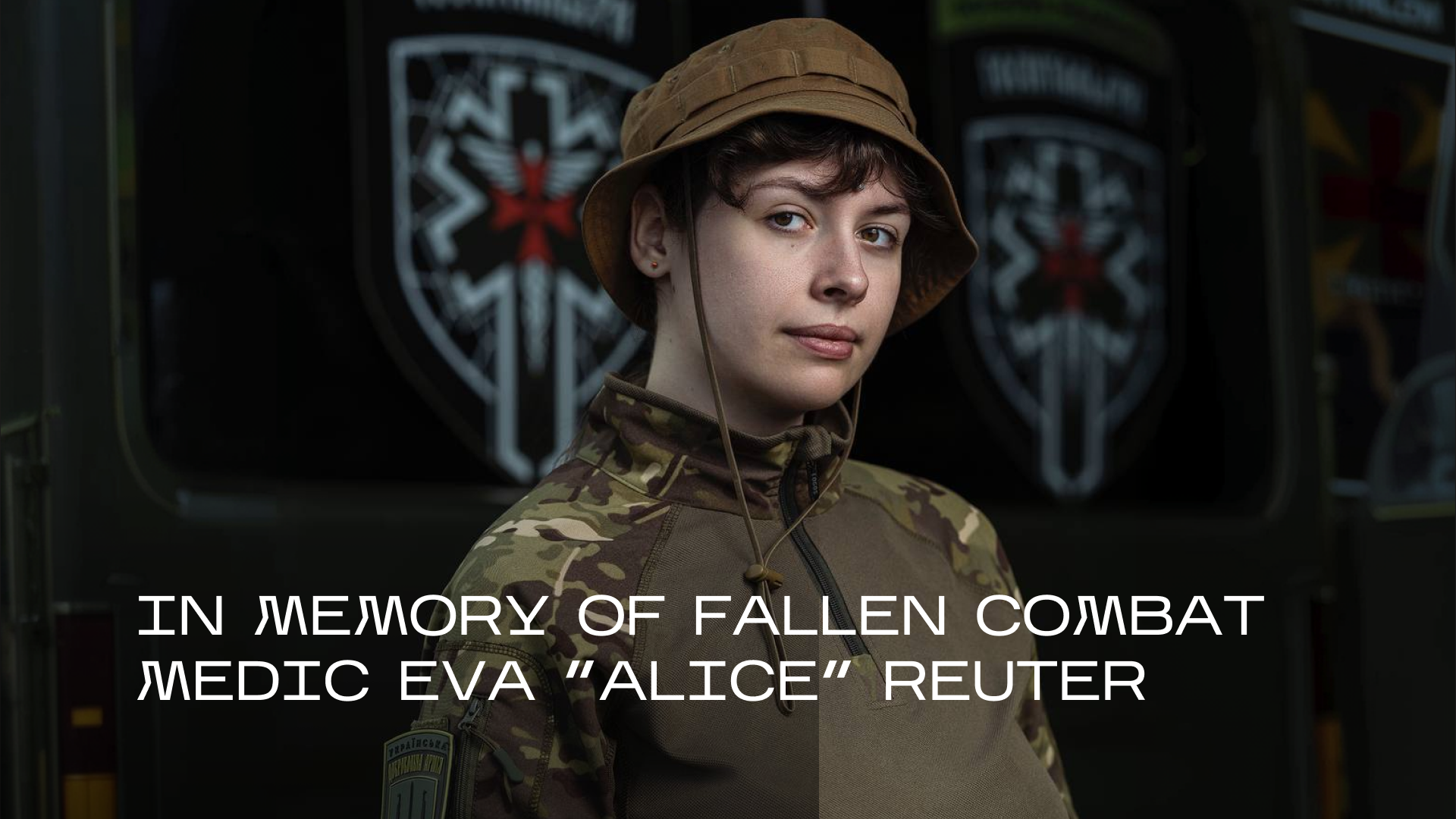 An art historian who became a combat medic, mastered drone repair, FPV drones, 3D printing, led international recruitment, and coordinated a major educational project
  To Mark the 8th Anniversary of the VETERANKA Movement
 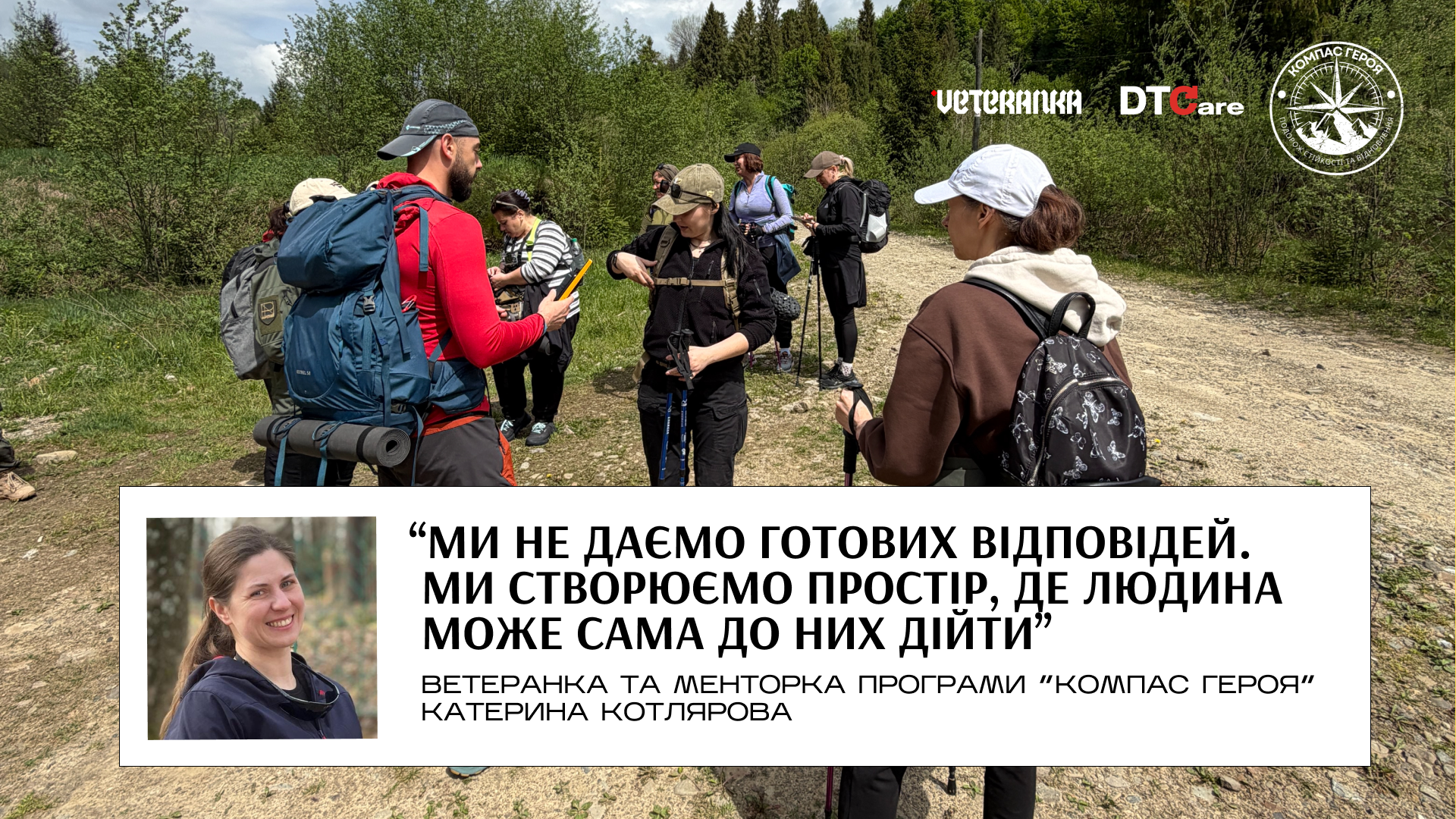 What Awaits Participants of the Hero’s Compass Adventure Counseling Program
 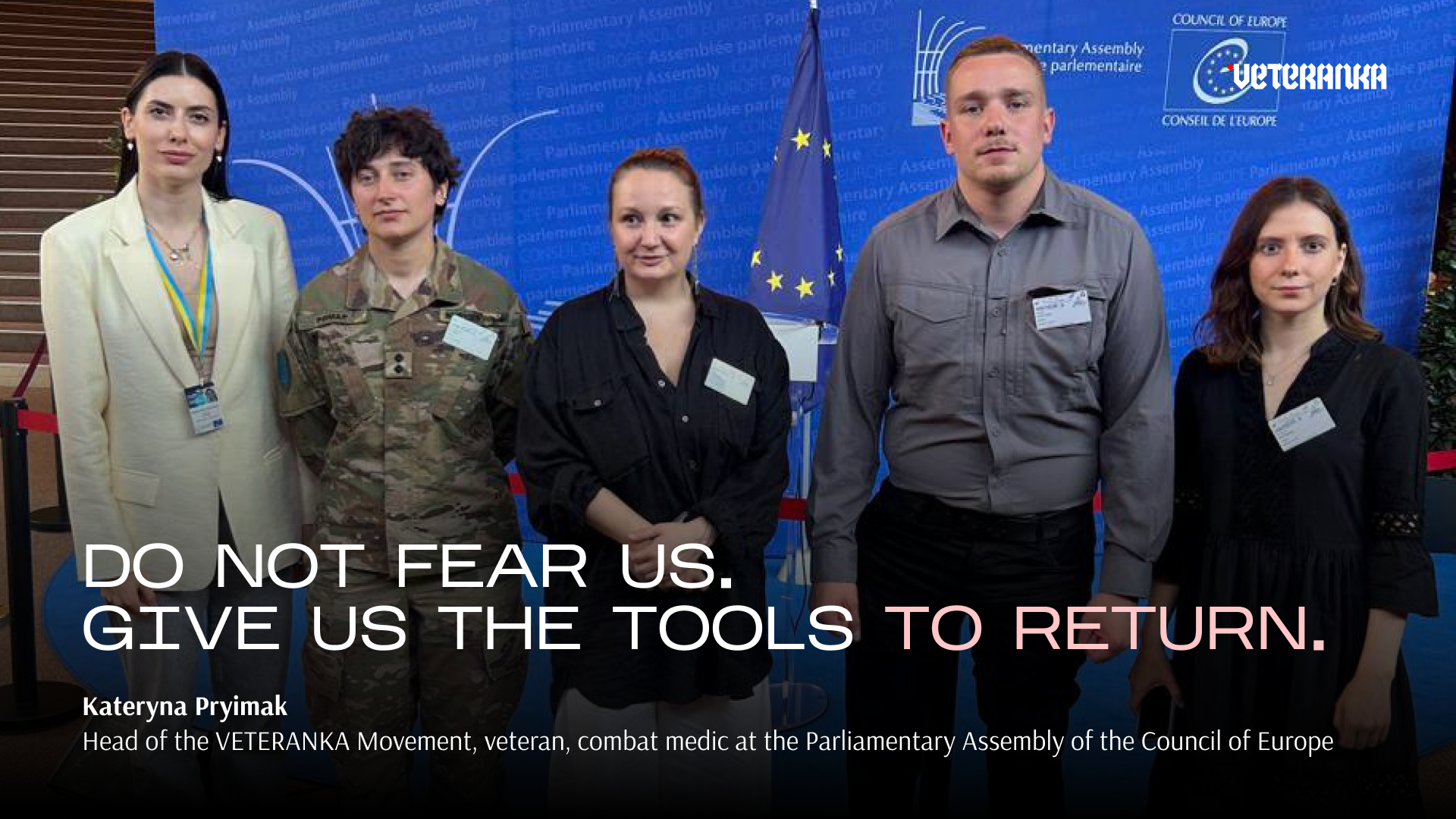 "Do not fear us. Give us the tools to return"
  “Life does not end after service — it becomes different”