Strong for the Strong. Fashion Designer Hanna Suvorkina

She could have been creating costumes for Beyoncé, but she turned down opportunities to work with famous brands and designers to tailor uniforms for Ukrainian servicewomen. “What Beyoncé is up to doesn’t interest me as much right now as what our women are doing on the front lines,” says Hanna about her decision to step away from the fashion industry. What began as volunteering and a desire to contribute to a common cause led to a reevaluation and new challenges in her career. This is how Hanna Suvorkina became one of the organizers of the VETERANKA sewing workshop from scratch and now teaches women and girls the art of tailoring. She firmly believes that this profession will not only bring them income but also help them cope with stress and instill confidence in their future.
Life before the full-scale war: Could you please tell us what you used to do before?
I’m a professional pattern technologist and have been involved in clothing design since 2004, right after finishing school. I worked in a production facility that collaborated with various Ukrainian brands. Before the full-scale invasion, I also taught pattern making and clothing technology at the OFS school (Open Fashion Studio – Ed.).

My previous work involved the following process: a designer would come to us, explain what kind of clothing they wanted, show sketches, and I had to create it. This meant constructing the clothing and, possibly, helping choose fabrics, fasteners, and so on. Then, fitting sessions would take place, the designer would check if everything was as needed, and then we would make a sample. If everything was satisfactory, we would proceed to mass production, adjusting patterns for different sizes – in essence, the entire production cycle.
I worked as a pattern technologist for Ivan Frolov, whom most people probably know. I also had the opportunity to work with Katerina Kvit and Katerina Silchenko.
What personally changed for you in February 2022?
I felt a sense of urgency to pursue all my dreams and desires that I had put off for later, to overcome fears that something might not work out, and to do it quickly. It felt like there was no time to be afraid of anything.
And the feeling of resistance to Russian propaganda – it has always been there; it’s been with me since childhood. Patriotism was instilled in my upbringing. There’s even a funny story: when I was about 5 years old, we were in Siberia (my mom went there to work), and someone asked me about my nationality. I said I was Ukrainian, even though I had a slightly Evenki (a small Russian ethnic group) appearance due to my father. There were many kids around who looked similar to me, but I told them I wasn’t like them; I was Ukrainian.

At what stage did you find it? You came, looked with a professional eye: what did you see?
It was a completely empty space. Kuba (Yulia Sidorova – ed. note), who had dreamed of becoming a designer before the war and is now a paramedic, brought several sewing machines to the workshop that she had. In general, she proposed this idea to Stas (designer Stanislav Bitus – ed. note) – another instructor from OFS, with whom I was friends. He simply brought me here, and that’s how it happened. In the Women Veterans’ Movement (WVM), there were sewing activities before that; they collaborated with some manufacturers, made merchandise, and sewed some lingerie, but there was no organized workshop specifically at the headquarters.

What about your professional ambitions? Do you feel like you had to put your career on hold?
I can’t say that I’ve lost my skills because I’m still working in my profession as a pattern technologist. In reality, I’ve created many different things, from lingerie and workwear to various fashion pieces. So, it’s not really a pause for me – I’m still professionally dealing with various challenges every day. For example, I had never created military uniforms before, I didn’t know the specific requirements for comfort or the right fabrics. I had to learn all of this on the fly, do some Googling, make mistakes, and understand that certain choices weren’t suitable, and so on.
I also have a lot of plans: we need to start fabric production. Right now, I want to find training in that area so I can grow professionally.
For instance, take women’s underwear for servicewomen: gynecologists say it needs to be very soft, a hundred percent cotton. However, there’s a problem – it doesn’t dry quickly, leading to other issues and women soldiers don’t have the opportunity to dry it properly. There are synthetic fabrics that dry very fast, but they might be treated with harmful chemicals. There should be a middle-ground solution, and I’m very interested in learning more about how to solve this issue.
I can work on my plans alongside my current work (merchandise, collections, women’s uniforms). It can be combined with learning; that’s not a problem.
Have you discovered something new for yourself? What will you take with you after the victory into civilian life and continue working on?
I’ve always been an employee; I’ve never set up a workshop myself, selected sewing machines, or hired people. Right now, I’m doing all of that, and it’s a learning experience when you’re the one making these decisions. Of course, this will help me in the future.
I’m more comfortable in this role because I left the production industry before the war. I realized I didn’t want to work in fashion anymore, but I didn’t have a clear understanding of where I did want to work. So, I went to teach at school, and I really enjoyed it. I love it when people are eager to learn something because in the professional circle, you’re used to everyone knowing everything, and people becoming somewhat cynical. But people who are learning, they view everything I teach them as miracles – when they see how you can work like this, cut like that, or draw like that they start to have their own ideas and inspire me every time!
Right now, we’re considering creating something specifically for female veterans, those who will be returning, those who will want to learn a profession or use it as art therapy. In reality, the VETERANKA women had thought about this before, but perhaps those were dreams spoken out loud. However, in my opinion, it seems entirely feasible.
VETERANKA conducted a training session for women titled “Starting Your Own Sewing Business: How to Make Money Without Leaving Home” as part of the UN Women project “Transformational Approaches to Achieving Gender Equality in Ukraine.” During this session, they used the VETERANKA sewing workshop as an example to explain the peculiarities of the sewing business. If you wish to join the workshop or obtain a video recording of the training, please reach out to us.
Who is currently working in the VETERANKA workshop?
We have women who want to help. They had dreams of doing something hands-on, like sewing, but they pursued other professions before. We teach them from the very basics: how to cut fabric correctly, how to sew properly, and how to use a sewing machine. Getting the basic knowledge of using a sewing machine is relatively simple. After this, people have a certain impression and understanding of whether they want to continue with it.
I have a young student who sat at a professional sewing machine for the first time here. I also have a retired woman who finds satisfaction in this. There’s a guy who is primarily a singer. There’s a hairdresser, a doctor.
Even if they don’t pursue sewing professionally, they will still have sewing as a hobby. Creating something with your hands is fulfilling; it’s both emotional development and a form of stress relief. For example, one of my students is from Nikopol. She lost her home – her house was bombed, and her grandmother’s house was destroyed. But when she works with her hands, she is happy, genuinely joyful. In those moments, I believe she doesn’t think about her losses, and it doesn’t sadden her for a while. At the same time, she’s making plans for the future: creating and designing. She bought a sewing machine to make pajamas and bedding at home and sell them on Instagram. This brings her peace and a greater sense of security for the future.

Can sewing become a real source of income, especially for women who have lost their jobs or whose professions are no longer in demand?
Not immediately, but eventually, yes. For instance, in a technical school, it used to take two years to receive an education before starting something. However, if it’s about producing something on a smaller scale, like simpler items, it can be an income source. Initially, it may not be substantial, but it can grow. So, there is a demand in general, and there is currently a shortage of professional tailors. Even before the full-scale war in Ukraine, there was a high demand for this profession. Currently, many tailors, mostly women, have left for other countries. For example, they were quickly absorbed in Poland and other countries because there is also a high demand for blue-collar workers there.
It’s actually a good story. If a person is creative and doesn’t stop at just sewing a few seams on a machine but begins to think of interesting ideas and create unique items, continues to develop and acquire new skills (there are many secrets in sewing and tailoring), they can definitely become a sought-after professional.
Currently, a professional tailor earns around 20,000 hryvnias. If you turn this into a small business, like clothing repairs, it could be more. If you create your production, the earnings can be even higher. It all depends on the individual’s ambition and what they want to achieve in this profession.
Do you have any success stories to share?
Yes, there is my student who comes to the VETERANKA sewing workshop. When she first came here, she didn’t know anything about sewing. She didn’t even know how to turn on a sewing machine or thread it. Now she knows it all. She sews, and her stitches are straight and even. I’ve even started giving her more complex tasks, like decorative stitching and making pockets. She has made significant progress in this regard. She’s only 19 years old, and she’s studying design at Kyiv National University of Technologies and Design (KNUTD). The workshop provides her with additional practical knowledge that the university, especially during distance learning, cannot offer.

What advice would you give to those who want to try their hand at this profession but lack the confidence to start?
Many people lack the confidence to start. They think it requires a lot of money, which is true to some extent. However, if you plan strategically and start with just one sewing machine, it’s possible. I know real examples – this was before the war, but those examples are still fresh in my mind. People started with a basic sewing machine and then actively developed their career without creating too many plans. In fact, those who are new to the profession, like me, are more relaxed because they don’t understand all the pitfalls and are therefore not afraid of them. They do encounter difficulties on their way to success, but their confidence and enthusiasm for the new profession help them overcome these challenges. On the other hand, professional seamstresses are often held back by the fear that problems will arise, that they might lose something, which is why they don’t start their own business. In reality, the war has taught me that you can only lose one thing – your life. Everything else can be rebuilt, restored, earned, and achieved in this lifetime. So, don’t be afraid!
This publication was made within the framework of the UN Women project “Transformational Approaches to Achieving Gender Equality in Ukraine” with the support of the Office of the Vice Prime Minister for European and Euro-Atlantic Integration of Ukraine and funding from the Government of Sweden.
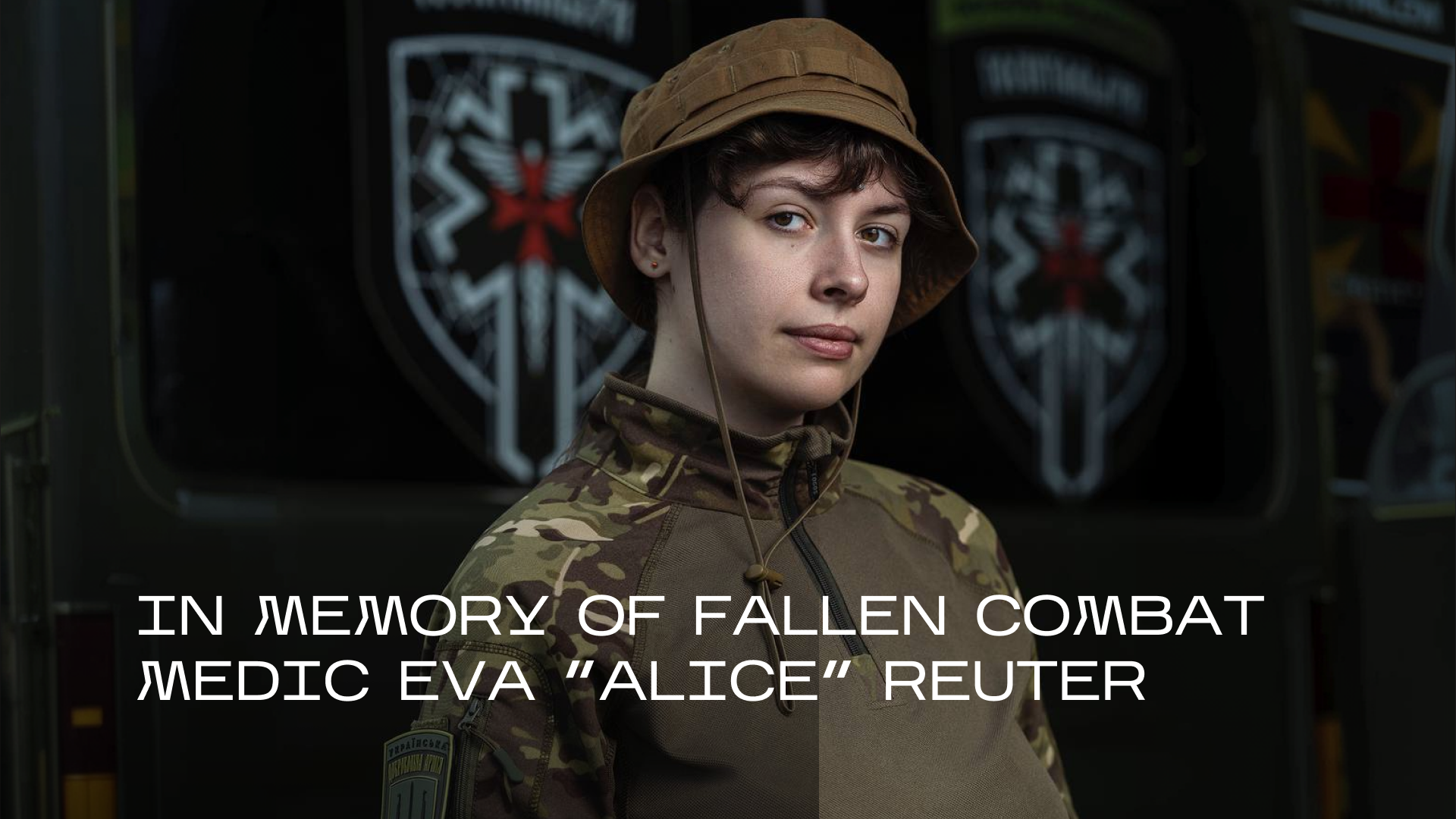 An art historian who became a combat medic, mastered drone repair, FPV drones, 3D printing, led international recruitment, and coordinated a major educational project
 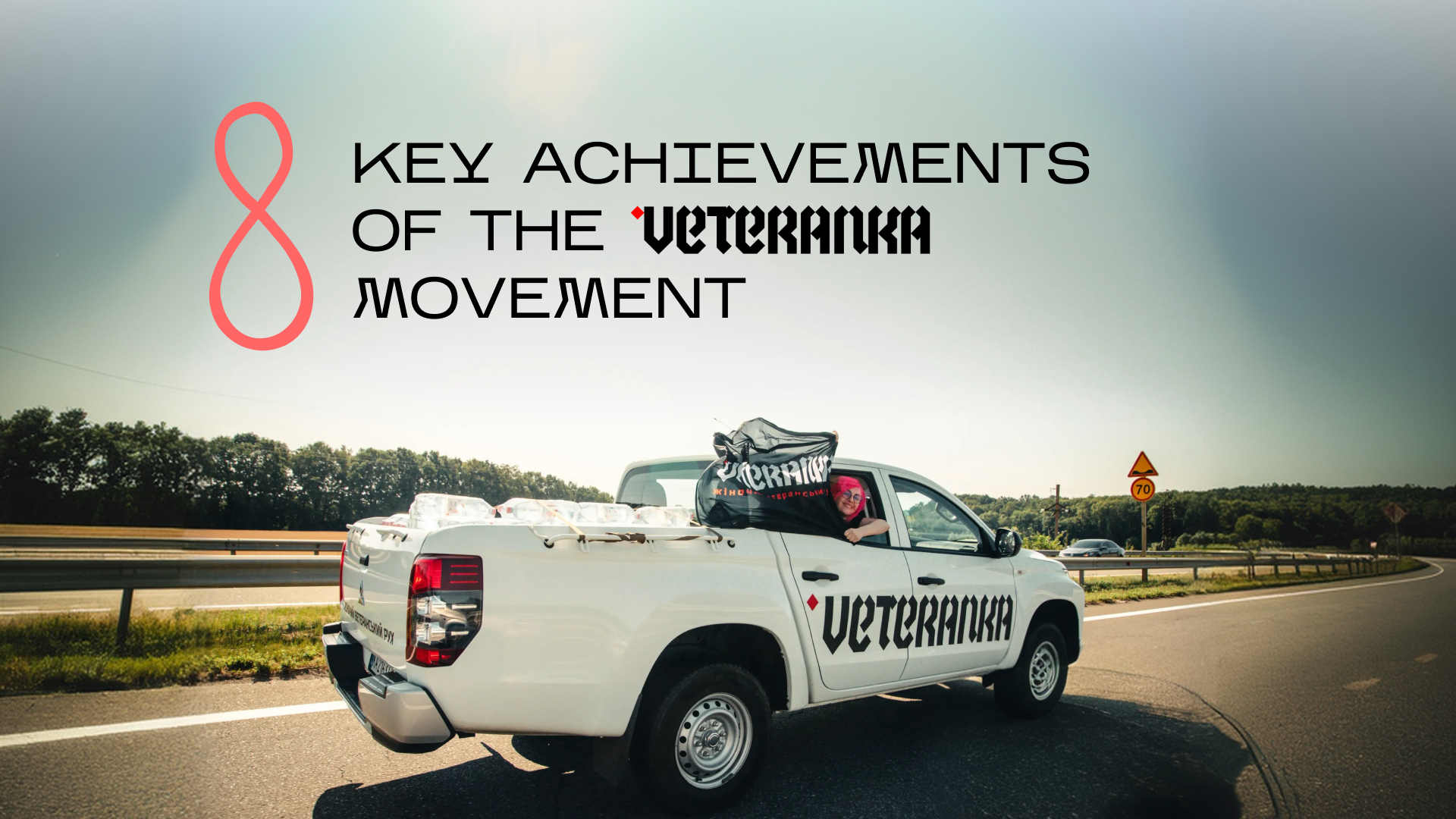 To Mark the 8th Anniversary of the VETERANKA Movement
 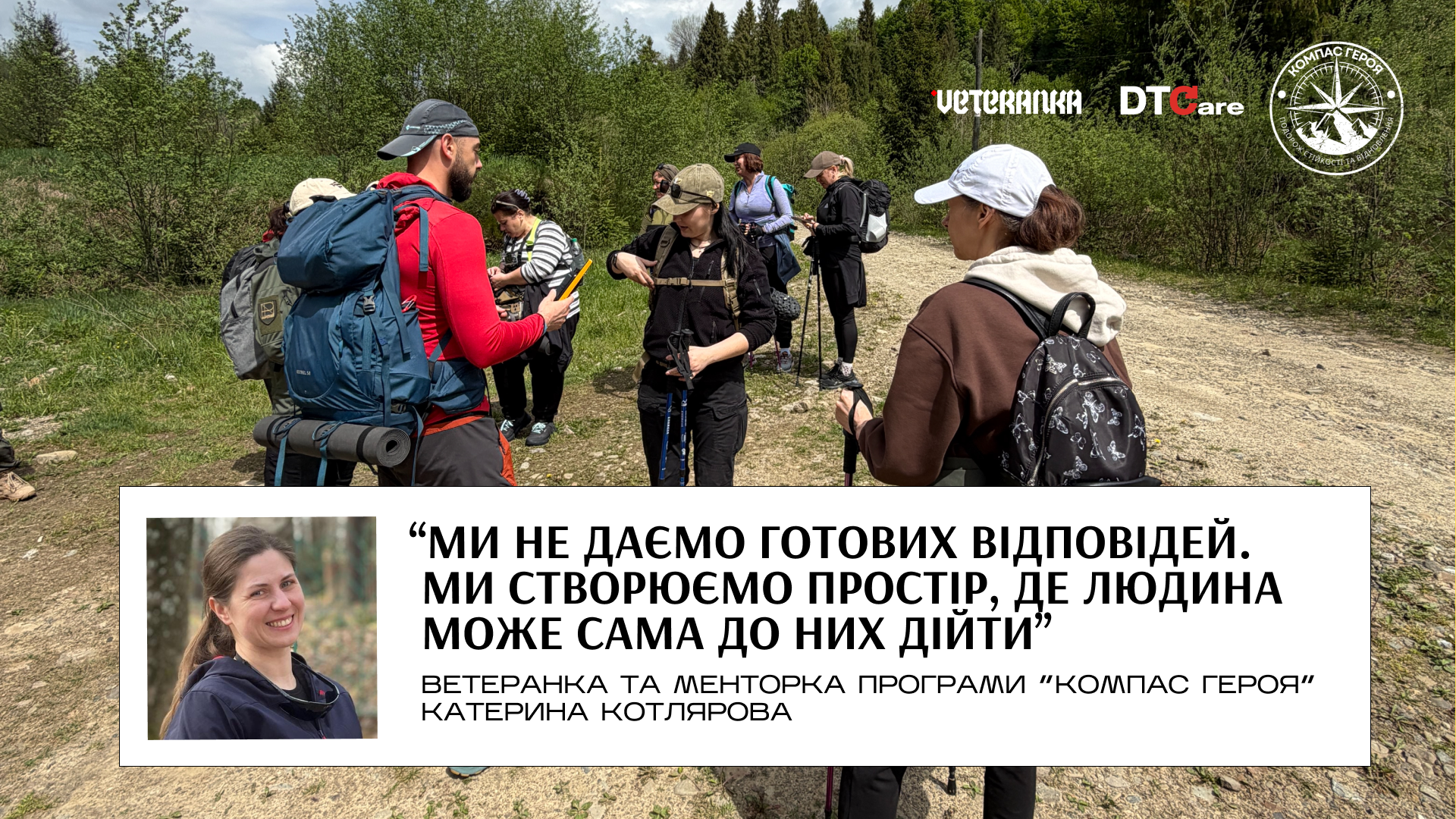 What Awaits Participants of the Hero’s Compass Adventure Counseling Program
 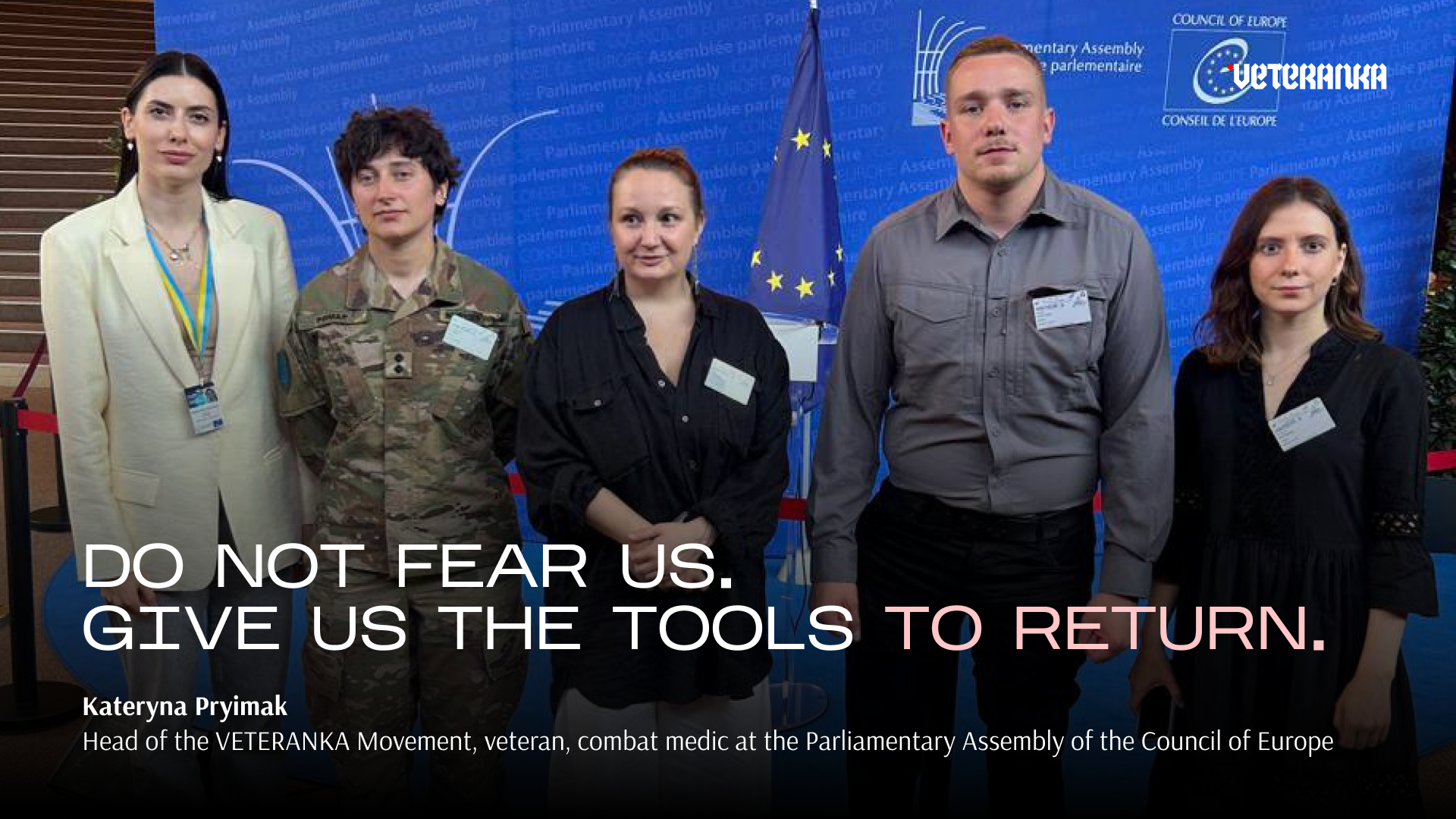 "Do not fear us. Give us the tools to return"
  “Life does not end after service — it becomes different”