Strong for the Strong. Volunteer Diana Andrunik

Diana is a social photographer and photojournalist who has been working in the genres of artistic and advertising photography for 11 years. She became acquainted with the VETERANKA movement in 2021 and, together with servicewomen, has completed several projects, one of which is titled “A Warrior Woman First and Foremost – Woman.” During the fifth month of the full-scale invasion, Diana was forced to leave Ukraine and relocate to the United Kingdom for her family’s safety. However, she did not abandon volunteering and continues to raise significant donations abroad, using her photographs to share the truth about the war in Ukraine with foreigners. Her works are displayed in the Parliament of England.
In this interview, you’ll discover how she deals with PTSD, the support she found within the Women Veterans’ Movement, and how she manages to raise up to 300,000 hryvnias through photo exhibitions to address the needs of the frontline.
When did the war start for you?
For me, the war began in 2014. Many of the guys from Ternopil region, with whom we used to chase a ball in our childhood summers, went to war and never returned. Then there was a project with the Women Veterans’ Movement called “A Woman-Warrior First and Foremost – Woman,” where I heard stories from the girls. Also, a friend from Luhansk told me how difficult it was to find an apartment and what kind of attitude she faced due to her registration. It didn’t quite register in my mind because life in the capital was different. But personal experience is profound; there were many crisis situations where it seemed like we wouldn’t make it: the fear that the invaders would reach Kyiv, the uncertainty of nighttime safety, and nowhere to hide.

Your first actions on February 24th, your emotions?
I thought my mom was joking when I woke up at around 4 AM from the explosion. I wear earplugs, so it sounded like the neighbors were causing a commotion. Then I heard my mom say, “Just don’t be scared; Russia has bombed the entire Ukraine. The war has started.” I saw a column of smoke from Zhulyany and realized it wasn’t a joke. My mom and I were very organized and relatively calm, even though we saw neighbors fleeing in their pajamas, getting into cars. We went to the pharmacy, then for canned goods. I taped up the windows; we already knew about the “two-wall rule,” and we had a water supply. The whole day was quite peaceful in my mind; I watched Alina Mykhailova’s video where she calmly explained that they were already prepared. At night, we stayed with friends, right near Hostomel, and it was very frightening. We didn’t know if we would wake up. That’s probably why I’m so anxious about going to bed every night now. It was also challenging due to the lack of transportation; we couldn’t get my grandmother out for a very long time. She had suffered a second stroke, and she had gone through all that horror on her own, sitting in the basement. I can’t emphasize enough the human factor: what amazing volunteers fate has brought us. How the girls from the Women Veterans’ Movement supported us with warm clothing and food. And what a disappointment I felt towards my now former friends. It was a complete devaluation of my life. At the same time, we have such courageous people: they were constantly driving buses, evacuating strangers, and transporting medicine.

What kind of support did you receive in the organization? What does sisterhood mean to you?
I believe I truly experienced what sisterhood means within the Women Veterans’ Movement (WVM). It was the way they took me “under their wing.” I was initially quite overwhelmed by all the information overload, and the way the girls explained things – where and when – was invaluable. They provided my mom and me with medical supplies and essentials for the initial period. Honestly, without this volunteering for the WVM, I might have lost my mind. Almost immediately, my mom and I started helping the Right to Protection (R2P) organization. I worked at the WVM headquarters, disseminating information about the organization in the media and the assistance it could provide. I believed that the information was crucial at that time. Later, the focus shifted to helping senior citizens, and my mom and I volunteered for elderly people. By the way, my now-best skill is logistics. I learned the routes well, had experience providing Cherkasy region with insulin when gasoline was as precious as gold and not all roads were passable. We also obtained gas masks for Rubizhne, medical supplies for National Guardsmen. After a while, a military woman named “Kudryava” contacted me, whom I met through the movement, and she said, “Please, we don’t need anything more. There’s nowhere to put it.” There were also thermal imagers, drones, Starlinks. All my volunteering, my entire journey, revolves around female veterans, and thanks to them, I have many connections and can undertake powerful projects.

What was the main trigger for your relocation? What difficulties do temporary emigrants face?
We left on the fifth month of the invasion, primarily due to the safety of my family and the need for volunteering abroad because Ukrainians were running out of funds. It was a conscious decision made by me, my mom, and my friends who were also volunteers. It wasn’t an escape; it was more of a necessity, most likely. Later, I learned about PTSD; somewhere after the first month of being in Britain, I was constantly uncontrollably crying, experiencing panic attacks, and my local social worker referred me to a British psychotherapist who diagnosed me with PTSD. The trigger was the work on one of my photo projects on the frontline; I’m not ready to disclose the details.
In my case, the challenges abroad were related to adapting with PTSD. For about four months, I lived in a fog, sleeping with a knife beside my pillow. I got used to the noises outside my window. I got used to people who didn’t accept me and were sometimes openly scared because of my occasionally deviant behavior. Meanwhile, my psychological state didn’t hinder my work; I worked for BBC and completed a project with a British production team. My motivation drops here in London when you can’t find a stable contract that you need for renting housing (it costs a fortune here). Recruiters devalue all your experience, passing you through bureaucratic red tape without even looking at your portfolio. Language is crucial; I came here with an intermediate level of English, which helped me collaborate as a freelancer with some great teams. At the moment, I’m working with advertising agencies and doing portraits. For example, I photographed Boris Johnson.

The only thing that really bothered the British was my facial expression. I used to frown all the time, and it took a long time for me to let go of it. Personally, I reacted very aggressively to all comments that it’s all about putin and not the russians. So now, I speak like a diplomat, and I always have historical facts at hand. But no matter where I go, Russians are everywhere. And it’s challenging in terms of mentality: the British are cold, especially in London. They might shower you with friendliness, and then never call you. But in small towns, people are lovely and sincere. In Scotland, they love us and provide strong support.

Tell us about your volunteer work.
In the UK, I began sending money from the sales of my photo works. There were two exhibitions in central London featuring soldiers from the front lines, including veteran Yulia Phobia, whom I met in the Women Veterans’ Movement. The leader of the movement, Andriana Susak, had offered me to join a mentoring project and assist a veteran interested in photography. That’s how I met Yulia, who became my assistant. (In reality, she became much more – Yulia became a reliable friend and a faithful companion. I’ve never felt so at ease planning night shoots, knowing Yulia is there. I love her very much and pray for her every night now). I sell works about soldiers; one of them, featuring Ksenia Vognevitse, is displayed in the UK Parliament. I also gifted another work to Olena Zelenska when she was in London. For example, 300 sets of military warm clothing were purchased thanks to the sales of my works. When I had my first exhibition in London, there was a parallel exhibition in Kyiv at the Vozdvizhenka in the SWAP gallery. The proceeds from it – 300 thousand hryvnias – I donated for a medical evacuator for Kuba’s and Alaska’s paramedics movement.
I also engage in volunteering related to creating various conceptual projects that engage foreign audiences with the issues in Ukraine, such as ecology and inadequate healthcare. If I find out that companies here want to donate for Ukraine, I show them where it’s currently relevant to do so. In reality, it’s more complicated here not because there’s a lack of money – they don’t want to donate to the war because they’re pacifists. It’s a touchy subject, but we need to keep chipping away at it because how much longer can we rely solely on donations from Ukrainians? All my work and activities here are aimed at supporting my country.

Do you ever have thoughts like ‘I’m not doing enough’? How do you overcome them?
Of course, especially when volunteers in Kyiv couldn’t get in touch due to the cutoffs. I thought it wasn’t fair – I’m here, they’re there. When they send me photos of enemy corpses, I understand why I’m in London and not at home. But when I’m here and I still have a life outside of volunteering, I can go for a beer at a pub or attend a concert. At that time, my friends are warming their feet with a trench candle, and I want to scream, curl up in a ball, or go back home and ‘dig the earth’. Thoughts often come to my mind, “by what principle did someone survive, like me, and someone died a horrible death, like the people in Bucha.” But in those moments, I write and inquire about the frontline’s needs, and then I move on. I remind myself that life goes on and it must be lived. Or bury myself in volunteering without sleep, like I did for half a year, and lose myself forever. Then it’s unclear how long I’ll last. So, I seek my balance. When needed, I shout and cry, like that guy in the mountains in the video, and then I regroup and think about what else I can do to raise more money for the frontline.

What new skills have you learned emotionally and physically over this year?
Emotionally, I have become very calm and composed. I am no longer bothered by minor issues that can wait. Family is the most important thing. All material possessions are like ashes that can turn into seconds of a missile strike.
Physically, my body is always prepared to flee. I’ve joined a sports program, and my boxing class is starting soon. I’ve completed a basic first aid course and I plan to get my driver’s license. Having a car is very helpful when war is outside your window. With a friend I met in London, we constantly discuss the possibility of war reaching anywhere. I feel the need to be constantly prepared for anything. I make sure to finish all my food now, because there were days when there was simply nothing to eat. I always carry water and a first aid kit with me. Even in London, I have a rule: documents, water, first aid kit.
Emotionally, my eyes have stopped crying, I’ve become tougher. It’s hard to get caught up in everyday problems, breakups with partners, or butterflies in my stomach. I’ve developed a sense of aggression, and I try to channel it where it’s necessary. Sometimes, my own inner state scares me; I feel like I’ve aged a hundred years. When your biggest fear was war, nothing surprises you anymore.
From skills, I gained experience on a combat mission, like knowing how to find the right helmet and how important it is to have dry socks. And, of course, the realization that you can fit your entire life into a backpack.
This publication was released as part of the UN Women project “Transformative Approaches to Achieving Gender Equality in Ukraine” with the support of the Office of the Vice Prime Minister for European and Euro-Atlantic Integration of Ukraine and funding from the Government of Sweden.
Olena Brutska
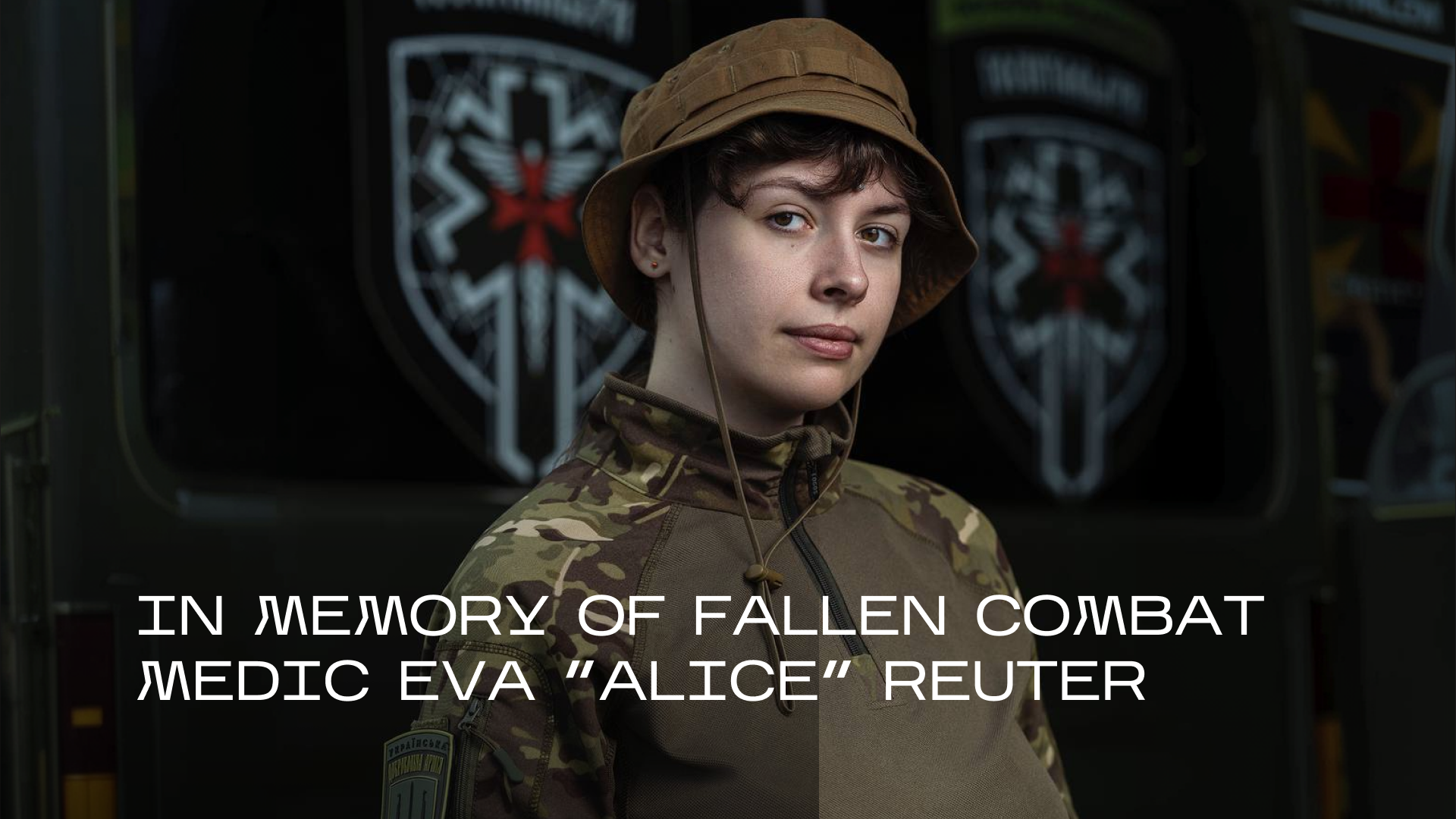 An art historian who became a combat medic, mastered drone repair, FPV drones, 3D printing, led international recruitment, and coordinated a major educational project
 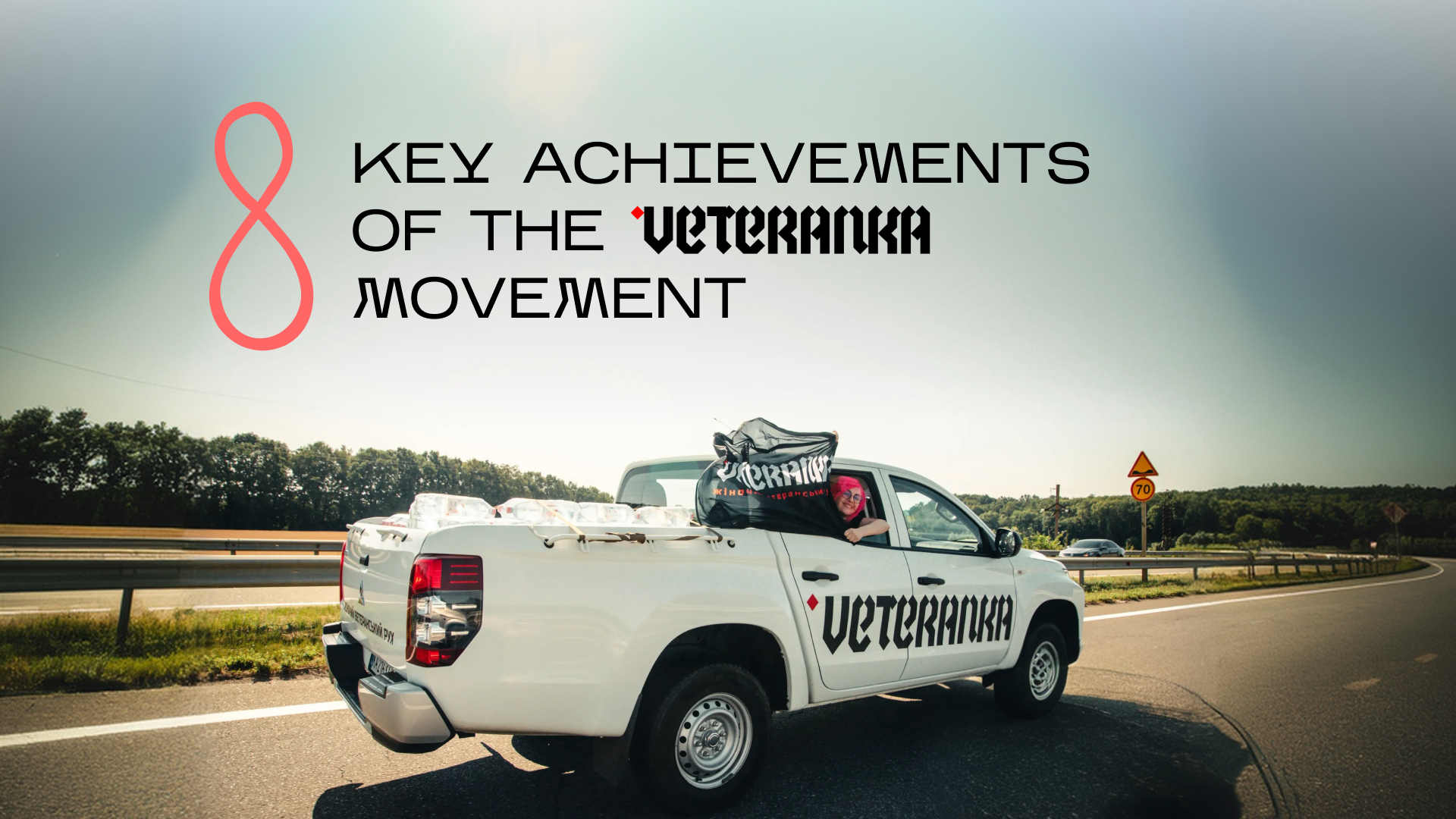 To Mark the 8th Anniversary of the VETERANKA Movement
 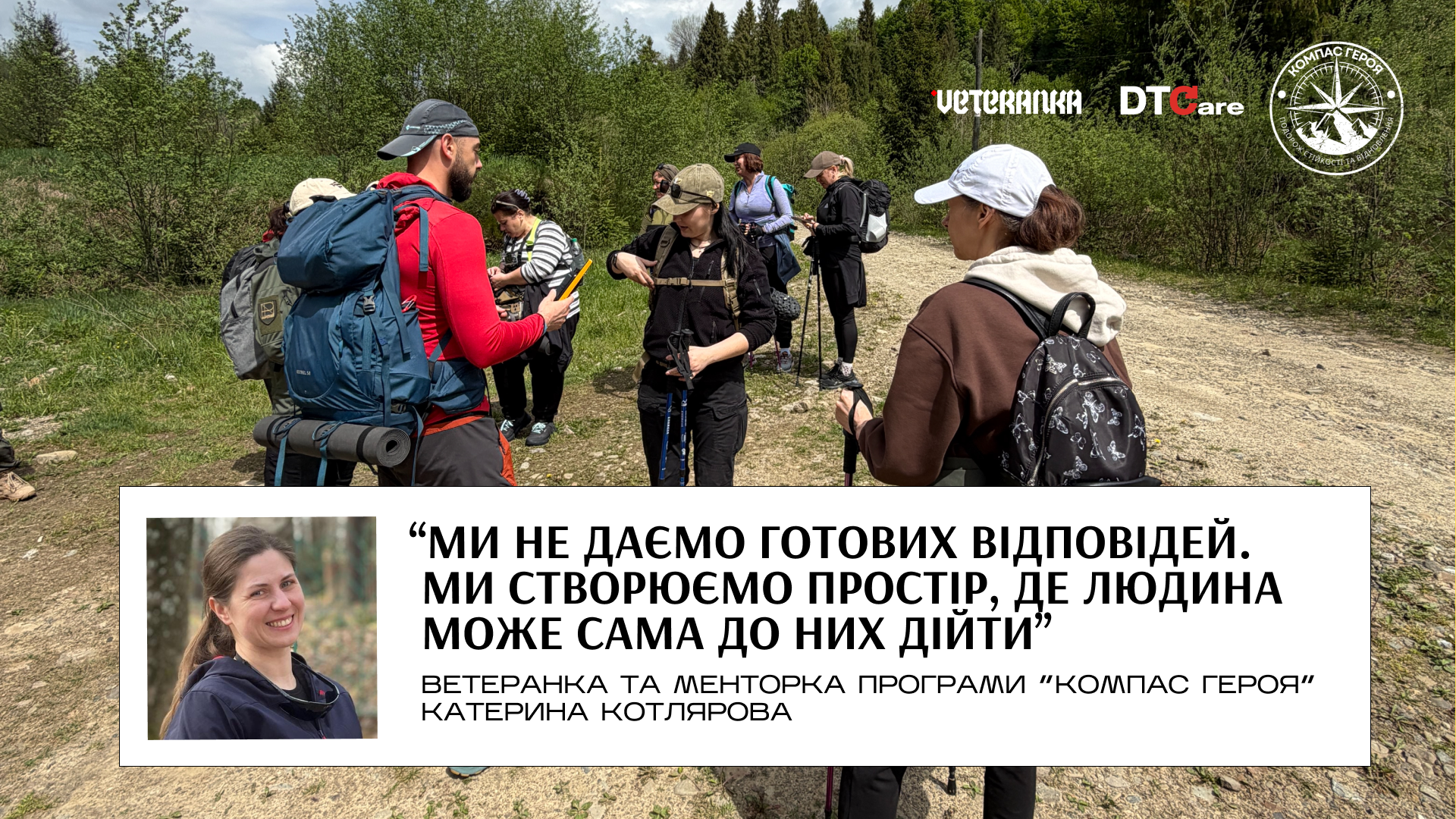 What Awaits Participants of the Hero’s Compass Adventure Counseling Program
 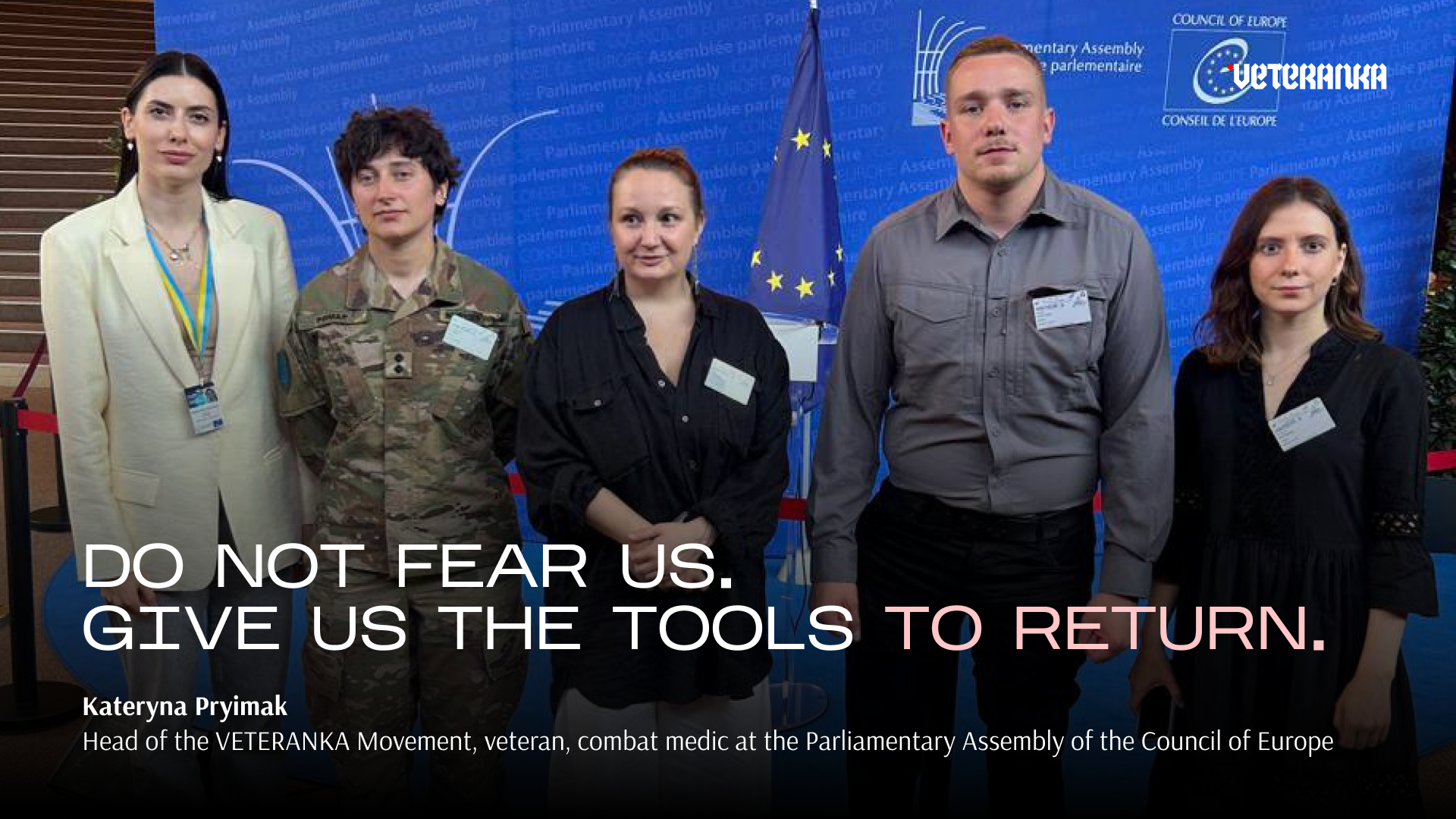 "Do not fear us. Give us the tools to return"
  “Life does not end after service — it becomes different”