Strong for the Strong. Volunteer Gandia Morozova

Gandia’s story is a transformation from a casting manager, a second director, and a creative individual into the head of the VETERANKA volunteer headquarters. In volunteering, Gandia assists both the frontlines and the rear 24/7 – making trips with aid to the liberated territories and hotspots.
Read about how volunteering during the war saved her, about skills from the “first time in my life” category, and about daily motivation to work towards victory in this sincere interview with the representative of the volunteer movement.
When did the war start for you? What were your first actions on February 24, 2022?
The war began for me during the ATO (Anti-Terrorist Operation): that’s when they mobilized my dad, and from that moment on, I lived with a clear sense of expectation for full-scale conflict. The question was: when? It turned out to be February 24, 2022. On February 23, I had everything I dreamed of: work, people, fulfillment. On the morning of February 24, my mom called me. I thought I hadn’t packed my backpack yet. I was worried about one thing: whether we would cancel the planned shooting, because actors need to be notified a day in advance. The shoot was canceled, I informed everyone, apologized, and started reading the news. Then I turned on the livestream of a Ukrainian comedian. He was saying something, and I was packing my backpack. Later, I went to look for a bomb shelter. The shelter that was marked on the map as the closest was closed, so I went to the parking lot to look at people. It was very cold there, so I returned home to cook some soup.
The day before, at work, I was given a plush teddy bear, bigger than me. I placed it on the bed by the window, thinking that if there was an explosion nearby, it would protect me from the shattered window glass. Then I stayed to sleep at home.
Everyone I love was relatively safe, so I was calm.
I had no idea what to do next – I was thinking. One question tormented me: how to be useful? It turned out that it was through volunteering. I knew for sure that I was helping, bringing benefits, and immediately saw specific results.

How did you find out about the movement, and why did you choose this organization?
At work on February 22-23, we were discussing the war and everyone’s plans. I voiced my position that I wouldn’t leave the country. Everyone laughed, joking that I’d be conducting auditions “from the trenches” and searching for a young general, playing the role of a “kind dad.” We had a good laugh. After that, my colleague Alla Valyukevych approached me and advised joining a chat with volunteers and veteran women. I got interested, and since then my phone hasn’t stopped buzzing. In the chat, there were unfamiliar terms like “teplic,” “picatinny rail,” “unloading.” I thought, let it be, but at that point, I didn’t understand much. While “strolling” between closed bomb shelters and parking lots, I went into the subway. Colleague Alla messaged again, saying that the NGO “Women Veteran Movement” – VETERANKA had set up a volunteer headquarters and they needed people. Volunteers picked me up from the subway, and from that moment, we lived at the headquarters.

How does VETERANKA differ from hundreds of organizations in the same field?
There are indeed many volunteer organizations – the country, the army, and the population need them. But I realize that there’s nothing quite like VETERANKA. Since I got involved with the movement until today, there hasn’t been a moment of silence or downtime. We’re constantly in action, raising important issues about women in the military, organizing million-dollar fundraisers for military requests, and helping civilians. I’m confident that this will have a positive impact on society as a whole and on the reconstruction of the state in the future. We can’t afford to waste time – we understand this and we’re already taking action. I made an attempt to return to my usual job, but it’s tearing me apart from the inside because it all seems off. I’m convinced that at this moment in VETERANKA, I’m contributing more to the country.

What does your daily work as a volunteer entail?
Right from the start, it involved logistics, processing applications, ferrying people, loading and unloading, and so forth. As the volunteer headquarters evolved, so did my duties. Now, I’m responsible for organizing various work and life processes at the headquarters: from creating spreadsheets and instructions to overseeing task execution. Simultaneously, we quickly tackle new tasks: receive, send, locate, travel, create – it’s very dynamic and enjoyable. Currently, we’ve organized theater outings for the headquarters staff. It’s important not to forget that the war spans all directions, and culture is one of them. My respect and gratitude go to the artists who peel away the imposed Soviet layer from our culture.
Have you experienced a reevaluation of values? What new skills have you acquired emotionally and physically this year?
Physically, at the headquarters, we’ve undergone training in firearms, tactical medicine, and driving. Emotionally – I’ve come to truly understand the phrase of my university professor Vitaliy Volodymyrovych: “Here, we’ve become wiser by yet another pain.” The war has affected me and continues to do so every day. I’m an empathetic person and feel changes in everything, so often, I simply can’t separate my pain from the collective one. I never understood hatred as an emotion because how can you wish ill upon someone? But now, I go to sleep with this feeling and wake up with it, realizing that it’s wearing me down, yet I sincerely wish for there to be no Russia or Russians. In moments of crisis, my recipe is acceptance, even though it’s sometimes tough. It’s crucial to consider circumstances and experience. After victory, there will be much work, so we’re preparing gradually.

From being a second director, immersed in the creative atmosphere of the set, to dealing with “first-time in life” routine tasks, and now leading the volunteer headquarters. How did you navigate this transformation? Do you feel like you’ve found your place?
The experience as a second director was incredibly valuable. The tasks on the film set and at the headquarters are similar: communicating with different people in different places, setting tasks, planning, and adhering to timing.
Later on, introspection became a significant part, and I became the queen of “emotional rollercoasters”. I enjoy self-critique and self-analysis, so sometimes it feels like everything is not quite right: it could have been done better, of higher quality. But thanks to the flow of events, I understand that I’m growing wiser in this sense, starting to accept today’s reality, realizing that in one day, week, or month, you can’t plan and organize everything 100%. It’s experience, and we’re not stopping in our quest for improvement. In life, I’m fortunate to be surrounded by cool, talented, wise, strong, intelligent, experienced people.
VETERANKA is the epicenter of exceptional people driven by shared ideas and desires. When there are contentious issues, we all “duke it out” and seek the right solution. I genuinely believe that we have an excellent professional team, and there are no random individuals in it.

What support have you received from the organization? What does sisterhood mean to you?
In the initial days of the full-scale invasion, I realized that I was alone in this city. Arriving at the metro, I understood: not alone. And when I found myself in VETERANKA, I felt that I would never be alone. Sisterhood for me:
- It’s a dedicated sleeping bag on the first night at the headquarters.
- It’s late-night talks with train chiefs – unloading from the 8th-9th track.
- It’s being the “bride of the herring” and “general of the pâté forces” (our volunteer humor).
- It’s journeys to the East with “our” Commander and without him.
- It’s singing Higa and Yaremchuk at night in the conference hall.
- It’s a laughter that you can’t mistake for any other.
- It’s a panther-print blanket, beside me on the floor, for two and a half months.
- It’s flowers given because you exist.
- It’s not consuming alcohol until Victory Day.
- It’s birthdays and surprises that everyone guesses but genuinely tries to be astonished by.
I have many of these “it’s”, and I’m grateful to those who are by my side and those who are at war.

How does working with veterans differ from working with civilians in the rear? Do you usually support them, or do they support you?
There’s always a specific aspect to working with people; I don’t draw a line between military and civilians. Indeed, the specifics of the job and tasks have changed, but I don’t see a critical difference. I’m learning to build healthy relationships with those around me, always offering support when needed, and I know there are people who will support me in return.
The specifics of volunteering, how do you overcome difficulties (burnout, self-discipline, finding constant motivation, bouts of apathy during the war)?
Volunteering is a dynamic, improvisational process. One must be prepared for constant changes, urgent tasks, and the fact that someone may not be able to help (it’s rare, but it happens). I have a great affinity for clarity, deadlines, and keeping agreements, so this experience was initially challenging for me. However, over time, I learned to accept these “rules of the game.” Motivation is constantly fueled by the adversary and the question: “If I give up, why should someone else stay and continue the fight for our Victory?”
My motivation lies in Victory and peaceful sleep, knowing that our people are not dying, that those I love are safe, that one can live life without waiting for a rocket to hit their home. I know it’s inevitable, so we work. I do what I can do, wholeheartedly admire the people I’ve met, and together we’re realizing various fantastic projects aimed at benefit and results. It inspires me for something even greater and bolder.

Have you ever experienced the phenomenon of a volunteer and think “I’m still not doing enough”? How do you deal with it?
I think I’ve been living with the thought “I’m doing very little” since February 24th. Unfortunately, it takes up a lot of energy and resources, so I try not to dwell on it. All I can do is continue working, look for something positive in my life and in people. Besides working in the headquarters, literature helps. Reading is difficult because concentration is zero, but it’s necessary to keep the brain active. The important thing is not to lose yourself.
This publication is part of the UN Women project “Transformational Approaches to Achieving Gender Equality in Ukraine” with the support of the Office of the Deputy Prime Minister for European and Euro-Atlantic Integration of Ukraine and funding from the Government of Sweden.
Olena Brutska
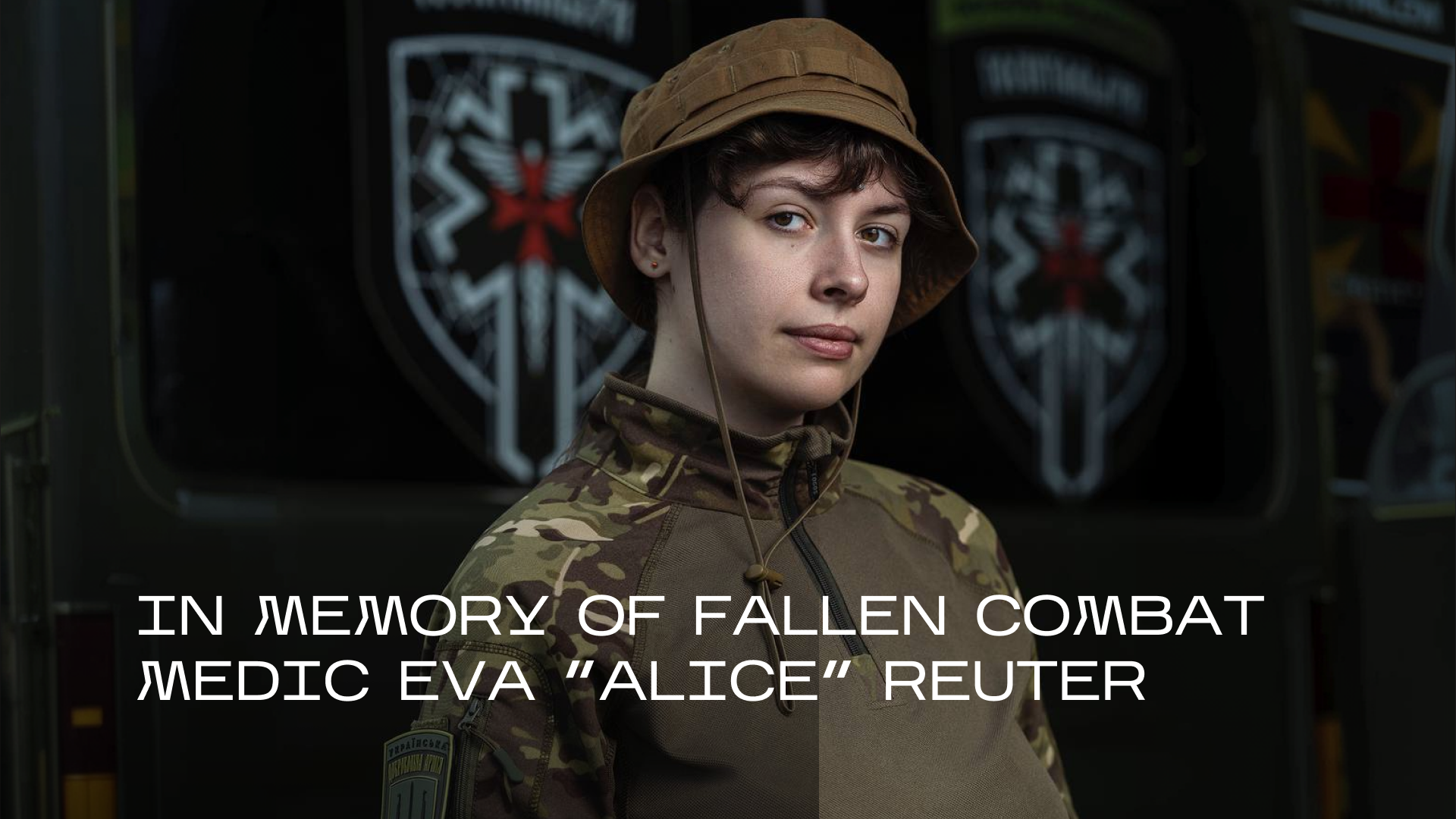 An art historian who became a combat medic, mastered drone repair, FPV drones, 3D printing, led international recruitment, and coordinated a major educational project
 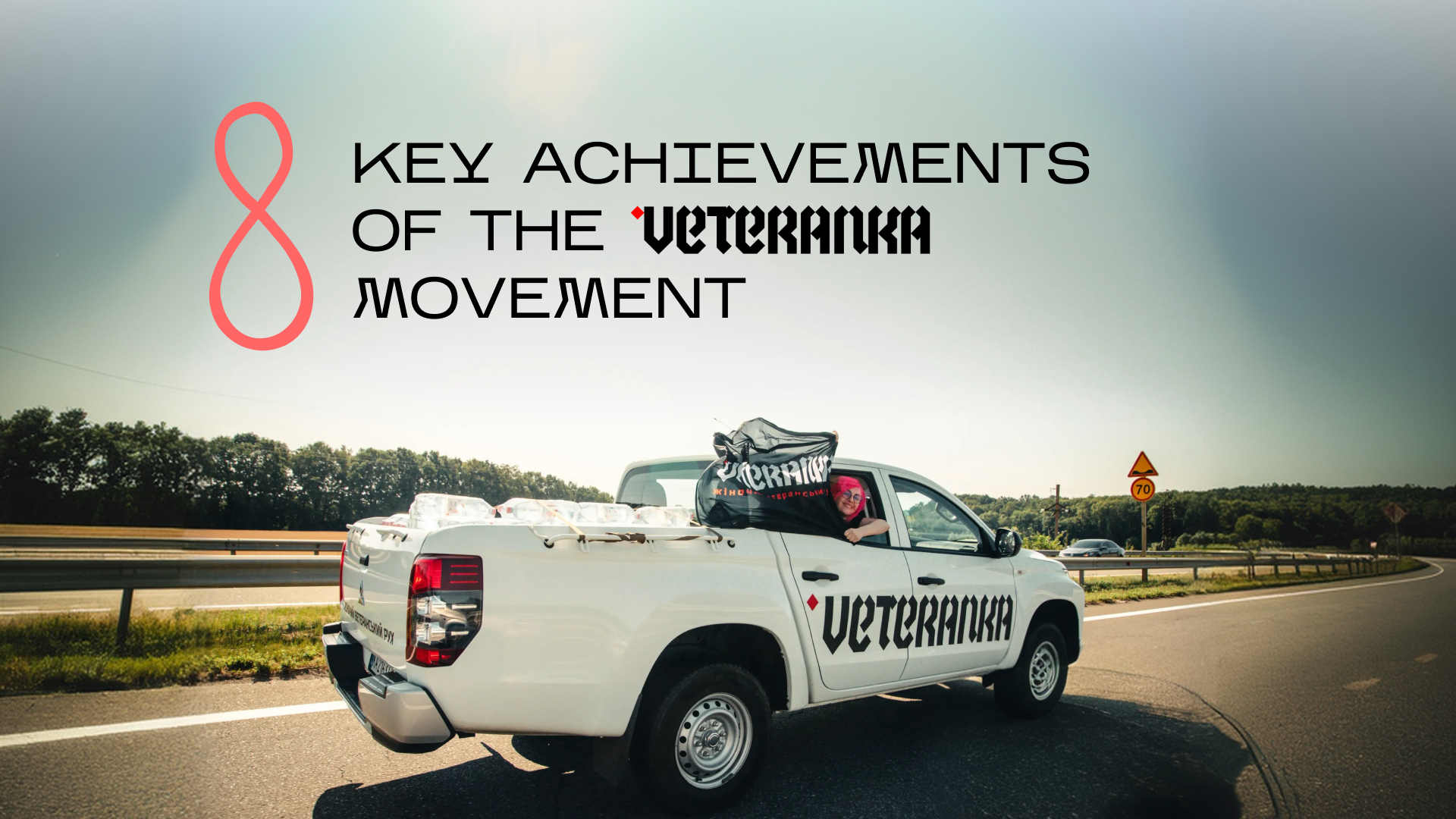 To Mark the 8th Anniversary of the VETERANKA Movement
 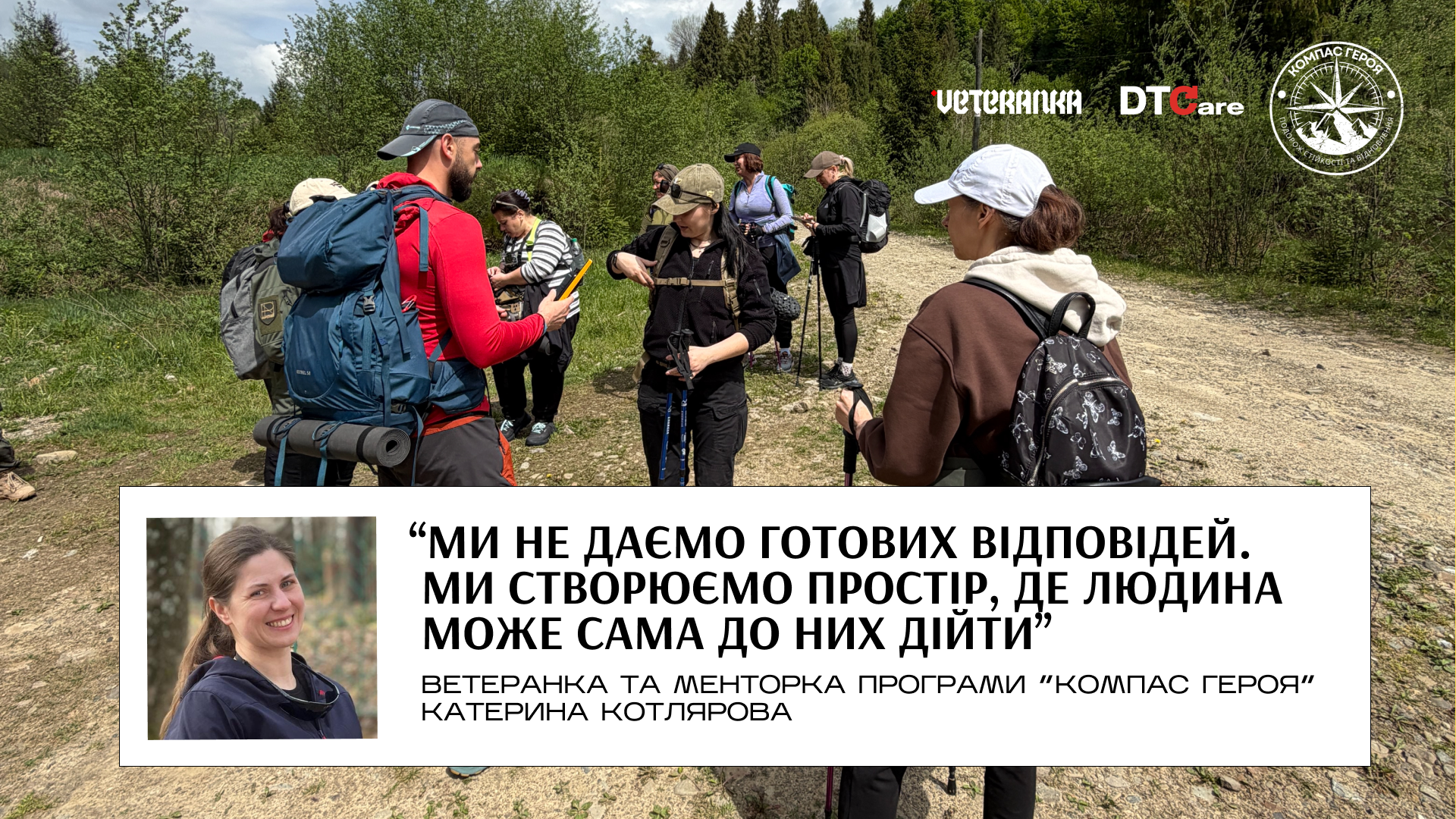 What Awaits Participants of the Hero’s Compass Adventure Counseling Program
 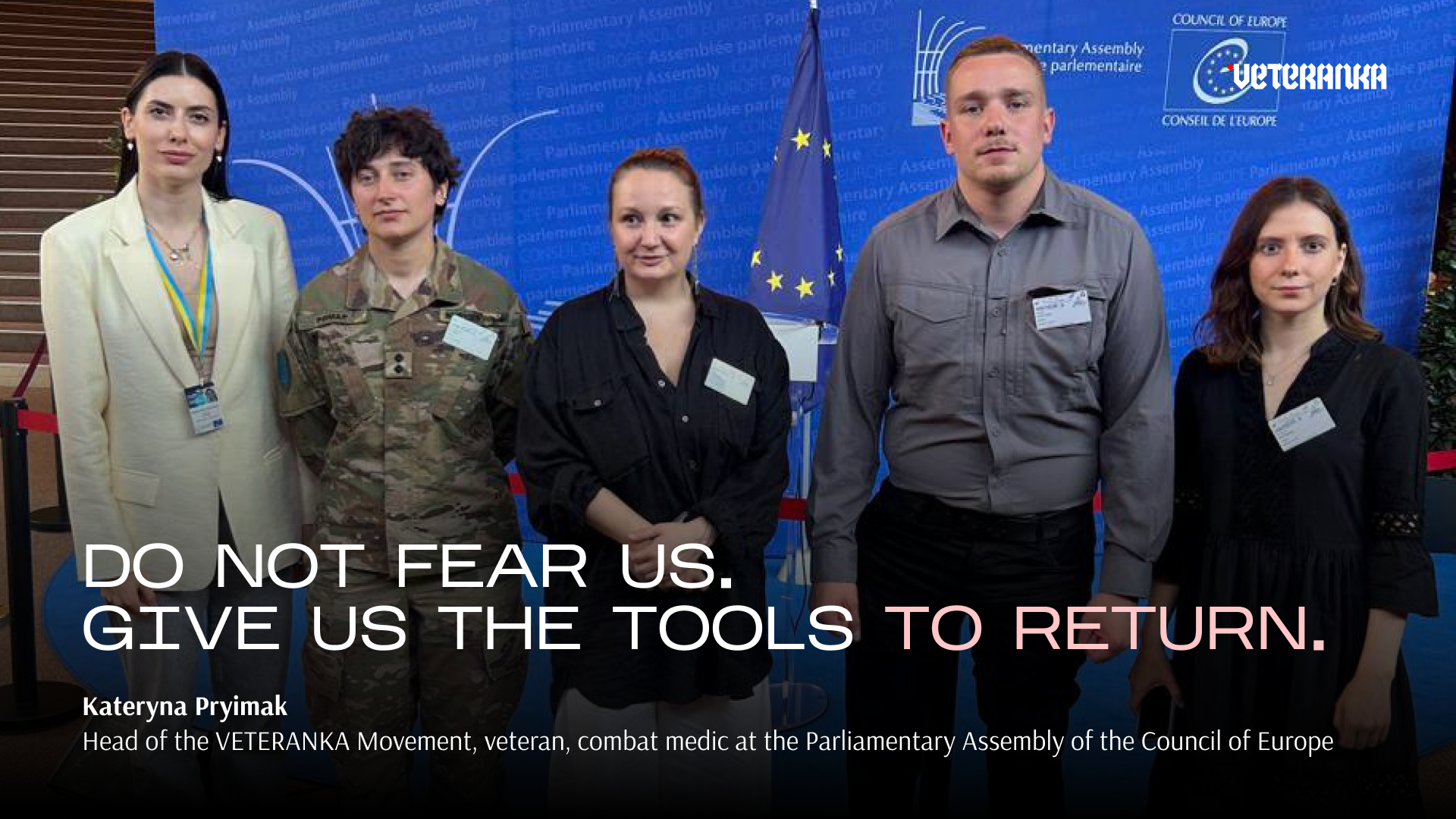 "Do not fear us. Give us the tools to return"
  “Life does not end after service — it becomes different”