Three stories about war. Tetiana Romaniuk

About the most valuable things that soldiers carry with them, the values for which we fight with the occupier, and the strength that helps endure losses – three stories about war are told by the hospitalier Tetiana “Rudy” Romaniuk.
Story about the polaroid
Our hospitalier crew evacuates wounded soldiers and retrieves the bodies of the fallen. Sometimes we manage to take the bodies of the deceased immediately, during the evacuation of the wounded. But sometimes the bodies can lie for several months until the soldiers can retrieve them from under the shelling.
Usually when a body is handed over to us, we have to search it to identify the person. We always look for documents or a phone, or a token. We put all these in a separate package, sign it, and hand it over with the body to the morgue or to the next stage.
That time we were working on the Zaporizhzhia direction. We were assigned to one of the brigades that had just repelled the positions from the russians. They brought from there the body of a deceased Ukrainian soldier. It was a guy whose body was decomposed because it had been lying there for a long time. It was impossible to determine his age or recognize him by his face. But he was wearing a bulletproof vest where many people put their phone, for example, or some documents. That guy had a polaroid photo there, where he was with his girlfriend or wife by the sea. He was about 30 years old in the photo.
When you deal with an anonymous body of the deceased, you do your job. You hand it over, try to identify the person. But when you find such personal pieces of someone’s life, the anonymous body turns into a specific person, and all this becomes very touching, heartbreaking. It becomes personal. You look at the photo and understand that this girl is waiting somewhere right now for her missing beloved, and today or tomorrow she will be notified that he died and died a long time ago.

Story about the little goat
My first rotation as a hospitalier was during the Kherson counterattack. Our crew worked at a stabilizing point that moved with the front line. The front line was moving very fast, and we moved along with it into the depths of the region.
They brought us a soldier with a leg injury. He had a makeshift tourniquet, but due to constant shelling, it took a long time to evacuate him from the positions, and the tourniquet was on his leg for over 8 hours. As soon as they brought him, the doctors treated and bandaged the wound. He was waiting for an evacuation vehicle to take him to the hospital, and I stood nearby trying to reassure him. He was a sturdy, stern man, about 45 years old, a stormtrooper. And he had blue eyes, very clear, like a child’s. He looked at me with them, but as if he didn’t see and kept repeating, “Why did they take so long to bring me? I’ll lose my leg, they’ll cut it off.” I tried to reassure him, but he didn’t listen to me. And suddenly, he looked straight at me, smiled, and started singing a song about a little goat that ran and lost its leg, and then he cried.
I had many wounded after that, but for some reason, it was this man, his brutal strength and at the same time childlike helplessness due to the lost leg, the song he sang, that stayed in my memory.

Story about the accordion
The village of Yatskivka, Donetsk region, was under occupation by Russian invaders for 4 months. When it was liberated by Ukrainian soldiers, many civilians left. Our rapid response unit evacuated the less mobile people who could not move independently for various reasons. A call came from the village of Yatskivka to evacuate an old man. The village was without electricity, heating, or mobile communication at that time. And we couldn’t notify when exactly we would arrive. When we arrived, it turned out that the old man had been waiting for us for three days.
The old man was very calm, very modest. He lived alone in a house he built himself, had a wife who died, and a son who was killed by the russians during the occupation.
The man had almost completely lost his sight (he could see something about 3%) and moved with a stick, with neighbour’s help. He had a tidy yard and house, and grew grapes. We entered his house, and he says to us, “I loved my wife so much! I loved playing the accordion to her… Can I sit down and play the last song here?”. Then he sat down, started playing, and while playing, he cried.
I asked him if he wanted to take the accordion with him to play at the new place where he was going. The old man replied that he would leave the accordion at home because he still wants to return here.
At that moment, I felt how much I hate the russians who destroy everything valuable and bright. They came to ruin the peaceful life of the old man, who lived his whole life on this land, in a house he built with his own hands, where he lived with his beloved wife and sang songs.
I want to believe that the old man will return home and play his accordion again.

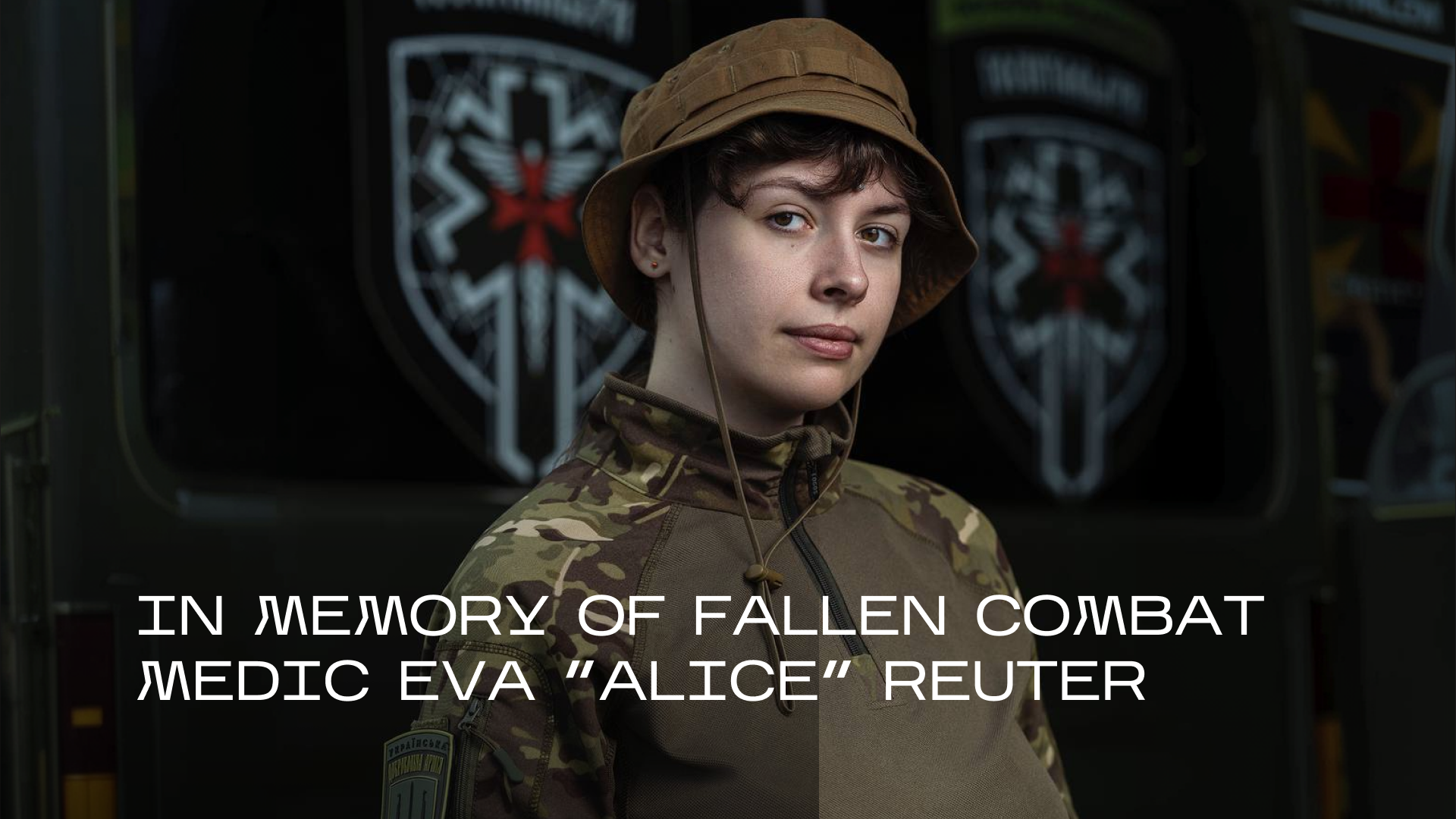 An art historian who became a combat medic, mastered drone repair, FPV drones, 3D printing, led international recruitment, and coordinated a major educational project
  To Mark the 8th Anniversary of the VETERANKA Movement
 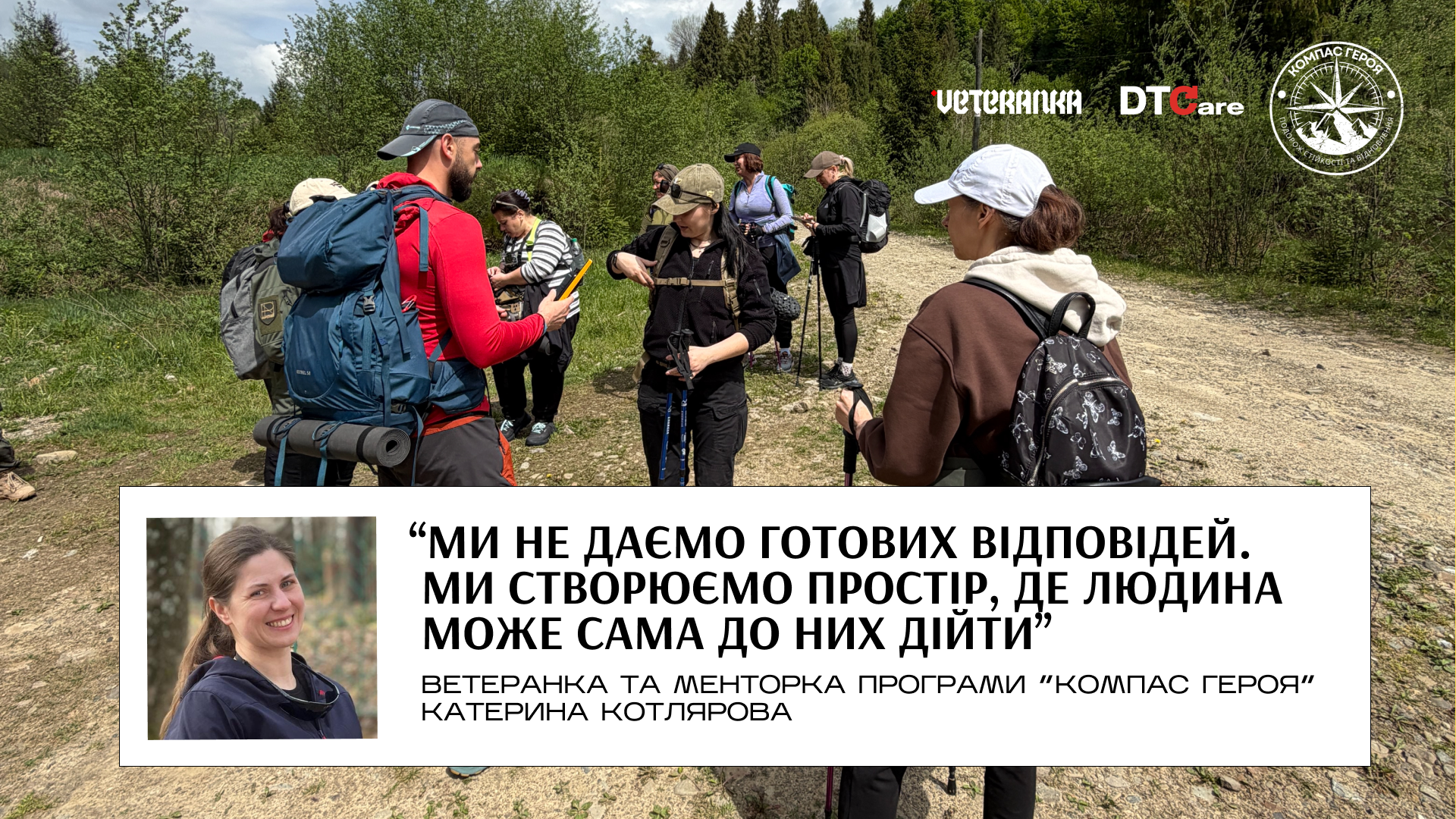 What Awaits Participants of the Hero’s Compass Adventure Counseling Program
 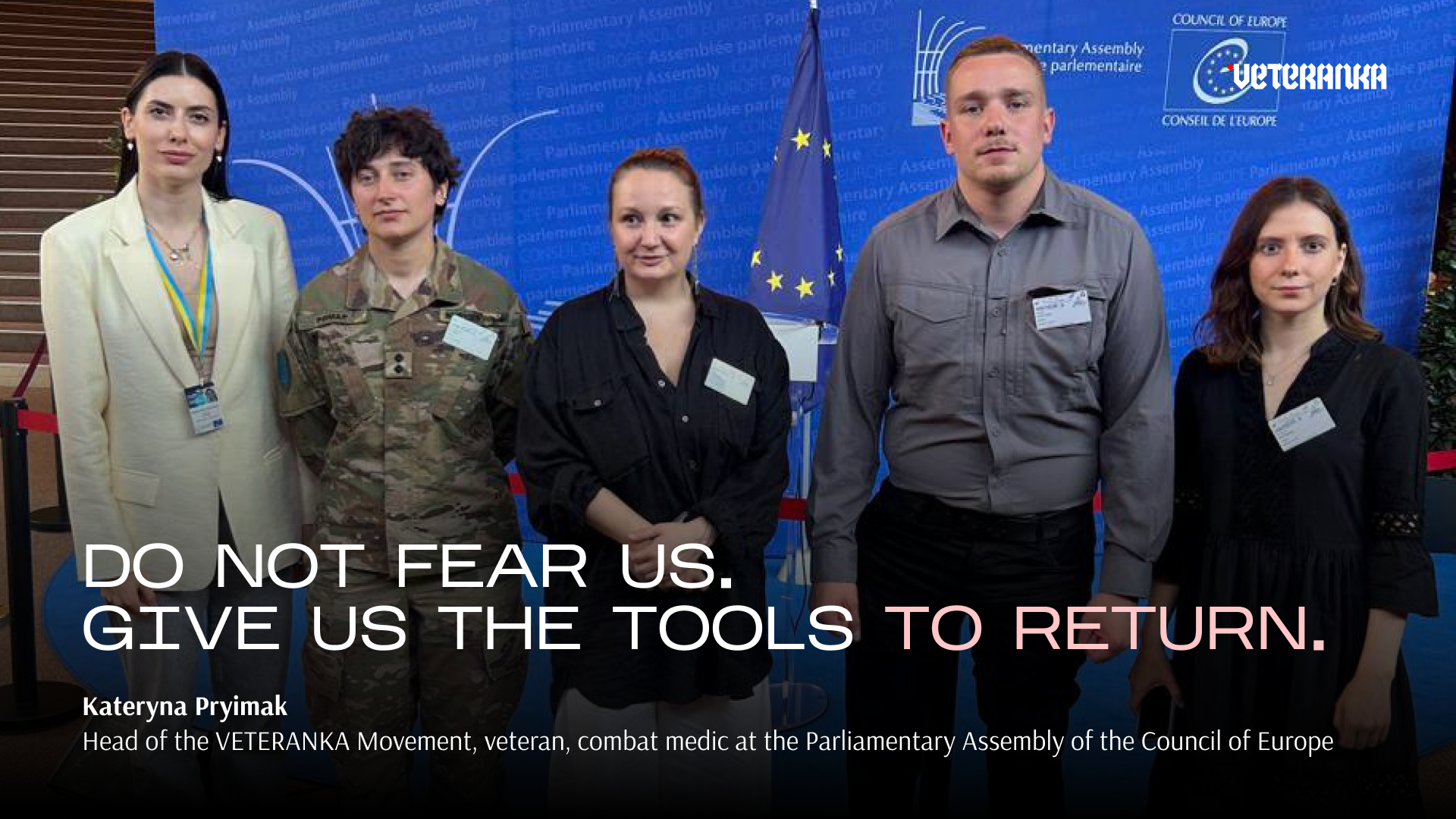 "Do not fear us. Give us the tools to return"
  “Life does not end after service — it becomes different”