To Survive, Abstain!

If you were to search on Google for something like “military and alcohol” or “drugs and servicemen,” you would quickly find articles about the law that strengthens the personal responsibility of servicemen or a multitude of information about the convictions of soldiers for cases of distribution, possession, and misuse of narcotics or alcoholic beverages.
The issue of alcoholism and drug addiction in the army has been highlighted in the media numerous times, discussed in the command of all branches of the Armed Forces of Ukraine and other military formations, outlined in the orders of unit commanders with an emphasis on combating this disgraceful phenomenon. However, for some individuals, it is not so easy to abstain from narcotic euphoria or Soviet “100 grams of frontline courage.”
Why do soldiers turn to alcohol and drugs, even on the frontlines? The scale of the problem.
I suggest not delving into the details of how individuals who have consumed alcoholic or narcotic substances long before their military service end up in the armed forces, as this is a chronic condition and a significant issue for both the army and our society as a whole.
There is no precise information on how many soldiers use one type of prohibited substance or another. No soldier will admit to using, nor label themselves as dependent, as this would lead to official investigations, loss of monetary rewards, and potentially jeopardize their entire military career.
While purchasing alcohol from a store poses no issue (even for individuals in military uniform, violating the law during full-scale warfare, numerous vendors readily sell this product), acquiring narcotics is slightly more complicated. Drugs need to be brought in from leave or furlough (which now sounds like something from a bygone era), received in a parcel at the post office from “friends” (often even relatives) who believe it’s worth finding time to “unwind,” or bought from a pharmacy as a potent painkiller.
People mistakenly view military service as akin to a civilian job, thinking that at the end of the workday or during a holiday weekend, it’s “not a sin” to have a drink or two or three… However, it’s crucial to finally realize that for military personnel, there’s no fixed working hours. We carry out our service/combat duties around the clock, 24/7, and must perform our tasks flawlessly!
Many soldiers use drugs, even those who are not addicts in civilian life, and have never tried anything before. To relax in the separation areas, they smoke “weed” (cannabis), and in their positions, to stay alert, they snort amphetamines, which heighten their senses and prevent sleep. Even worse, some have taken to using “bath salts.”
Why does addiction develop in those who did not abuse substances before entering the military? It is likely due to psychological issues:
- Individuals not adapted to military service and warfare.
- Disappointment that reality does not match their expectations regarding combat and loss.
- Lack or insufficient support from family, friends, comrades-in-arms…
- The body is unaccustomed to such a level of stress, or it “had enough” of one acute stress reaction. Often, by frequently using narcotic stimulants (I would include energy drinks here, as soldiers increasingly use them without which they rarely go on combat missions), soldiers believe it will help them perform their duties more effectively and better serve their purpose. However, these substances offer no benefits to the body. A healthy body needs quality rest and sleep, which cannot be achieved under the artificial strain on internal organs and the brain. It’s worth noting separately that some soldiers receive significant doses of potent painkillers after injury in hospitals, which they then cannot reduce and become dependent on.
Narcotic substances are entirely illegal in Ukraine, and the sale of alcoholic beverages is prohibited to servicemen in uniform during the state of martial law. There are reasons for this, and one of the important ones is the impact of alcohol and drugs on our thinking, thoughts, behavior, and reaction to danger. Prohibited substances slow down the central nervous system. Both drugs and alcohol alter brain function, leading to depletion of natural chemicals that help reduce anxiety. Passing out under the influence affects the quality of sleep compared to when a person doesn’t use alcohol or drugs. This can heighten anxiety levels.
As a result, soldiers may experience stress, anxiety, panic, or depression even more intensely. Later, they may feel they need more alcohol or drugs to cope with this overwhelming feeling of anxiety.
Prohibited substances (including alcohol) affect our ability to process thoughts and make rational decisions, which creates serious conditions for an increased likelihood of violence, emergencies, and accidents with unforeseen consequences. It also contributes to the spread of suicidal tendencies and leads to non-combat irreparable losses among servicemen. Every year, the number of accidents, injuries, poisonings from substandard alcoholic beverages (overdoses), and military-related criminal and administrative offenses is increasing.
A civilian using drugs or alcohol causes harm and discomfort to themselves and possibly to their family, but a military personnel, in addition, poses a danger to the unit in which they serve. Unpredictable (inadequate) behavior is the greatest threat from a servicemember struggling with drug or alcohol dependency.
Within military formations, command conducts individual and group preventive discussions, targeted activities with personnel, and puts maximum effort into addressing the issue of substance use and preventing the spread of prohibited substances.
At the legislative level, there is a protocol for identifying servicemembers with drug or alcohol dependencies (sudden raids for detection and testing for usage). However, there is no established system for treating dependencies (illnesses) in the Ukrainian Armed Forces.
Who should you turn to?
For alcohol intoxication, you can seek medical attention to “restore” your body through an IV. If you notice that you only use drugs situationally, perhaps in response to stressful reactions, it’s advisable to reach out to a military psychologist or a combat stress control group.
If you feel that the problem has taken root and you want assistance in overcoming your dependency, turn to a military chaplain. In this relatively new structure in the Ukrainian Armed Forces, there is a protocol for directing soldiers to specialized treatment at rehabilitation centers (including the option of “coding”) and subsequently returning to their military units.
It has been proven that drug addiction and alcoholism are incompatible with military service, which involves intellectually demanding tasks and duties that require significant physical and psychological exertion for the individual’s well-being.
Now, during military operations, it is crucial to remain sober and rational — it could save your life!
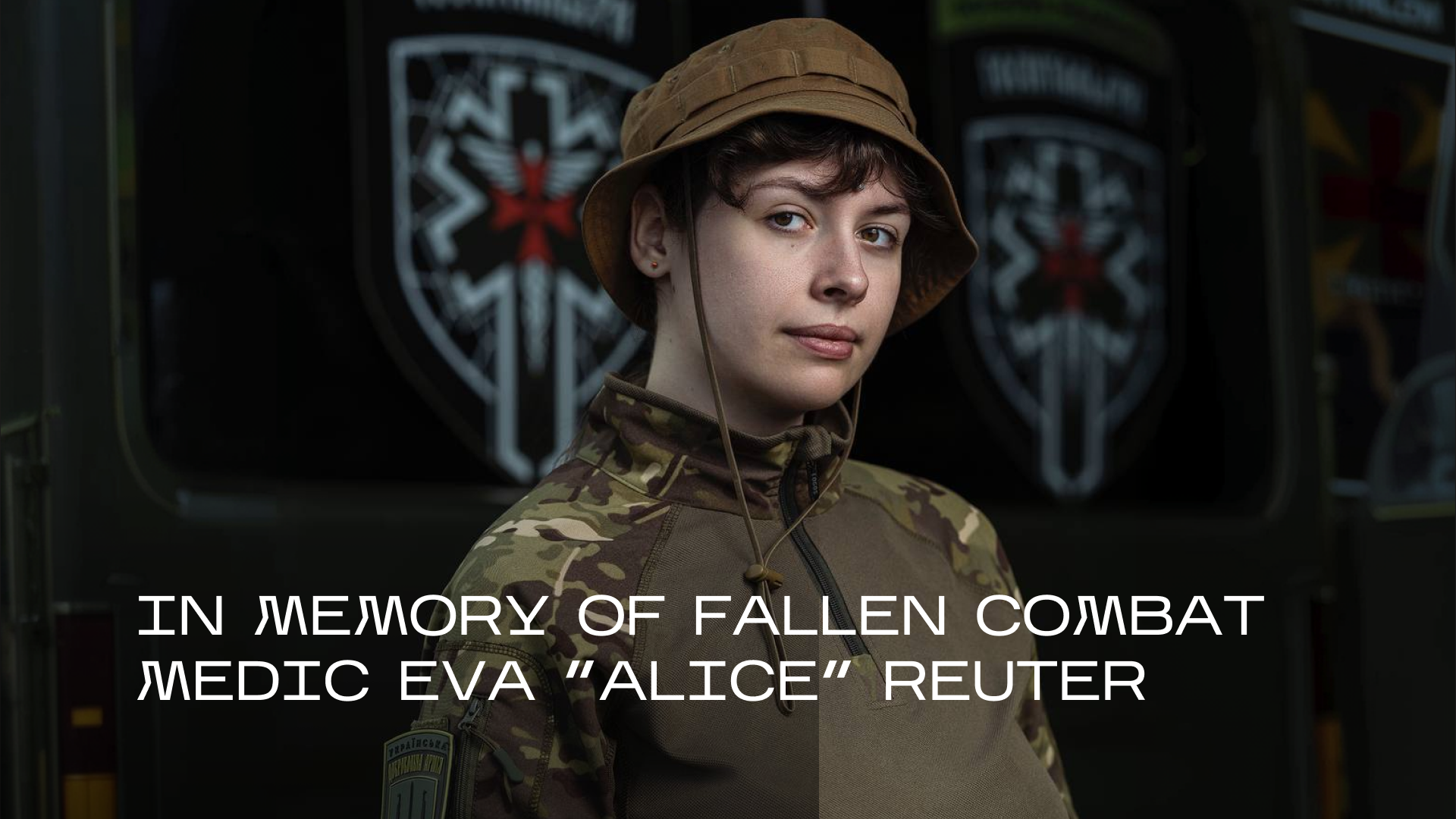 An art historian who became a combat medic, mastered drone repair, FPV drones, 3D printing, led international recruitment, and coordinated a major educational project
  To Mark the 8th Anniversary of the VETERANKA Movement
 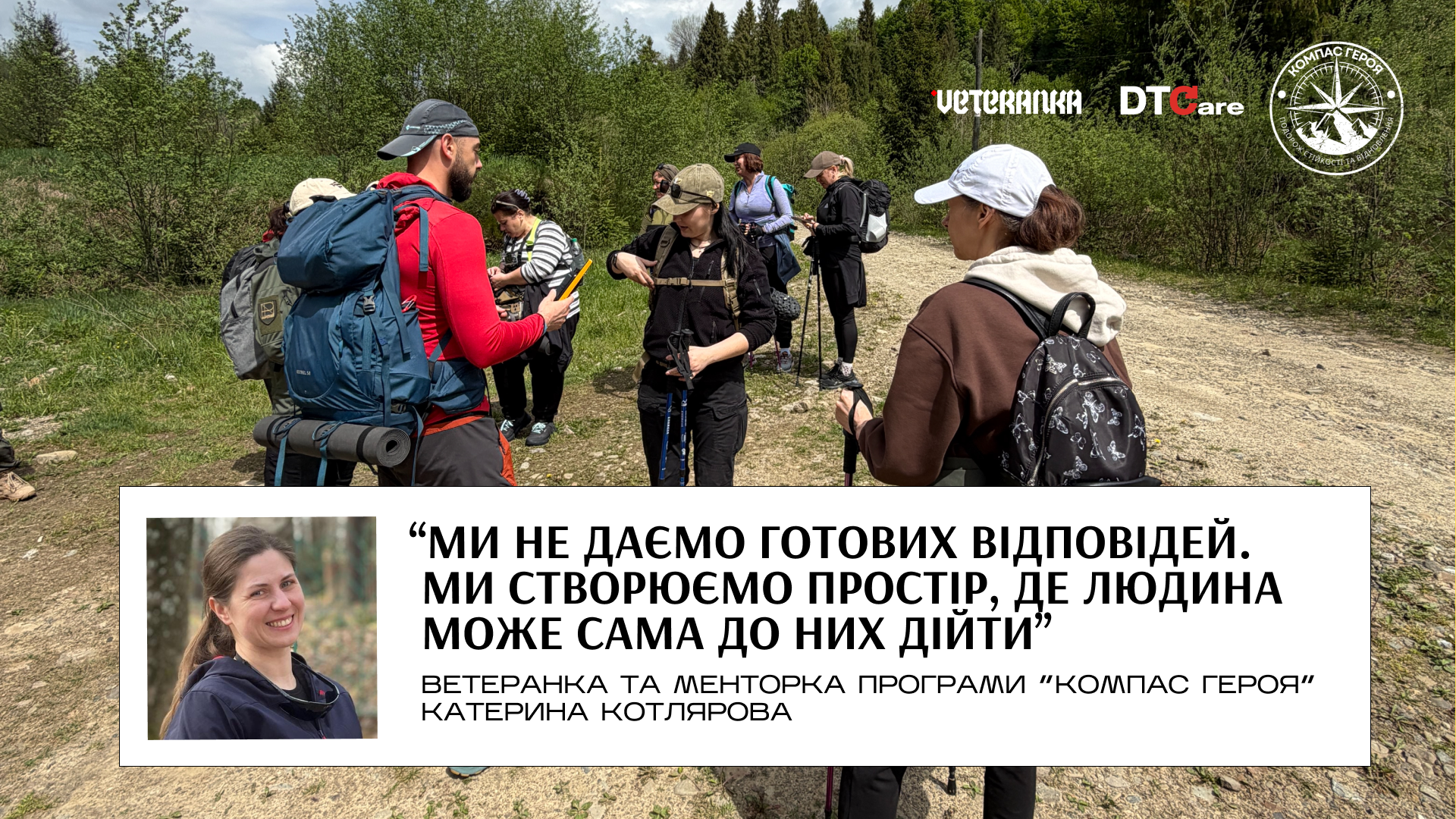 What Awaits Participants of the Hero’s Compass Adventure Counseling Program
 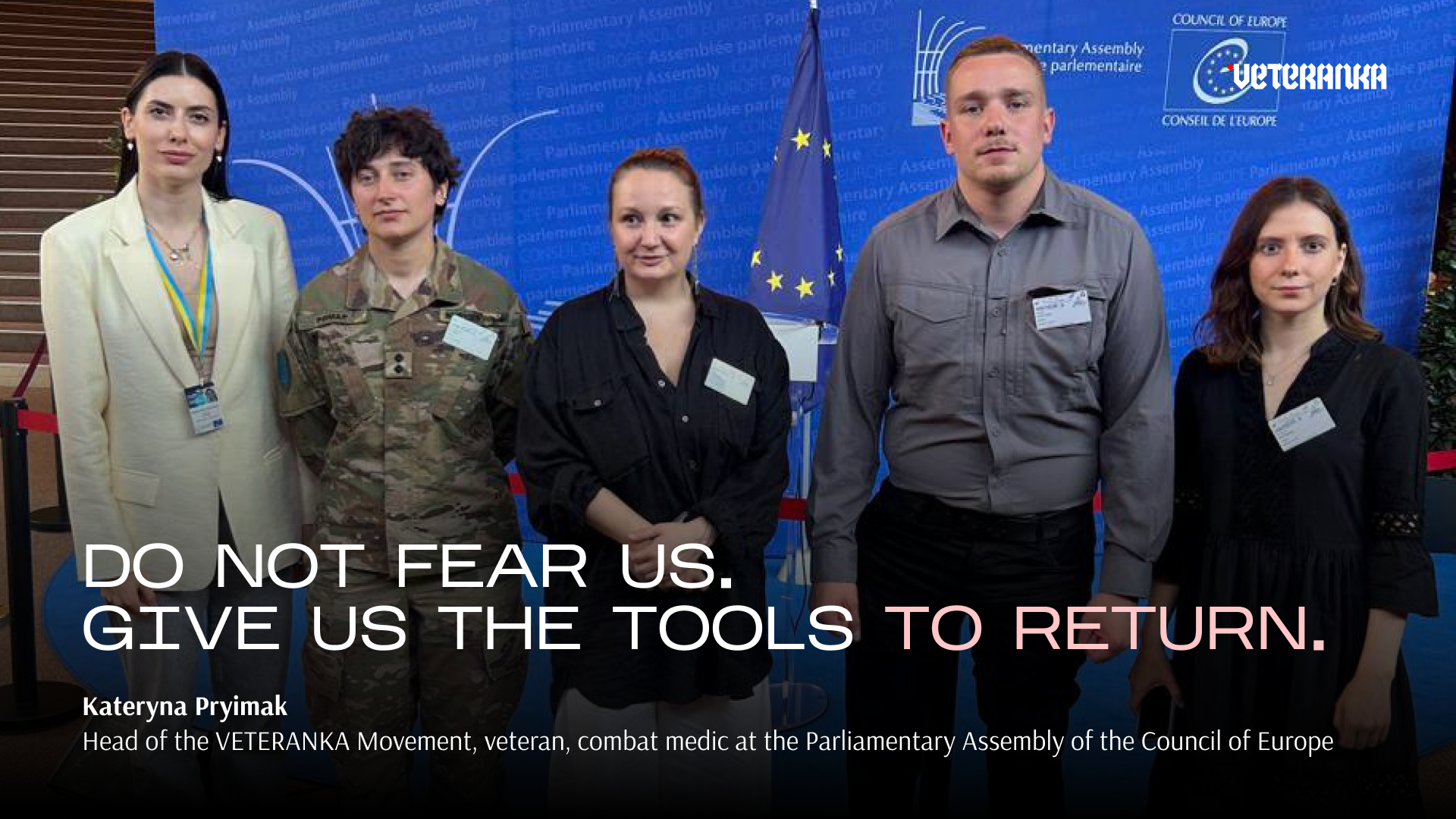 "Do not fear us. Give us the tools to return"
  “Life does not end after service — it becomes different”