What is trauma?

Psychological trauma is an emotional response to a stressful event. Any situation perceived as stressful, frightening, or threatening can be traumatic.
Some common causes of trauma include:
- Loss (of a loved one, home, property, job, or relationship)
- Violence (physical, sexual, financial, or psychological)
- Car accidents
- Natural disasters
- Terrorist attacks
- Bullying and other distressing events
A traumatic event is a situation in which the psyche is exposed to intense stress. The stronger the stress, the deeper the trauma.
Signs of trauma
Trauma can manifest in different ways, including:
- Physical symptoms: Weakened immune system, flare-ups of chronic illnesses, sleep disturbances, and appetite changes
- Cognitive impairment: Slowed or chaotic thinking, trouble concentrating and remembering, and reduced ability to process information
- Behavioral changes: Uncharacteristic actions or reactions that do not align with a person’s usual behavior
- Social shifts: Avoiding certain people or situations, increased irritability, aggression, cynicism, hyper-vigilance, or a persistent sense of danger
Understanding trauma and its effects is the first step toward healing and finding the right support.
Types of trauma reactions
There are several types of trauma reactions:
Acute stress reaction – a temporary disorder that develops in response to an unusual physical or psychological stressor (for example, a real threat to life, serious injury, or sexual violence). It manifests immediately after a traumatic event or within the first three days.
Avoidance. A person may avoid thoughts, feelings, conversations, places, or people associated with the traumatic event.
Re-experiencing the event. This includes intrusive memories or dreams.
Physical reactions (excessive sweating, rapid heartbeat) and panic when reminded of the traumatic event.
Dissociation. A sense of detachment from others. This may include an altered perception of reality or oneself. For example, a person may feel like they are watching themselves from the outside. Emotional numbness, derealization, depersonalization, and dissociative amnesia (inability to recall an important aspect of the traumatic event) are also possible.
Increased stimulation. Symptoms include poor sleep, irritability, excessive vigilance, and outbursts of anger with little or no provocation.
If a person does not receive timely and professional support, an acute stress reaction can develop into PTSD.
Post-Traumatic Stress Disorder (PTSD) can be diagnosed no earlier than one month after a traumatic event and is characterized by the following symptoms:
- Avoidance of social interactions;
- Heightened arousal (sleep disturbances, risky behavior, increased emotional reactivity);
- Re-experiencing the event (flashbacks, nightmares).
 To Mark the 8th Anniversary of the VETERANKA Movement
 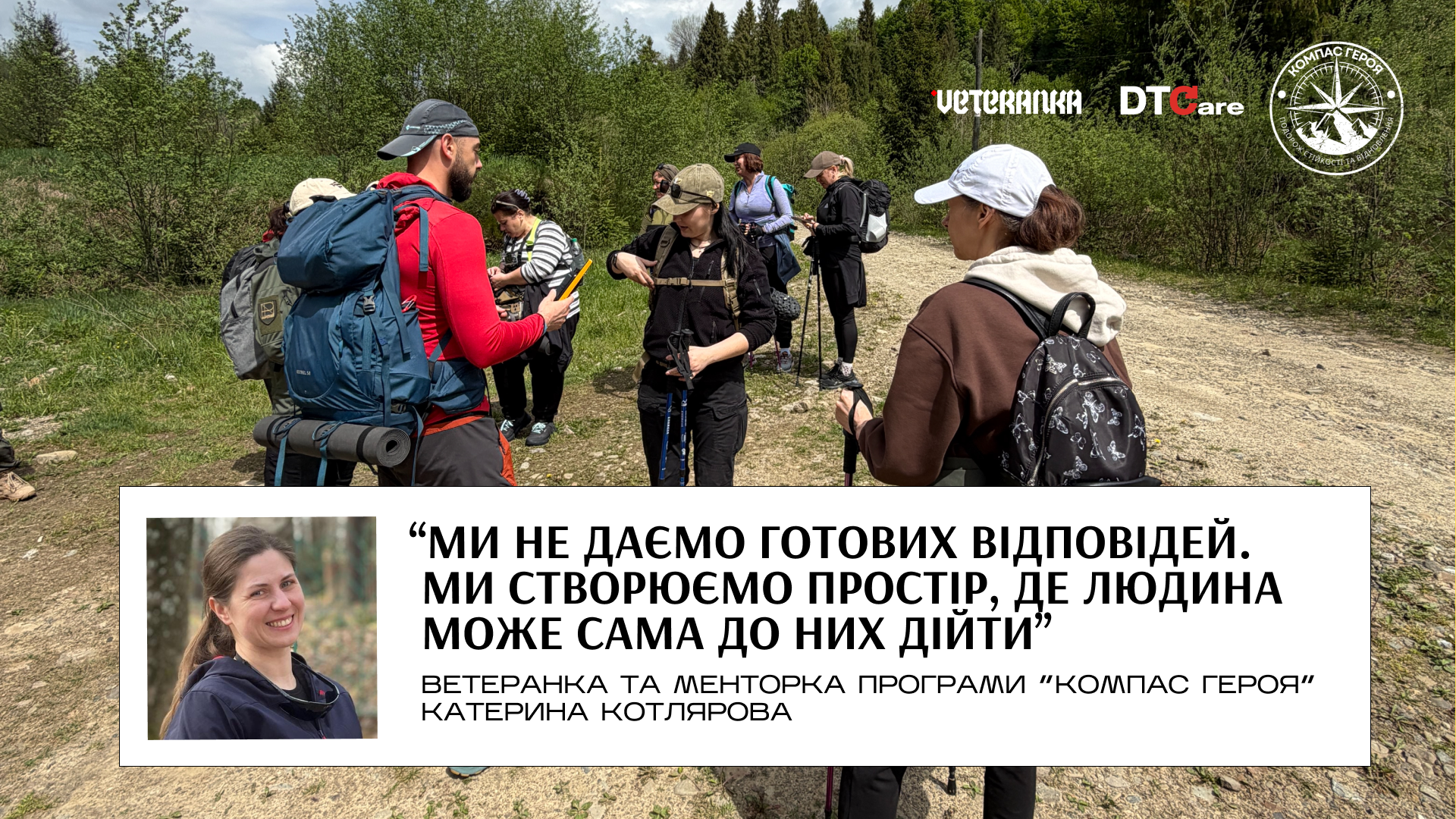 What Awaits Participants of the Hero’s Compass Adventure Counseling Program
  "Do not fear us. Give us the tools to return"
  “Life does not end after service — it becomes different”
  We strengthen evacuation efforts on the most difficult sections of the front and delivers the unique robotic complex “Maul”