What to Do About Sexual Harassment in the Military?

Mavka’s Story, Systemic Failures, and What Steps to Take if It Happens to You
Yelyzaveta, a 24-year-old squad leader in the reconnaissance and adjustment platoon of unmanned combat systems with the 115th Separate Mechanized Brigade—callsign “Mavka”—spoke out on social media about sexual harassment in the military.
We’ve put together a short explainer about why this continues to be a problem, what’s being done to address it, and what to do if you or your comrade experience harassment.
This week, yet another story of sexual harassment in the military became public. Servicewoman Yelyzaveta—known as “Mavka”—shared her experience online. She says she sought help from a personnel psychological support officer in the Armed Forces of Ukraine, but he “refused to assist in launching an investigation” and, on top of that, filed a reprimand against her.
More often than not, stories like these are kept behind closed doors. In many cases, the victim—not the perpetrator—is transferred to another unit. Unfortunately, Mavka’s case is following that same pattern.
She reports that this was not the first instance of harassment or “romantic-sexual pressure” from a fellow serviceman. Once again, the soldier “came into my room at night, climbed into my bed wearing only underwear, and refused to take no for an answer.” She managed to avoid rape, but described “a lot of unwanted touching, coercive persistence, and kissing […]. Disgusting, painful, and terrifying. No consequences for the offender, but panic attacks and emotional burnout for me.”
Instead of receiving support, she was blamed—accused of provoking the situation and reprimanded for “rude communication with the officer” who, in fact, failed to perform his duties.
The Problem:
Despite the war having lasted over 12 years, Ukraine still lacks a legally defined response mechanism for sexual harassment in the military. According to the Gender Advisor to the Armed Forces, the first-ever official punishment for harassment in the military was only recorded earlier this year, in March 2025.
In most cases, dealing with such incidents still relies on personal connections and informal efforts. There is no clear or effective institutional protocol in place.
Why is this happening?
- There is no safe, anonymous channel for submitting complaints.
- The Ministry of Defense hotline may take up to 30 days to process a case.
- Victims are often the ones transferred out of the unit, not the perpetrators.
- Offenders are rarely held accountable and are frequently shielded by the system.
- Survivors fear going public because they have little to no protection, and resigning from the Security and Defense Forces is extremely difficult.
Military leadership often claims the problem “does not exist” because they receive few formal complaints. But the truth is: reports are rarely made, since complaints are sent straight back to the unit commander—who might be the abuser or someone protecting them.
What Reforms Are Underway?
- In 2023, the Women’s Veteran Movement launched a petition calling for mechanisms to address sexual harassment in the military. It gathered over 25,000 signatures.
- A draft law to amend the Disciplinary Statute of the Armed Forces is now awaiting adoption.
- The amendments include guarantees of equal rights and opportunities for women and men, non-discrimination (including based on sex), and prevention of sexual harassment and gender-based violence.
- These legal changes would allow for the development of functioning procedures and tools to combat abuse and discrimination.
- Also crucial is the adoption of legislation on a Military Ombudsperson, with real mechanisms to influence investigations.
What to Do if You Are a Victim of Sexual Violence:
- Prioritize your immediate safety.
- Document all details and gather witnesses if possible.
- Photo and video evidence is vital for future investigations.
- File a formal report to your direct or higher-level commander.
- If needed, submit a criminal complaint to the Military Law Enforcement Service or civilian police.
- Report the incident to the Ministry of Defense Hotline (24/7 at 1512).
- Contact the Presidential Commissioner for the Rights of Military Personnel and Their Families at zpv@apu.gov.ua, explaining the circumstances.
And Also:
Write to us — we’ll support you and provide full assistance, including legal, psychological, and medical help, as well as confidentiality, if needed.
Don’t stay silent!
We thank Yelyzaveta for her courage in speaking out about a problem many face in silence. We’re in touch with her and continue to support her.
If you’ve been subjected to sexual violence, reach out to us. We are here and ready to provide all-round support to those affected.
 To Mark the 8th Anniversary of the VETERANKA Movement
 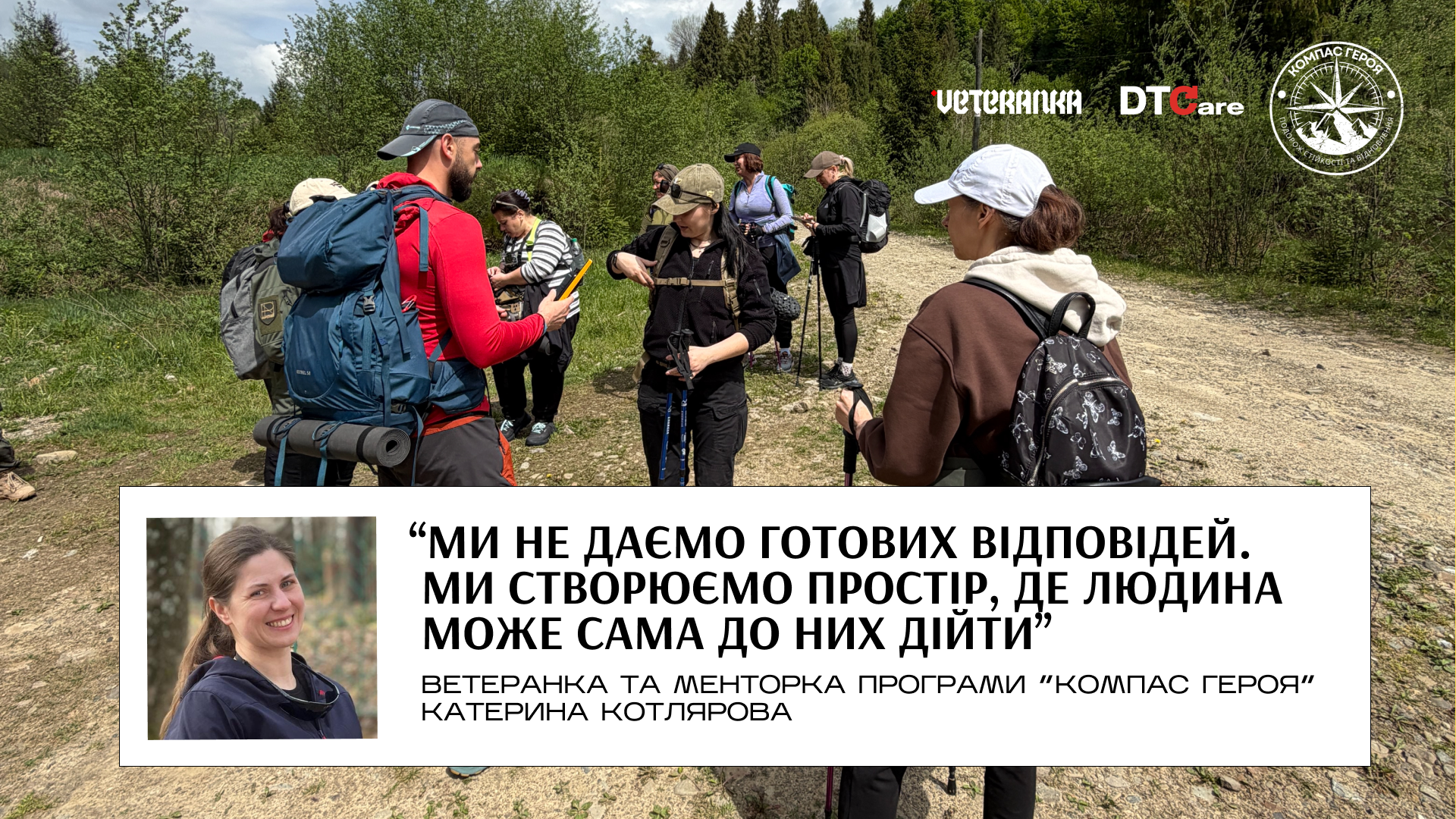 What Awaits Participants of the Hero’s Compass Adventure Counseling Program
 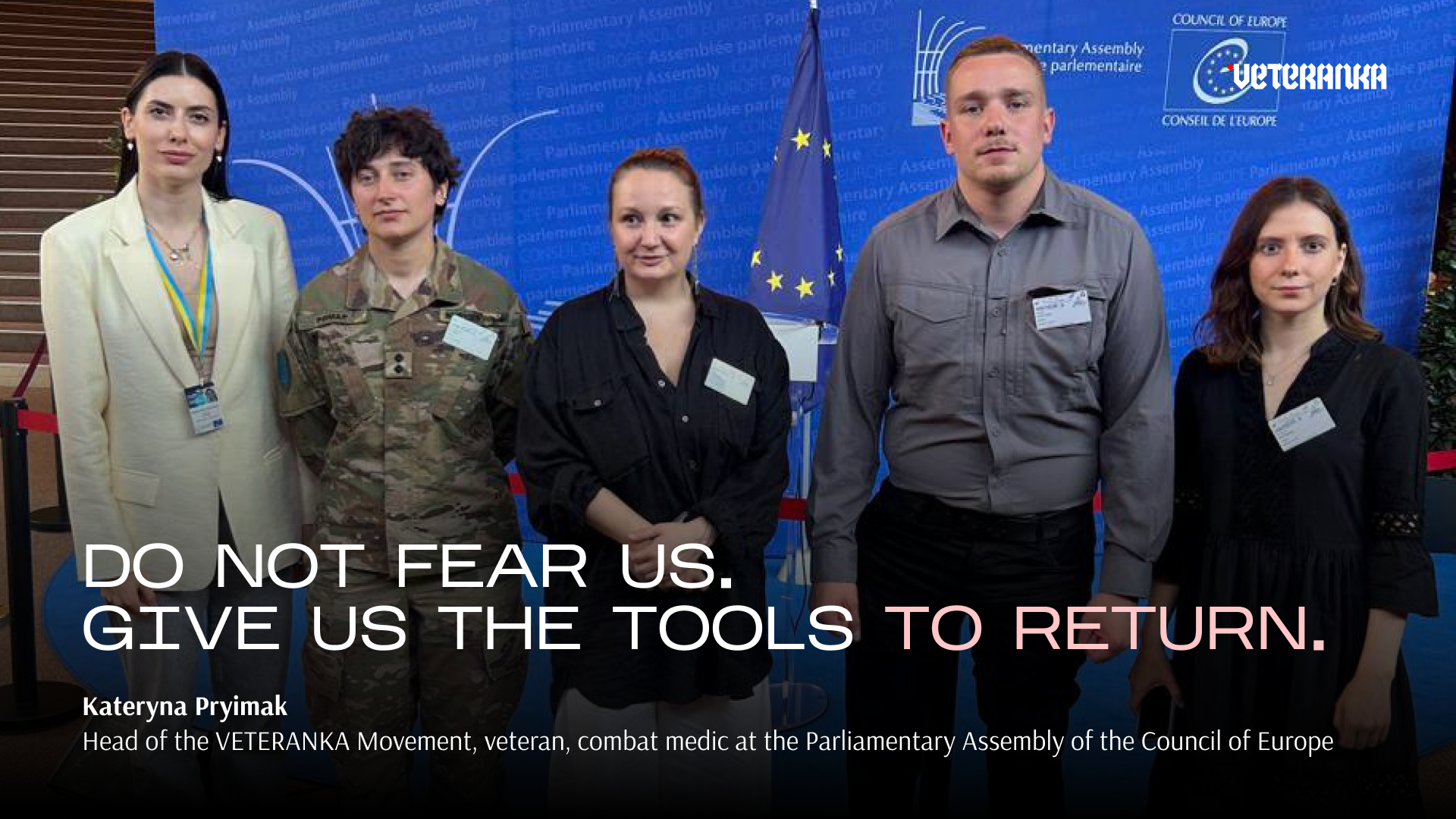 "Do not fear us. Give us the tools to return"
  “Life does not end after service — it becomes different”
  We strengthen evacuation efforts on the most difficult sections of the front and delivers the unique robotic complex “Maul”