“Why did you even go there? You’re not required to serve” — words I hear all too often

Alex is a servicewoman in Ukraine’s Defense Forces and the mother of two. Back in 2014, she wanted to enlist but was turned away — her younger son was only six. In 2022, she finally joined the army. Yet alongside fighting Russia on the battlefield, she faces another battle in civilian life — against social prejudice.
The Beginning of Service as a Combat Medic and an Injury
When the full-scale invasion began, Alex saw it as her duty as a conscious citizen to defend her country, convinced that victory would only be possible through unity. She spent three years on the frontlines as a medical instructor and combat medic, saving the lives of her comrades. In 2023, after being wounded in the Sumy sector, she was reassigned to head the battalion’s personnel group in the command unit.
“Your child is growing up without a mother”
Alex recalls that once she began serving, she often heard civilians say things like: “What are you even doing there? You’re not required to serve,” “Why did you go there,” or “Your child is growing up without a mother.”
People rarely said it directly, but the judgment came through in remarks such as: “Well, someone has to go to the parent meetings,” “You should be paying more attention,” or “Why did you enlist? That was your choice.”
“That’s how the bullying of military mothers begins,” Alex explains. “In my case, I’m a mother raising a child without the father, who takes no part at all in his upbringing.”
Such situations, she says, bring inner tension — any mother ends up overthinking and spiraling deeper into self-doubt.
No One Spoke Up
Criticism sometimes even came from other mothers.
“When my son had a parent meeting, I warned in the group chat that I couldn’t be there because of service and asked if someone could share the key points. One mother replied: ‘We’re not going to tell you, you should have come to the meeting.’ What hurt the most was that no one else spoke up for me. And this wasn’t the only time.”
The Harshest Words Come from Family
Alex admits that criticism from strangers is easier to bear than words from loved ones. Since 2022, her older daughter has said: “Your younger son is growing up without a mother,” “Who did you leave him with,” and “Quit the army, you have the right.”
“My mother once compared me to her friend’s son, who comes home every weekend or every other week. She asked: ‘Why can’t you transfer closer?’ But I can’t. I’m in a different brigade, with a different role. And I also have an exaggerated sense of responsibility — unlike some men who try to get out of service just to go home,” Alex says.
She often reminds her fellow soldiers: “If we don’t stand here now, tomorrow Russian troops will be in your home. What will you do then? Alone, you won’t protect your wife or your kids. That’s why we have to stand together.”
Civic Duty for Everyone
Alex believes every Ukrainian citizen should serve, at least once, to see and feel what it’s really like. In her view, at a time when the nation is fighting for independence and freedom, service is a civic duty.
Double Pressure on Military Mothers
Serving mothers face double pressure — from civilian society and within the army. Civilians accuse them of abandoning their children, while in the military women are often dismissed as “less than” and their maternal needs ignored.
“In a recent conversation with colleagues, I said I needed leave because my 16-year-old son was starting at a new school and needed my support. They told me: ‘Why do you need leave? He’s already grown up.’ I explained that for any mother, her child will always be her child,” Alex recalls.
She cites an example from her unit: a father and son serving side by side. The son is already 30, yet the father always stands firmly by him.
Fighting for Her Rights
According to Alex, the army is still not built for women — prejudices remain, along with cases of harassment.
“For a woman, service is extremely difficult. It demands enormous physical, mental, and emotional strength. If a woman understands her purpose in the army and performs tasks on par with men, there won’t be problems. But not many women manage this. That’s my view, based on the experience I’ve gained over three and a half years.”
Women Fight, Not Just “Serve”
She believes the army must raise its combat readiness and cohesion, making it more effective.
“First, the system must change. We need to redefine the very concept of ‘service’ for women. Because like men, we fight — we don’t just serve. Many of the psychological and emotional struggles come from needless nitpicking that changes nothing — not the course of the war, not the outcome of service.
Second, we must work for efficiency. Too many shift responsibility onto others. It’s rare to find someone ready to take real responsibility for their actions, ideas, or work. The army as a system often flattens individuality, pushing everyone to conform. In other words: don’t stand out, or you’ll be punished.”
Support from the Rear — What’s Often Missing
In civilian life, Alex says, service members often face misunderstanding, because most people simply don’t grasp what war really means.
“People don’t understand what you’ve been through. They don’t know where you’ve been, what you’ve done, or the burden you carry every day,” she says.
To change this, she believes, society must actively shape public opinion and create programs that support both men and women serving in the Defense Forces. The state must care for its citizens — and in return, they will defend it. Conscious citizens must be nurtured from kindergarten. After all, the national idea won’t invent itself.
 To Mark the 8th Anniversary of the VETERANKA Movement
 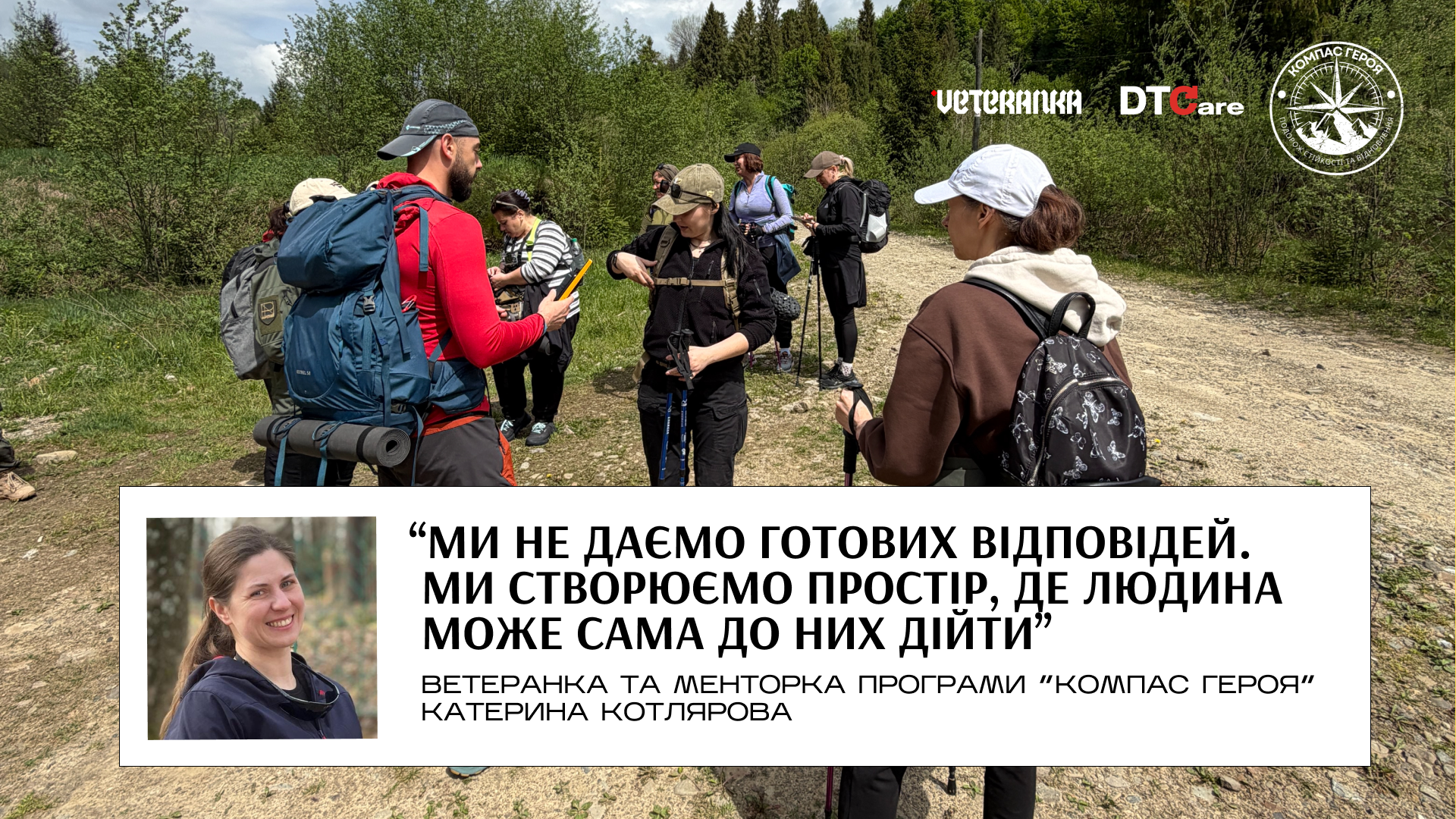 What Awaits Participants of the Hero’s Compass Adventure Counseling Program
 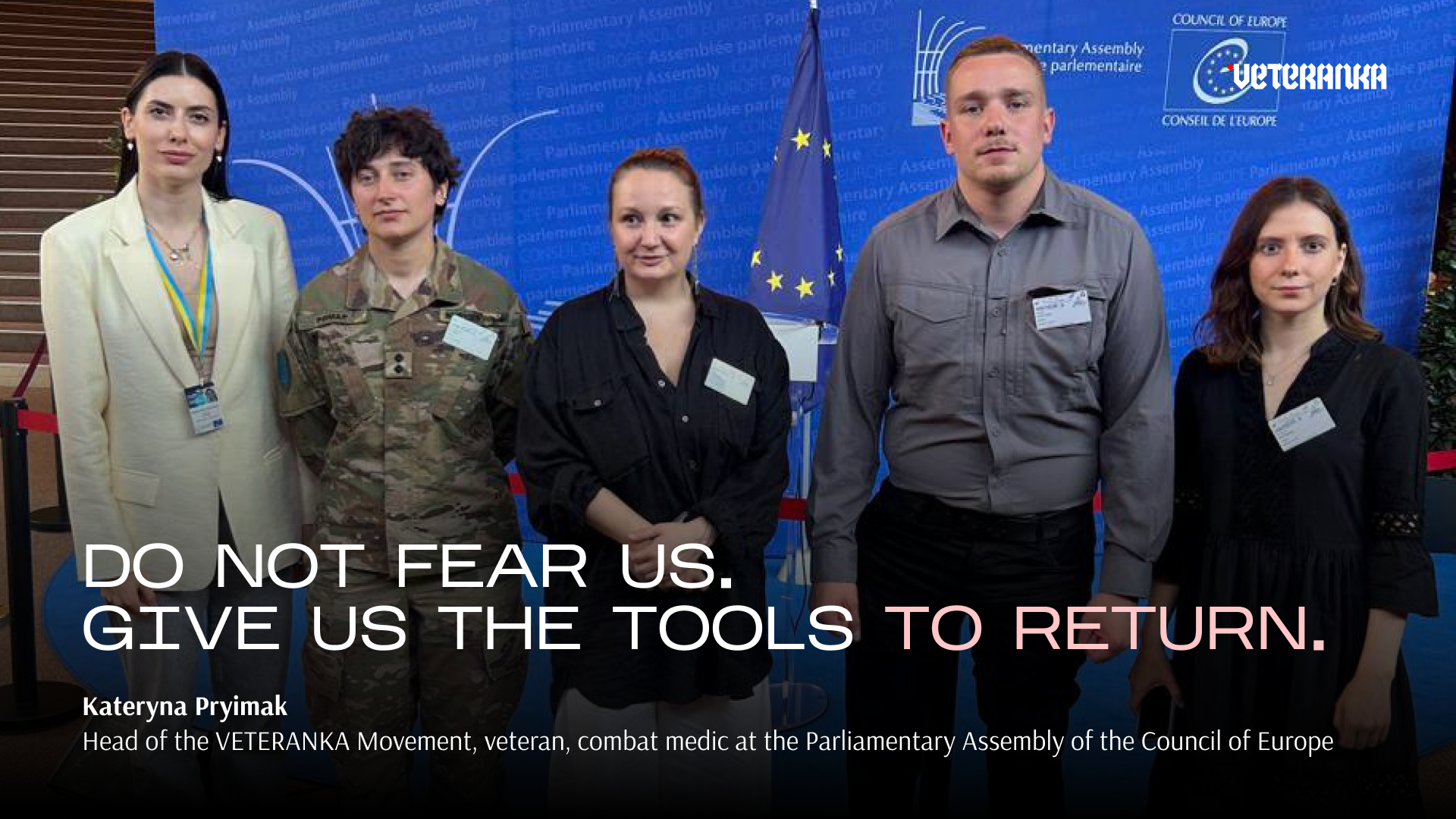 "Do not fear us. Give us the tools to return"
  “Life does not end after service — it becomes different”
  We strengthen evacuation efforts on the most difficult sections of the front and delivers the unique robotic complex “Maul”