Women Who Chose to Fight from the First Day of the Full-Scale Invasion
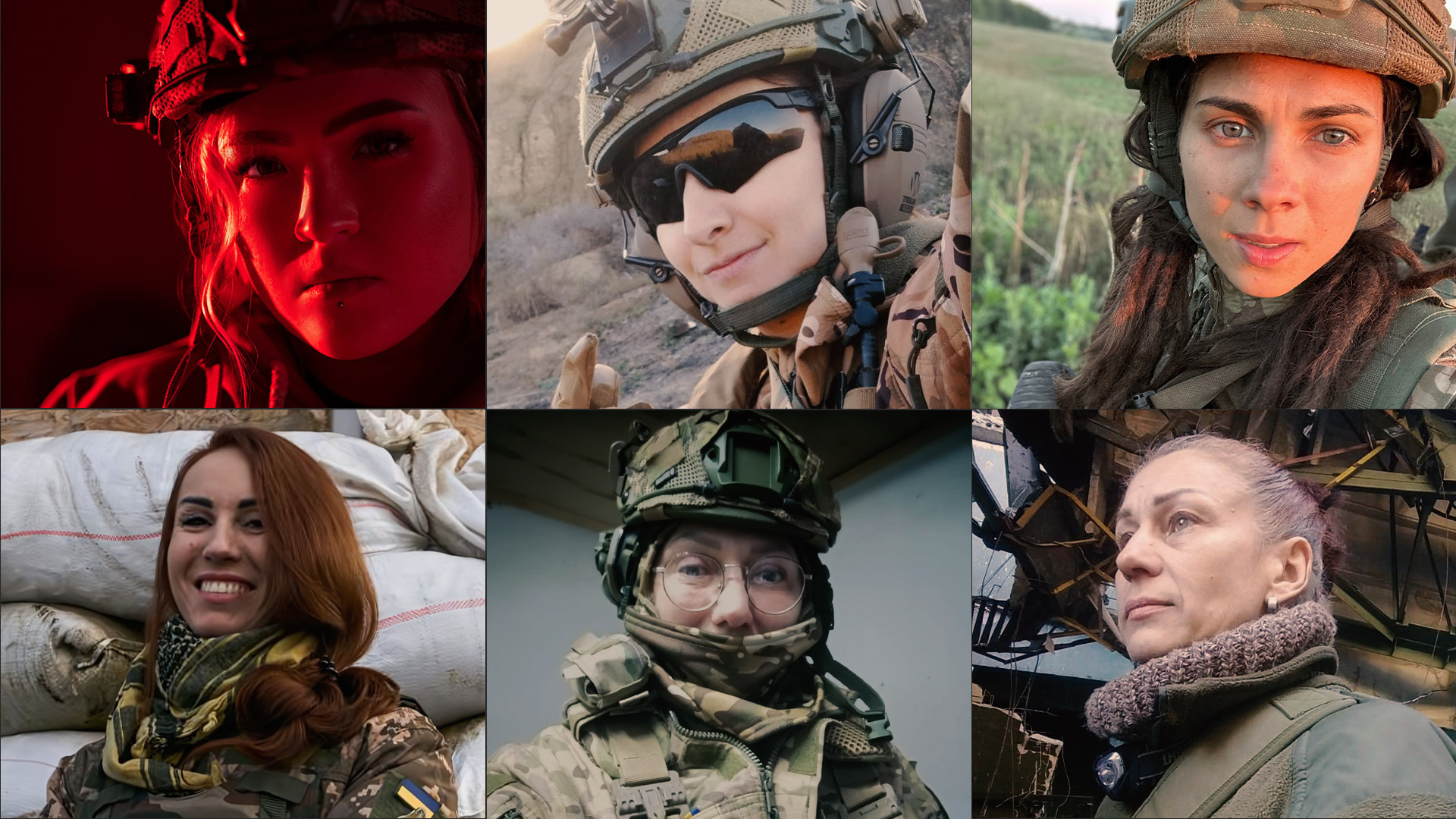
On the day marking four years since the start of Russia’s full-scale invasion of Ukraine, we share the stories of women who decided that day that they could not stand aside.
Many people rose to defend their country. Among them were members of the Movement — “Khymera,” “Vysota,” “Borysivna,” “Ruda,” “Lelya,” and “Niks.”
They came to the military from different professional backgrounds and life experiences, but they were united by one thing: the impossibility of staying on the sidelines when the full-scale war began. Their stories are about evacuations under fire, service on different fronts, and defending the sky.
The strength of women in the military is not expressed through loud statements, but through daily decisions and work — through the readiness to remain in your place and do what must be done.
Below are their first-person stories about decisions, responsibility, and the strength that sustains Ukraine’s defense every day.
“I never imagined joining the military before the full-scale invasion”
Olha “Vysota” Yehorova, Unmanned Systems Forces of the Armed Forces of Ukraine
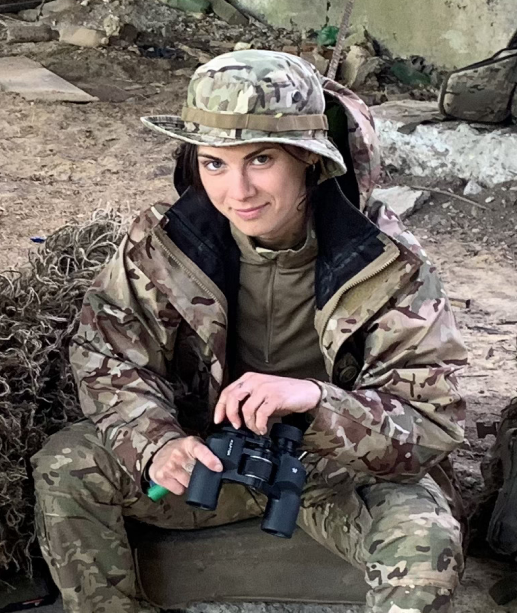
Since 2014 I worked as a gym trainer. I practiced weightlifting at a professional level and earned the title of Master of Sports within a year. I also did rock climbing because I loved the community around it.
On 24 February 2022, I joined a volunteer battalion. When you are young and healthy and your country is at war, I don’t know what other option there could be.
Given my physical condition and motivation to master a military profession, I wanted to try to obtain a combat position. Instead, I was first assigned to administrative work, with the promise that I would be allowed to train alongside the men and that my performance would determine whether I could move into a combat role.
The training was difficult. Every step and action I took was closely evaluated. But that is normal — you are being prepared for situations where you might end up alone with a wounded comrade and must evacuate them yourself. It’s a matter of life and death, so people need to trust you completely.
Later I was transferred to the position of riflewoman. My unit carried out missions in the Serebrianskyi Forest, Chasiv Yar, the Kupiansk direction, and many settlements across Donetsk region.
In 2023, during a mission in the Serebrianskyi Forest, I was wounded — a fragment from a mine pierced my abdomen. I recovered quickly and returned to service after four months to continue combat work. I came back because I felt I had not done enough.
Over the years the war has changed, and we have had to make difficult decisions and master new professions. Last year I changed positions and now I work “from the sky.” For my safety and the safety of my comrades, I do not disclose my exact place of service.
Although more women are joining the army now, we rarely meet each other. In my unit, you could count the number of women on one hand.
The VETERANKA Movement is an important community that connects women from different units, specialties, and locations. This sense of unconditional support helps you stay strong even in the darkest times.
“I have never once regretted joining the army”
Anastasiia “Khymera” Vinslavska, Senior Nurse of the Evacuation Department
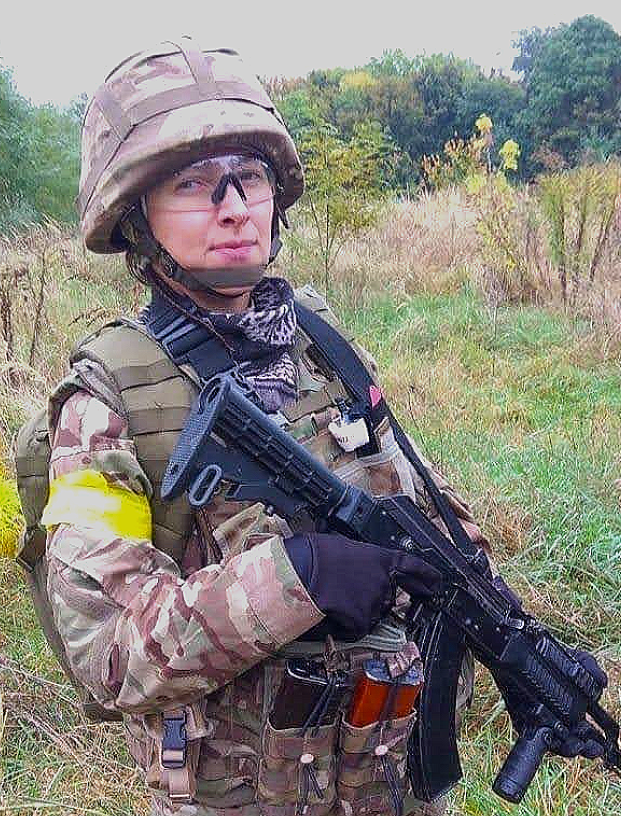
Since 2015, I have conducted first aid training for military personnel, police officers, and civilians, while studying nursing. During my work as an instructor I realized that I lacked medical education and wanted to grow professionally. My dream was to work on an ambulance.
When the Russian-Ukrainian war began in 2014, I had neither the training nor the knowledge. I was also caring for my small children, so I did not join the army, but I volunteered as a paramedic on evacuations near Bakhmut. During that time I gained experience and knowledge and developed a clear understanding of what I could do in the army.
People had been talking about the possibility of a full-scale invasion for almost a year before it happened, so my decision to serve was made long before the attack. My medical backpack was already packed.
Still, on 24 February, I panicked. I woke up around 5:30 in the morning from a call from a friend who shouted: “Wake up! The war has begun!”
I started reading the news while air raid sirens were sounding. I froze for a moment. It is one thing to travel east to a war zone, and another when the war comes directly to your home — where you have two children, a bedridden grandmother, and a cat.
But I quickly gathered my things and went looking for a shelter, which turned out to be closed. Then I ran to a store to buy food, but the shelves were already almost empty.
The day before the invasion I had attended a training session where I forgot my passport, so I had to retrieve it first. After that my friend and I went to the military enlistment office.
There were many people there, so we joined the 24th Brigade, where the line was shortest. Because I had medical education, I was accepted without problems — there is always a shortage of medics at the front.
Later I returned home, packed my things, and cut my long hair because I didn’t know if I would have a chance to wash it. The next day, after saying goodbye to my family, my friend and I arrived at the unit.
For more than two weeks they did not want to send us east because we were women.
Eventually we transferred to another company and, after two days on the road, reached Luhansk region. Honestly, we thought we were going on a one-way trip — the situation seemed that hopeless at the time.
At first I served as a combat medic, and later moved to evacuation work — where I could be more useful. I worked in Luhansk, Donetsk, Kharkiv, and Sumy regions, and also in the Kursk direction.
The work is difficult, but it is the best job I could imagine. As the saying goes: “Whoever saves one life saves the whole world.”
Now I am the senior nurse of an evacuation department working on the Kupiansk direction.
I have followed the VETERANKA Movement for a long time, so I was happy to join the community. As a feminist and a soldier, I see that women veterans and defenders still face sexism and discrimination. Together with other women in the Movement, these challenges are easier to overcome.
“I didn’t join the army for a story. I joined because I couldn’t do otherwise”
Natalia “Niks”, Combat Medic
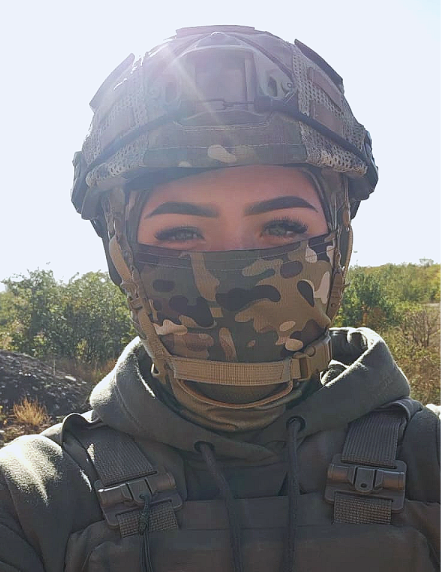
Before the full-scale invasion, I worked as an administrator in the restaurant industry and developed my own business. I have two university degrees. I lived an ordinary life — work, plans, growth.
The war seemed distant then, even though it had already been going on.
In 2014, I was sixteen. I could not join the army, but I decided for myself that if the moment ever came, I would not look for reasons to stay aside.
On 24 February 2022, that moment arrived.
There were no dramatic decisions — only a lot of silence and a clear understanding that life would no longer be the same. I remember confusion, calls to loved ones, and endless news updates.
But somewhere inside me the decision had been made long ago — back in 2014. The question was not whether I would go, but when and how.
At first I volunteered in Odesa, but soon realized that it was not enough. I wanted to be inside the process, not just helping from the outside. I called a friend in Kyiv who was already serving in a volunteer formation and asked if I could join.
For two years I worked in administrative support. It was important work, but eventually I felt that I wanted to be closer to those risking their lives every day.
I completed training and became a combat medic. I worked at different stages of medical evacuation — from CASEVAC to stabilization points. Now I serve on the Zaporizhzhia direction with a medical unit of an assault regiment.
This is work where there is no “later.” Only now.
I joined the VETERANKA Movement deliberately. Women in the army are becoming more visible, but systemic problems remain. If we perform our duties at a high level, then the attitude toward us must be appropriate.
I did not join the army for a story. I joined because I could not have done otherwise.
“I could not abandon my crew”
Tetiana “Borysivna” Vasylchenko, Combat Medic, Volunteer Medical Battalion Hospitallers
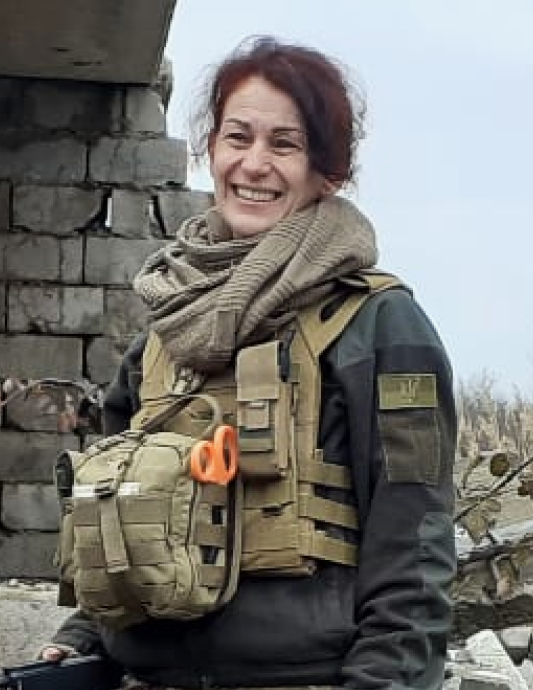
After retiring in 2021 from the 8th Special Operations Regiment, I completed training with the Hospitallers Battalion in Pavlohrad.
From 16 October 2022, I served on rotation in the village of Vodiane, 32 kilometers east of Mariupol. I saw everything with my own eyes, so there was never any thought of returning home while we were still needed there.
When I briefly returned home at the end of January 2022 for my granddaughter’s birthday, my crew remained at the position. They told me not to hurry — they would manage.
On 14 February they called to congratulate me, and I could already hear explosions near them. After the call I immediately bought a train ticket to Mariupol for 23 February.
I arrived early in the morning on the last train that entered the city and walked most of the way to our position until our driver was able to pick me up. Aviation and artillery were already active, so they could not come into the city for me.
I could not abandon my crew. My comrades had become family to me. And I understood that this was already a full-scale war and that I had to defend my home.
We worked alongside a mortar unit. While the mortar operators carried out their missions, we did ours — evacuating wounded soldiers almost directly under fire.
Later we were at the Illich Steel Plant, which held out while already surrounded. Eventually we had to withdraw to Azovstal.
During the move our column was shelled, and both I and several comrades were wounded.
On 18 May 2022, our driver and I were captured. The next day we were taken to Olenivka in temporarily occupied Donetsk region. I spent five months in captivity before being released in October during an exchange of 108 Ukrainian women prisoners of war.
Today I continue working in the patronage service of the Hospitallers Battalion.
“For me, the question of whether to serve never even existed”
Yana “Ruda” Petrova-Kravchenko, Public Relations Officer and Gender Adviser to the Commander of Operational Command East
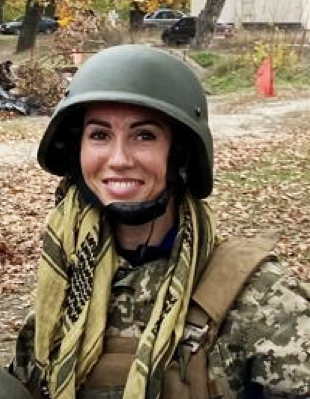
Before joining the Armed Forces, I was a university lecturer and deputy head of an academic department. I hold a PhD in Finance, Banking, and Insurance and had experience in strategic communications and journalism.
When the full-scale invasion began, I could not imagine anything more important than defending the country.
At first I joined a nationwide volunteer translation project that provided international information about the war. I also completed multiple first aid courses.
When my daughter turned eighteen, I began looking for a combat unit. Eventually I mobilized into an assault battalion that participated in the liberation of Kharkiv region.
After several months of service supporting journalists in frontline areas and managing communication work, I received my first officer rank and was later transferred to Operational Command East.
Since 2023, I have served as a non-staff gender adviser to the commander of Operational Command East.
I first encountered the VETERANKA Movement while organizing a training for gender advisers in military units and inviting the Movement’s leader Kateryna Pryimak to speak.
The Movement’s advocacy work — supporting women in the army and promoting equal rights and opportunities — is just as important as the material support it provides.
“For me, defense is not a function — it is a daily choice”
Lelya “Lelia” Palchykova-Kozub, Combat Medic, Reserve Officer
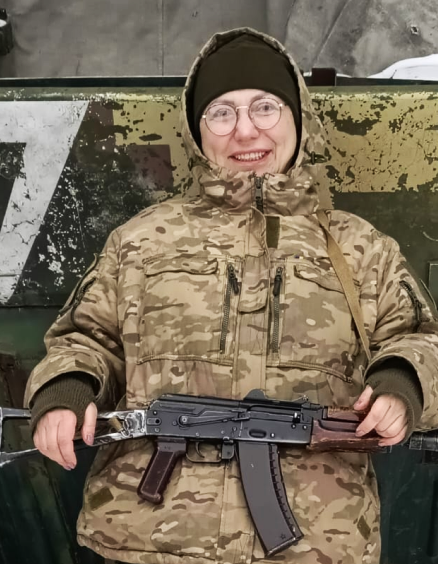
Before the war, Lelya was a lawyer and executive director of the Association of Housing Owners of Ukraine and participated in policy working groups at the Verkhovna Rada.
Since 2014, she had been part of a local civic defense initiative, and on 24 February she led a unit of volunteers in Kyiv’s Holosiiv district.
She later served as a combat medic, instructor of basic military training, military psychologist, and head of a group working with territorial defense units and civilians.
After suffering injuries and several concussions, as well as dealing with a serious illness, she was forced to leave active service.
Today she continues helping defend Kyiv as part of a mobile fire group, largely on a volunteer basis.
For her, defense is not a contract but a state of being.
“Defense is not a function — it is a daily choice.”
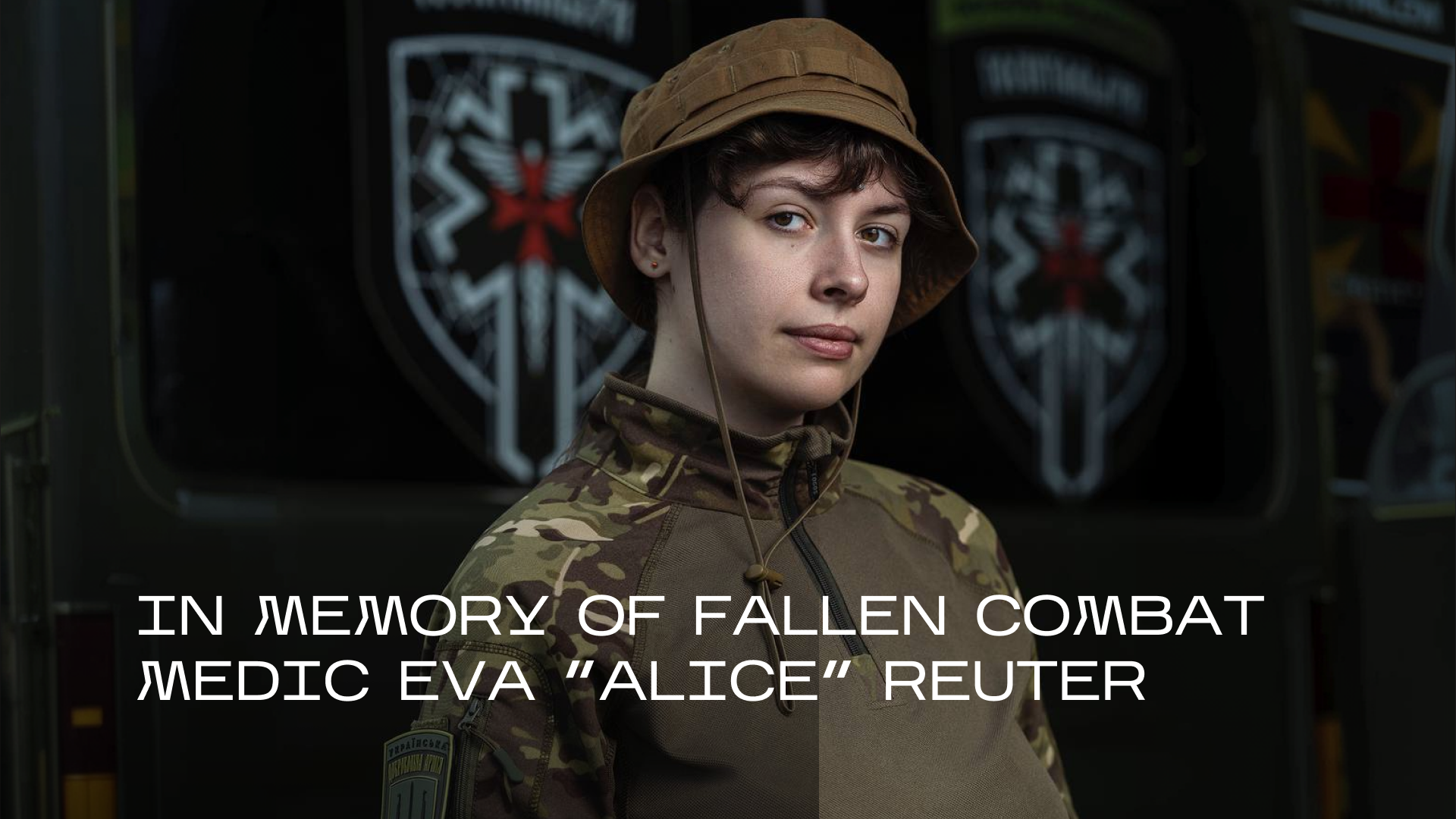 An art historian who became a combat medic, mastered drone repair, FPV drones, 3D printing, led international recruitment, and coordinated a major educational project
  To Mark the 8th Anniversary of the VETERANKA Movement
 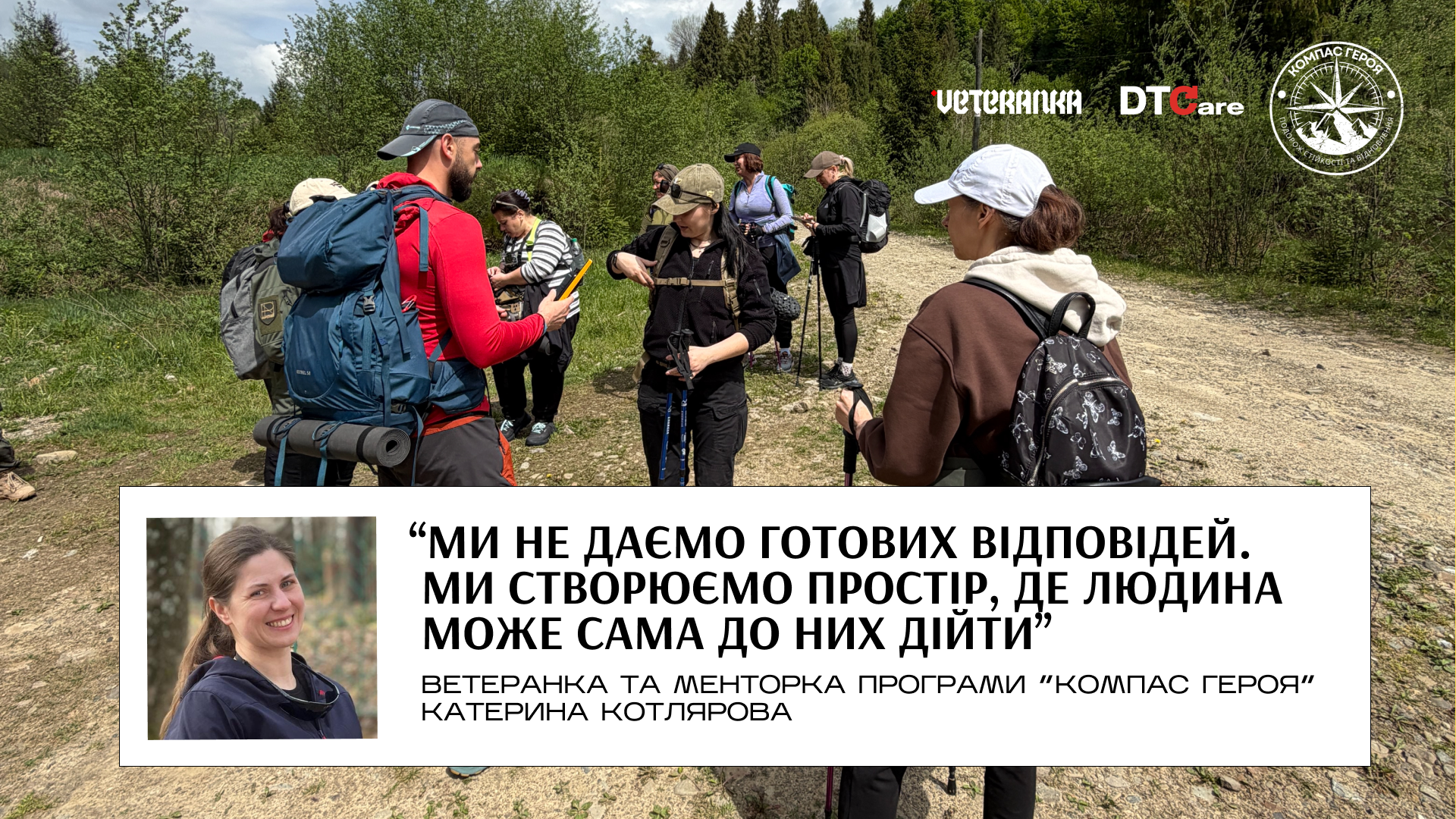 What Awaits Participants of the Hero’s Compass Adventure Counseling Program
 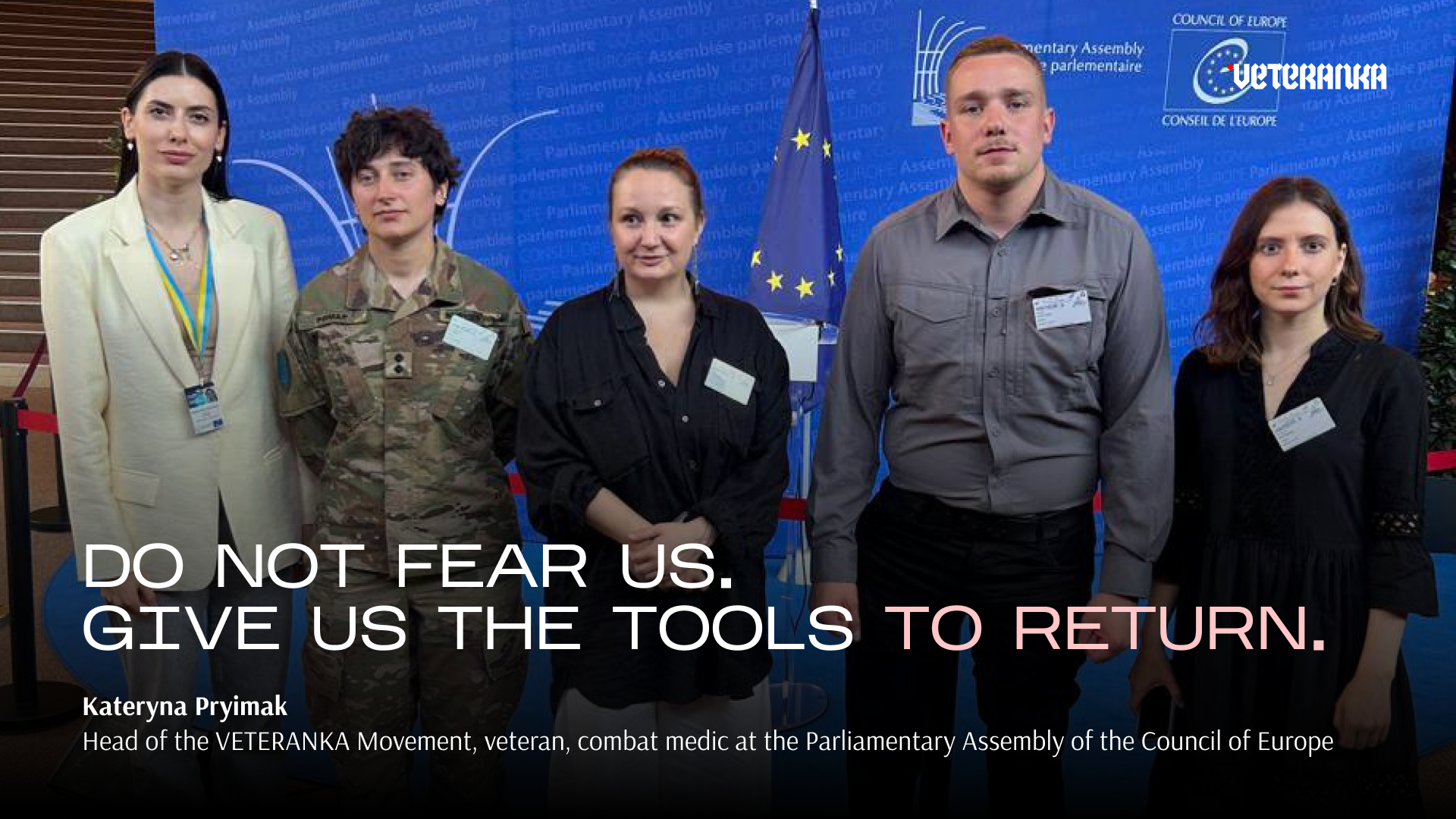 "Do not fear us. Give us the tools to return"
  “Life does not end after service — it becomes different”