“If You Made It Through the War — You’ll Make It Here Too”

The Story of Yuliia Zahurska, Still Searching for Her Place in Civilian Life
Yuliia Zahurska is a combat psychologist, an officer of the Armed Forces of Ukraine, and a veteran. Before joining the military, she served as a captain in the State Emergency Service (DSNS), with many years of professional experience.
Her story is about resilience and frontline work without rest — “doing everything possible to help everyone in time.” It is a story of daily support for those going through the hardest moments.
Yuliia’s path led her from soldier to Head of the Combat Stress Control Group. Every day, she helped service members recover after returning from the front line, cope with loss, fear, and traumatic experiences of war.
Constant physical strain and emotional exhaustion eventually affected her health. After undergoing two surgeries, she was forced to demobilize.
Today, Yuliia works as a specialist supporting veterans and demobilized service members in Kropyvnytskyi.
For Amnesty International Ukraine’s TRIBE project, she speaks about her military path, returning to civilian life, and searching for herself after demobilization.
Volunteering and Trips to the ATO Zone
“In 2014, I was working in the State Emergency Service. Wounded soldiers from the front were brought to our hospital. That autumn, a group of psychologists from the city came together to think about how we could help. That’s when I started volunteering.
During my lunch breaks, I went to work with service members, then returned to duty. I spent my vacations in the ATO zone and at training grounds, providing psychological support there as well.
Even then, I understood that soldiers need to be prepared both physically and mentally for war — it makes recovery easier later. There are volunteers, and there are mobilized soldiers. These are different starting points.”
A Talisman
“During one of those trips, a young man ran up to me, took a small white cross off his neck — the kind that were handed out during the Maidan — placed it in my hand and said: ‘You’re doing important work. May God protect you.’
Later I learned his name was Mykhailo. For me, it felt symbolic — like Archangel Michael, the patron of warriors. Since then, this cross has always been with me. It became my talisman.”
Beginning of Military Service and Psychological Work at the Front
“I tried to transfer to military service as early as 2018. I even had official referrals from the General Staff, but it didn’t work out.
After the full-scale invasion began, I actively searched for a position in the army. At first, I was told there were no staff positions for psychologists. But in June 2022, some fellow soldiers I knew called and said they needed me. On July 4, I officially joined the military.
I began my service in the 67th Mechanized Brigade on the Donetsk axis. We conducted group work and individual consultations: assessing soldiers’ conditions, helping them recover emotionally, regroup, and regain motivation. Soon, there was a waiting list of two to three weeks for consultations. There were only two psychologists for the entire brigade. The level of exhaustion was overwhelming.”
Becoming an Officer
“After completing officer training, I received my commission and transferred to another brigade, where I served as Head of the Combat Stress Control Group. The work there was very different.
Units were scattered across large territories, so we traveled constantly. If it wasn’t possible to gather personnel, we went directly to positions.
The continuous physical and emotional load gradually broke me down. My health deteriorated, and I underwent two surgeries.”
Returning to Civilian Life
“My adaptation to civilian life began even before demobilization, while I was in the hospital recovering from surgery. I was lying there, unable to do anything — it was very hard.
During treatment, I was threatened with being removed from my position because I was ‘no longer a fighter.’ I felt useless, even though I never intended to leave service.
My state at the time is hard to describe. I felt as if I were between two worlds, not understanding where to go or what to do next. I searched myself for PTSD, adjustment disorder, depression — perhaps all of that was present. I had no desire to communicate with civilians at all.
My connection with children had already changed: my younger daughter had been living abroad for three years, and my older daughter had her own family.
What saved me was a house that needed renovation. The repairs became my anchor. If not for that, I don’t know how I would have coped. I was there — in the renovation — and nowhere else.”
Self-Identification After Demobilization
“In April 2025, I was discharged due to health reasons. The first question that arose was: who am I now?
No longer a service member. No longer a military psychologist. A mother — but my children are already grown and independent. A daughter. A grandmother.
There were many questions in my head. At that moment, I didn’t know who I was. Honestly, I still don’t fully know.
Today, I work as a support specialist. I still feel connected to the military and can be useful. But it’s not what I want to do forever. I feel like I’m still avoiding what I truly love — psychology. Before service, I constantly trained and learned new methods and techniques. Now, I don’t have enough internal resources.
Yes, I have a job. I wake up with a purpose. I help people. But I understand that I haven’t fully recovered since demobilization. I’m functioning in a checklist mode: done — check, done — check. Inside, there’s a conflict between who I was in service and who I am after it.”
“Giving Up in the Rear Means Showing the Enemy They Broke Us”
“Everyone who returns to civilian life should know: if you endured the war, you will manage here too. It helps to have at least one person who supports you — a family member, a fellow soldier. Sometimes you don’t even need to talk. Just knowing someone is there is enough.
Everyone adapts at their own pace, with their own experiences and need for support. If a person survived injuries — anything is possible.
We must keep moving forward to show others that it’s possible to cope. Giving up in the rear means showing the enemy they broke us. We cannot allow that.”
Readiness to Defend the Country
“It genuinely angers me when people say that recruitment offices send unprepared or sick people into battle. The war has been going on for almost four years. Who is responsible if someone didn’t prepare physically, didn’t attend free trainings on basic weapons handling? These opportunities exist in abundance.
Who is responsible if a person didn’t gather documents proving health conditions or caregiving responsibilities? Often, the problem is simply that no one wants to take responsibility.
Everyone should honestly ask themselves: am I ready to defend my country — and what have I already done for that? Having a tourniquet, staying in shape, being prepared — this is not optional. The war didn’t start yesterday. In 2022, many weren’t ready either — but they stepped forward.
Recently, my daughter told me she decided to join the military. She is 21. As a mother, I wasn’t ready to hear that. But I will always support her.”
Connection with “One’s Own” Helps
“Once, a man who had been discharged from service came to see me — a veteran. His brother was killed in the war. He barely communicates with anyone, keeps to himself.
That day, we unexpectedly started talking. Remembering service: ‘There’s the turn to Lyman, there — to Yampil.’ We even laughed. We truly had something to talk about. We understand each other without many words.
Now, communication with ‘my own’ — veterans — helps me most.”
Dreaming of the War Ending
“I realize that I lost the joy of life during the war. I cannot radiate happiness while the war continues and blood is being shed. Perhaps this inner prohibition is what’s called ‘deferred life syndrome.’
Today, I have only one dream — for the war to end.
But I know for sure: we will never be the same again.”
 To Mark the 8th Anniversary of the VETERANKA Movement
 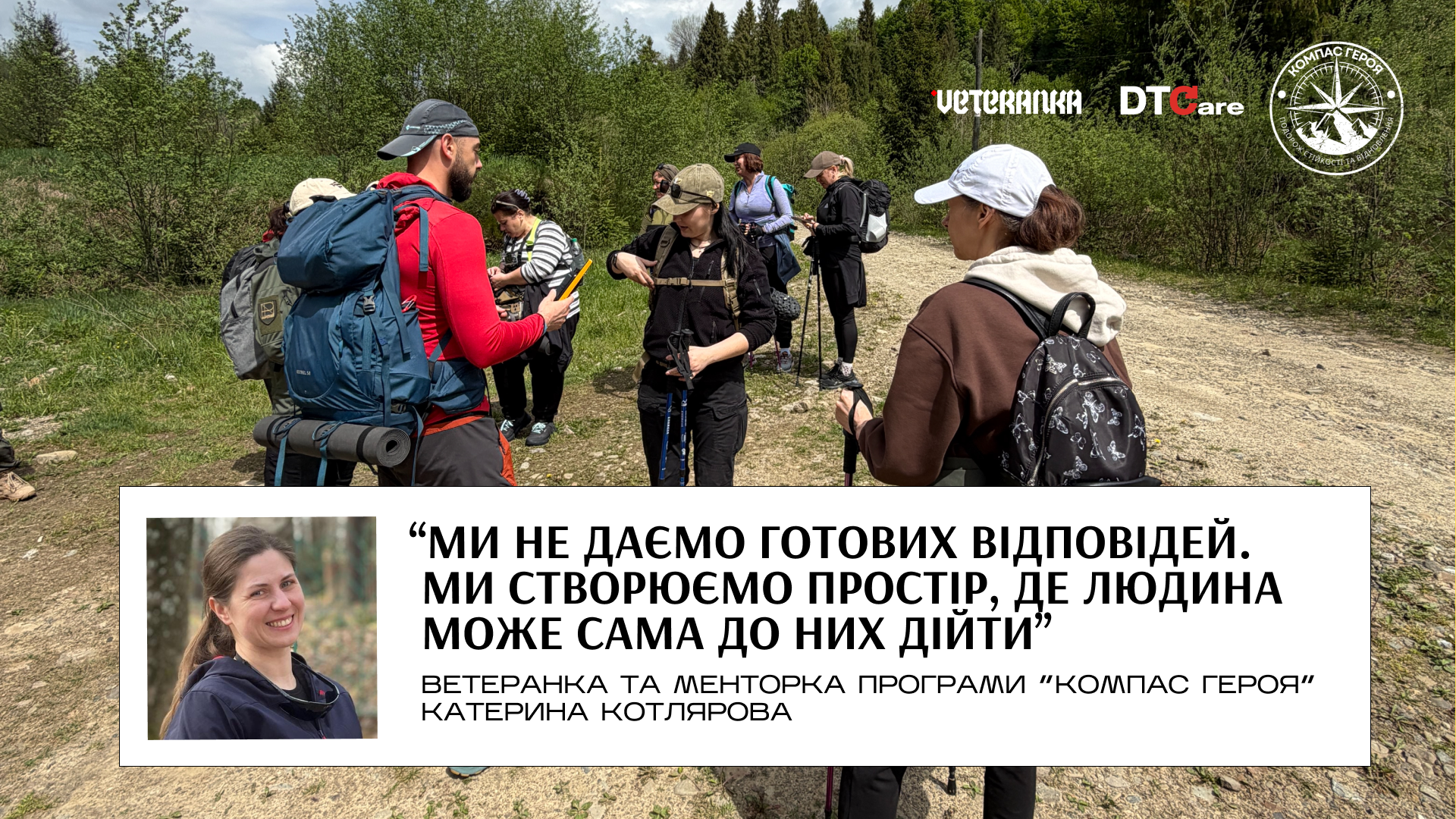 What Awaits Participants of the Hero’s Compass Adventure Counseling Program
 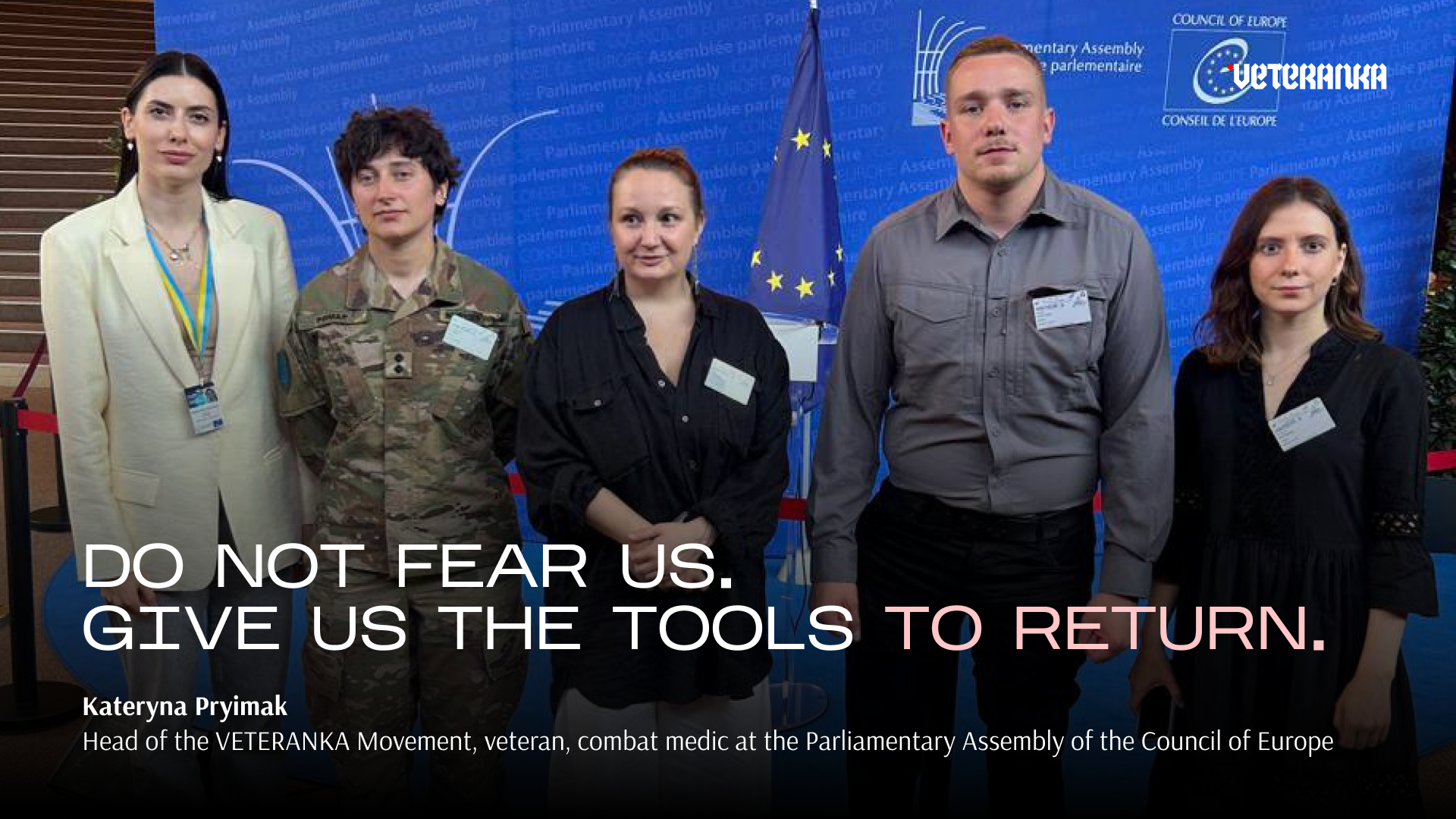 "Do not fear us. Give us the tools to return"
  “Life does not end after service — it becomes different”
  We strengthen evacuation efforts on the most difficult sections of the front and delivers the unique robotic complex “Maul”